
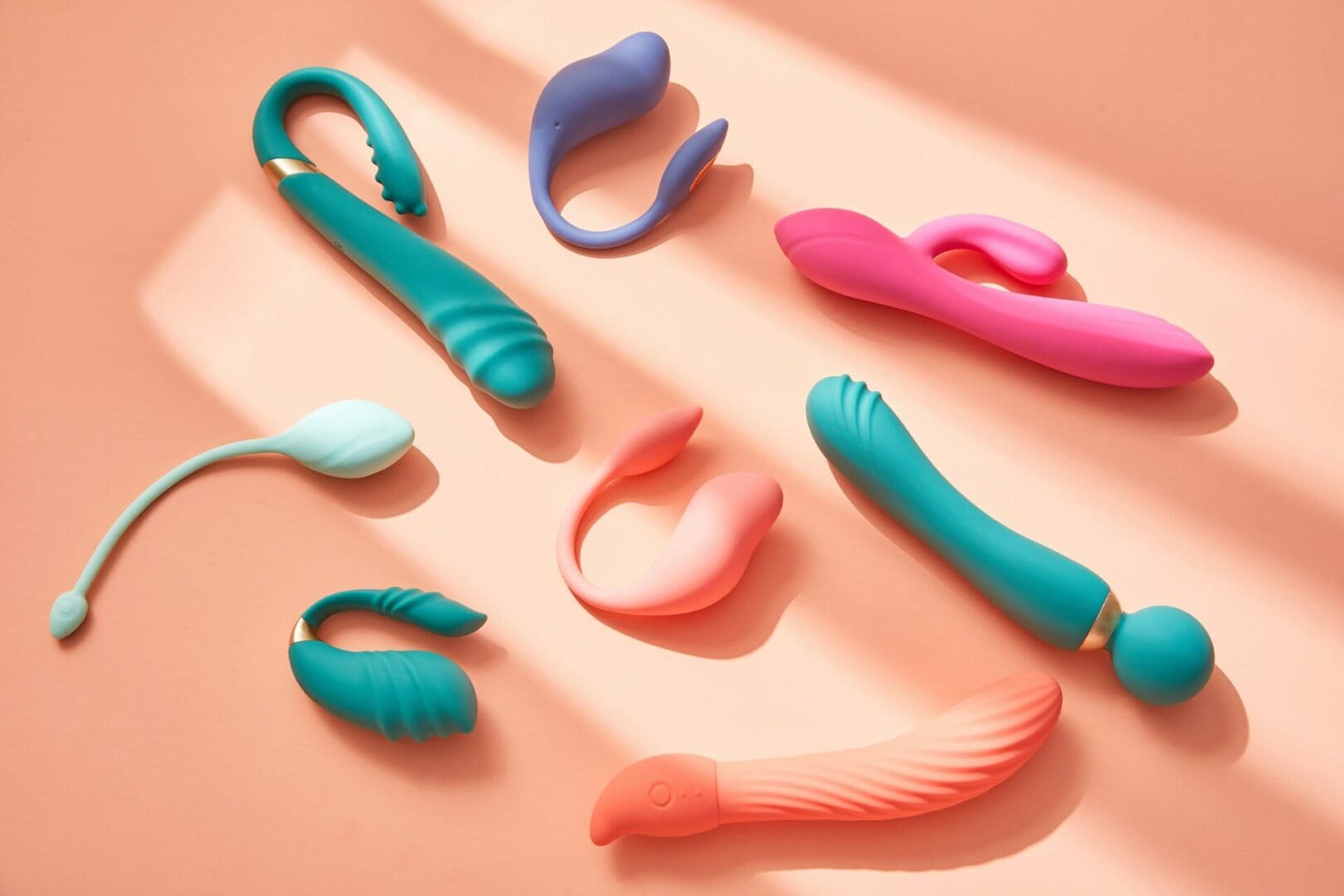
Does buying your first sex toy feels a bit like sneaking into a shop wearing sunglasses and a fake moustache?
Between the endless options, confusing marketing and fear of buying the wrong thing, it’s easy to feel overwhelmed before you’ve even reached checkout.
Pomegranate asked sex therapist and sex blogger Masha Chesnokova everything from choosing the right toy to navigating partner anxiety and avoiding expensive mistakes.

Image: Masha Chesnokova
Q: We talk about sex more than ever. So why does buying a toy still feel so awkward?
A: Because the conversation is still mostly a bubble. Online, sex positivity is everywhere, but zoom out from your feed, and most people are still operating with a pretty narrow definition of what sex even is.
Many still believe that sex is penis-in-vagina contact and everything outside that gets quietly filed under shameful substitute. If you’re a ‘proper’ woman or a ‘proper’ man, the messaging is that you don’t need these things. Toys read as something for people who couldn’t get the real thing.
Add to that the sheer volume of choice, the fear of wasting money on something that doesn’t work, and especially in straight couples, the anxiety about what a partner might think. There’s a lot of noise before you’ve even clicked ‘Add to Cart’.
Q: What to start with?
A: Start with action. Before you open any website, ask yourself what you want the toy to do.
Penetration? Clitoral stimulation? Anal play? Something to use during sex with a partner, or something purely solo? Maybe you’re curious about kink accessories, or you want to strengthen pelvic floor muscles.
Once you decide on the category of stimulation you want, there are subcategories.
For example, clitoral stimulators, the most popular category for women, include five types of sensation: vibration, suction, tapping, sound-wave technology, and electrostimulation.
Q: How to know which type of stimulation body actually wants?
A: This is where self-knowledge genuinely matters. One of the most useful things you can do is think about how you already experience pleasure. How do you masturbate? What kind of touch do you prefer?
The key thing to understand is your sensitivity level. There are three sensitivity levels – low, medium, and high.
As a rough guide, people who enjoy direct contact may have lower sensitivity and prefer stronger stimulation. Those who tend to use a lighter touch, indirect stimulation, or even stimulation through clothing may have higher sensitivity and prefer something softer.
Q: What about the lube – is it necessary?
A: In many cases, yes. There’s a common misconception that needing lubricant means something is wrong, but that’s simply not true.
If there’s not enough natural lubrication, friction can cause small tears and irritation. That can lead to discomfort, inflammation, and a less enjoyable.
Finding the right lubricant can take a bit of trial and error. Everyone’s skin and mucous membranes react differently, and some people are more prone to irritation, allergies, or recurring infections than others.
Test a small amount on your hand first, then apply a small amount on the mucous membrane.
Remember that silicone toys should only be used with water-based or hybrid lubricants.
Q: Is it okay to buy a sex toy from Amazon, Temu, or another marketplace?
A: If you’re buying your first toy, I’d always recommend a reputable sex shop. Good sex shops usually have staff who can ask the right questions and help you narrow down your options based on what you’re looking for.
Marketplaces can be full of unbranded products, counterfeits of popular models, and toys made from questionable materials. A product might look identical to a well-known toy online, but what arrives can be very different.
There’s also the practical side. If something goes wrong, established retailers are far more likely to offer warranties, customer support, and clear returns policies.
Q: Are there safety red flags?
A: Materials matter, especially if you’re buying from less established places. With reputable brands, you usually do not need to panic. Companies like Satisfyer, Womanizer, or We-Vibe have been around long enough to have quality standards and reputations to protect.
Some cheaper toys can be made with materials that are not body-safe. Certain thermoplastic elastomers can contain phthalates, which may be toxic.
If you unwrap the toy, wash it, leave it for a couple of days, and it still smells strongly chemical, that’s a warning sign. The same applies to toys you already own. If the surface starts cracking, changing colour, becoming sticky, developing bumps, or looking damaged in any way, it is time to let it go.
Q: I bought one, I tried it, I felt nothing. Does that mean it’s not for me?
A: Almost certainly not. The fantasy that you place a toy somewhere and immediately have the orgasm of your life is marketing fiction, and it sets people up to give up far too soon.
I’d suggest a minimum of a month of regular use, maybe two, before deciding something isn’t for you. Your brain needs time to understand what you want from it, and at some point, it clicks.
Think of it like learning what works with a new partner. There’s an adjustment period. The first time is almost never the best time. And while you’re at it, ditch the orgasm-as-goal framing entirely. No toy guarantees one, even for people who orgasm easily. Cycle, stress, mood, and context all play a role on any given day. Just focus on pleasure, and the rest tends to follow.
Q: What if a partner feels weird about it?
A: First of all, don’t open the conversation with, “So, I’ve decided to buy a vibrator.”
That’s a cold plunge, especially if shame, insecurity, or discomfort are already part of the conversation.
Instead, start much further back. Ask how they feel about sex toys in general. Have they ever been curious about trying one? Do they see them as something for solo use, partnered use, or not at all?
The more you explore the topic before introducing your own desire, the easier the conversation becomes. If talking about sex feels intimidating, games and conversation cards designed around intimacy can also help create a less pressured way into the discussion.
The other thing worth noting, especially in straight couples – a toy is not a competition. It doesn’t have emotional intelligence and it won’t hold your partner on a difficult evening.
Q: Who are sex toys designed for?
A: Sex toys are not essential; they are a preference. If you’re curious about new sensations, orgasm is difficult for you to reach, or you want to add variety to solo or partnered sex, sex toy might be a good option.
Come to them with curiosity, toys are made to be played with. They’re about fun. When you approach them that way, everything gets a lot easier.