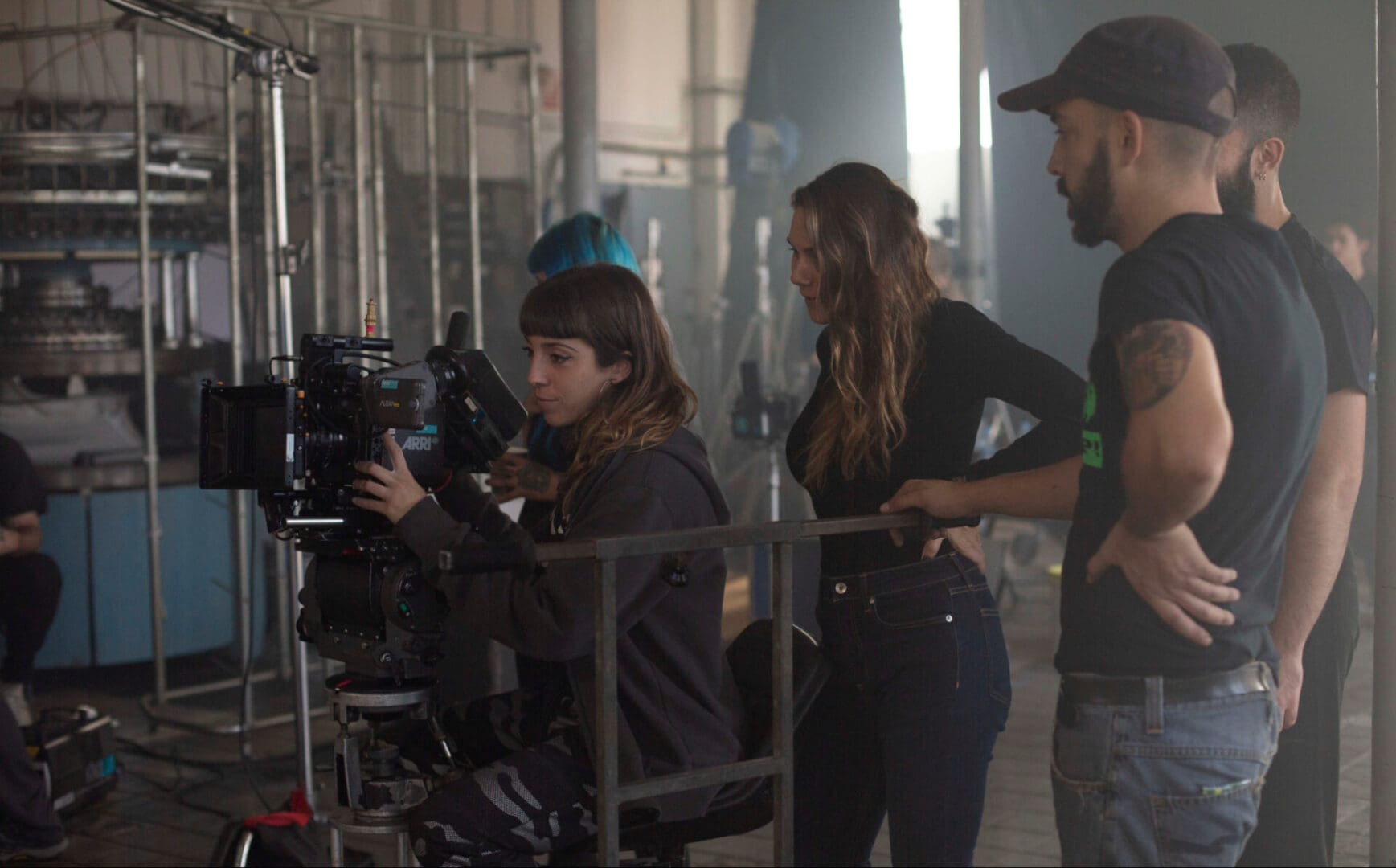
Championing adult film with the female gaze in mind, ERIKALUST productions is redefining the rules of porn, ensuring desire has no gender. Since a university film assignment went viral in 2004, the Swedish-born director Erika Lust has been making the case that adult cinema can be cinematic, ethical, and genuinely inclusive – without being any less erotic. Two decades on, her platform reaches audiences across the world who are hungry for something that actually reflects them – films that are story-led, aesthetically considered, and rooted in the full complexity of human desire.
Pomegranate sat down with Erika to find out what drove her here, what still frustrates her, and why the conversation is far from finished.
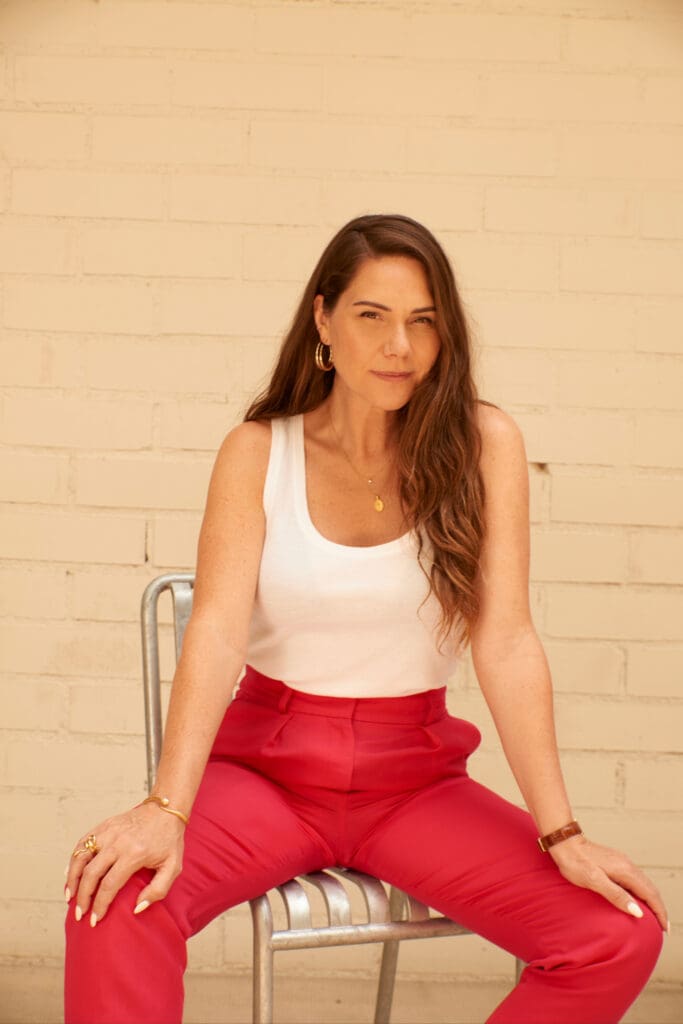
Summarise what ERIKALUST is all about for someone who is new to the industry
When people first discover ERIKALUST, I usually explain that we’re not just creating a different version of porn, we’re expanding what erotic cinema can look and feel like. From the beginning, the idea was to create adult films that are cinematic, story-led, and rooted in real human experiences. That means paying attention not only to sexuality and desire, but also to aesthetics, emotion, performance, consent, and the way people connect on screen.
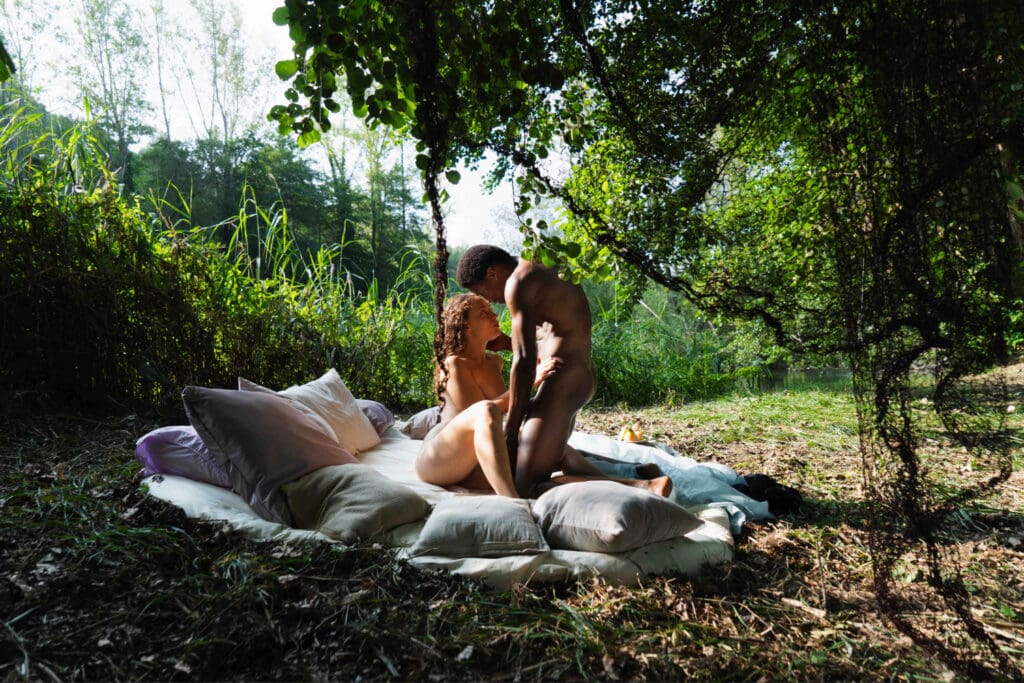
One of our best-known projects is XConfessions, which is a platform built around audience participation. People from all over the world anonymously submit their fantasies, confessions, desires, and ideas, and selected submissions are developed into original short films. It’s become a way of exploring sexuality through many different voices and perspectives rather than a single point of view.
What was the story behind the creation of ERIKALUST?
The story of ERIKALUST really began long before I ever stepped onto a film set. I was studying Political Science and Gender Studies at Lund University in Sweden, and during that time I read Linda Williams’ Hard Core’. One of the ideas that stayed with me was that porn doesn’t simply reflect reality, it communicates specific ideas about gender and sexuality. That completely changed the way I thought about adult cinema and made me question what kinds of stories and values were being normalised through the genre.
After university, I moved to Barcelona in 2000 and started taking film classes because I fell in love with the atmosphere of filmmaking. Then, for one of my assignments, I had complete freedom to create a short film and instead of making something conventional like most of my peers, I decided to make an adult film, but I didn’t want to recreate what already existed. I wanted to create porn according to my own tastes and values. Something playful, cinematic, and centred around female pleasure. I wanted to show sex differently: with desire, with humour, with mutuality.
That film became The Good Girl. I put it online for free, expecting very little from it. Instead, it reached over two million downloads in less than two months. Suddenly I was receiving messages from people all over the world saying, “This is what I’ve been looking for. When is the next film coming?” So I decided to keep going. People weren’t responding just to The Good Girl; they were responding to the idea behind it.
Two decades on, how has your mission evolved and what still frustrates you about the industry?
My mission feels both bigger and more specific now that I’m 20 years into my career. In the beginning, the goal was to prove that adult cinema could be made ethically and safely, with aesthetics that reflected the art and cultures that inspire me, all while centering itself around real desire instead of performances built on stereotypes.
What’s changed is that audiences have changed. People ask more questions now than they did when I first got started. They want to know: who made this, how were performers treated, whose perspective is shaping what we see. These shifts in consumer thought patterns give me hope.
What frustrates me is that there still seems to be an assumption that ethical filmmaking practices and creativity across the genre is niche, and that audiences only respond to formulas that flatten sexuality into something repetitive and disconnected from real people. I don’t think that’s true. People are curious, intelligent, and deserve better than stereotypical porn. I’m always going to be interested in challenging the idea that desire has to look one way. That conversation is far from finished and honestly, that’s why I’m still here.
The phrase “ethical porn” gets used a lot now. What does it actually mean in practice on your sets?
I think it’s great when phrasing like “ethical porn” is used, because it signals that people are thinking about and asking where their porn is coming from, but in practice, ethical porn is not an aesthetic. It’s about process, transparency, and respect.
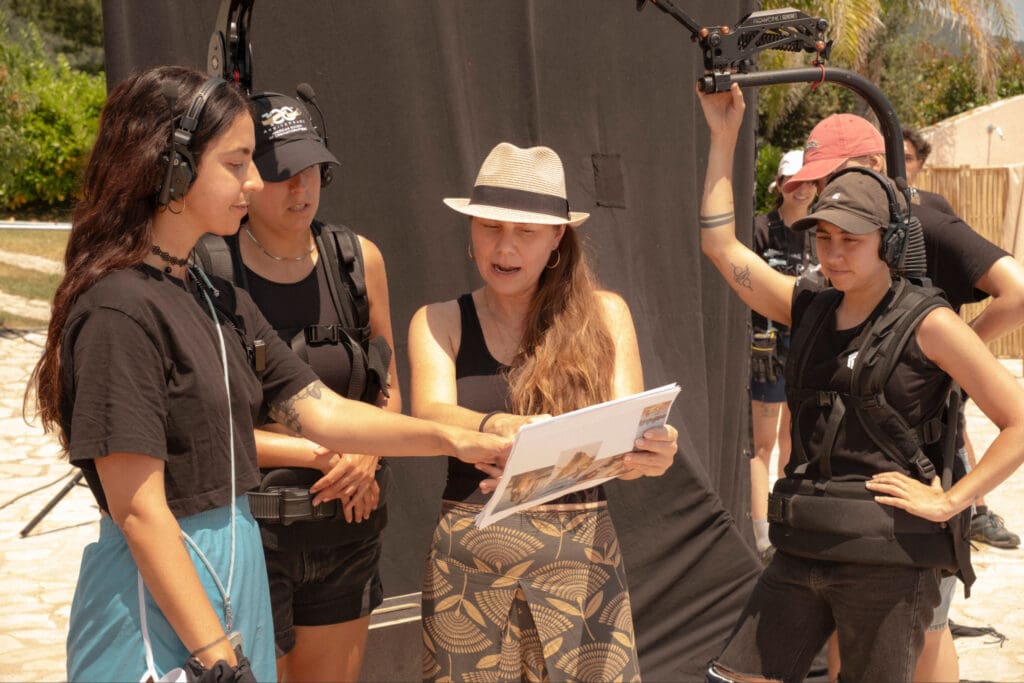
On our sets, ethical production starts long before the camera rolls. Performers discuss boundaries, desires, dislikes, sexual health, and exactly what they consent to on screen. Safer sex practices are agreed far in advance. There are no surprises for anyone. Everyone involved, including the crew, understands that filming intimacy requires care, communication, and professionalism. Intimacy coordination and ongoing conversations around consent are essential because consent isn’t a checkbox; it’s part of the entire working environment.
All of this is formalised within our Performer’s Bill of Rights – I wanted our ethical values written down, shared, signed, and something we could all use to hold ourselves accountable. We developed the bill together with our performers, because they are the people who best understand where the pressure points can exist in this industry. My feeling was: if we expect professionalism from performers, productions must meet professional standards too. For me, the goal isn’t to make these policies exceptional or exclusive to ERIKALUST. The goal is that one day these will be the professional standards across the adult film industry.
Where do you think other studios are still falling short ethically?
Where I think parts of the industry still fall short is transparency. The reality is that ethical practices are becoming more and more common across the industry, which is a good thing, but audiences often still have very little visibility into how content is made, who made it, whether performers had any agency in how the shoot was filmed, or whether working conditions were fair. I’ve always put my name, face, and values behind my work because I think accountability matters.
How do you balance making content that centres the female gaze while remaining genuinely inclusive?
I’ve never thought of the female gaze as something exclusive to women. For me, it’s not about swapping one narrow perspective for another, it’s about expanding who and where we’re centering our fantasies, whose pleasure gets acknowledged, and what kinds of desire are allowed to exist on screen.
Feminist values in porn, to me, are not about excluding men or prescribing one correct way to experience sex. They’re about equality, affirmative consent, intimacy, and authenticity. I think those values are universal. The balance comes from refusing stereotypes in either direction. We don’t assume all women want one thing or all men want another. We create space for different bodies, identities, fantasies, and ways of connecting. I think audiences, regardless of gender, are often looking for something that feels more recognisable, respectful, and ultimately more human.
Queer and trans audiences are often underserved or worse, fetishised by mainstream porn. How does ERIKALUST approach queer storytelling in a way that feels authentic rather than performative?
Authenticity in queer storytelling starts with recognising that queer and trans audiences are not a niche audience to be marketed to; they are people with their own desires, fantasies, sense of humour, intimacy needs, wealth of contradictions, and ways of relating to one another. Too often, porn has either ignored those experiences entirely or reduced them to categories built around fetishisation and outside assumptions.
At ERIKALUST, the goal has never been to simply create queer content or categorize it as a gesture of inclusion. We’ve built dedicated queer categories within the platform because queer desire deserves a space on its own terms, not as an extension of heterosexual narratives or the male gaze. A project that felt especially meaningful to me was Gender Bender, which we released to celebrate Pride in 2018. The film follows Kali Sudhra and Dante Dionys – performers, activists, and real-life friends – as they explore gender identity outside of judgement and conventional expectations. Like all XConfessions films, it came from an anonymous fantasy submitted by a member of the public, which already shifts the starting point: instead of imposing a narrative, we begin from somebody’s real curiosity and desire.
Through the XConfessions submissions you’ve received over the years, what have you learned about the diversity of what women and queer audiences actually want to see?
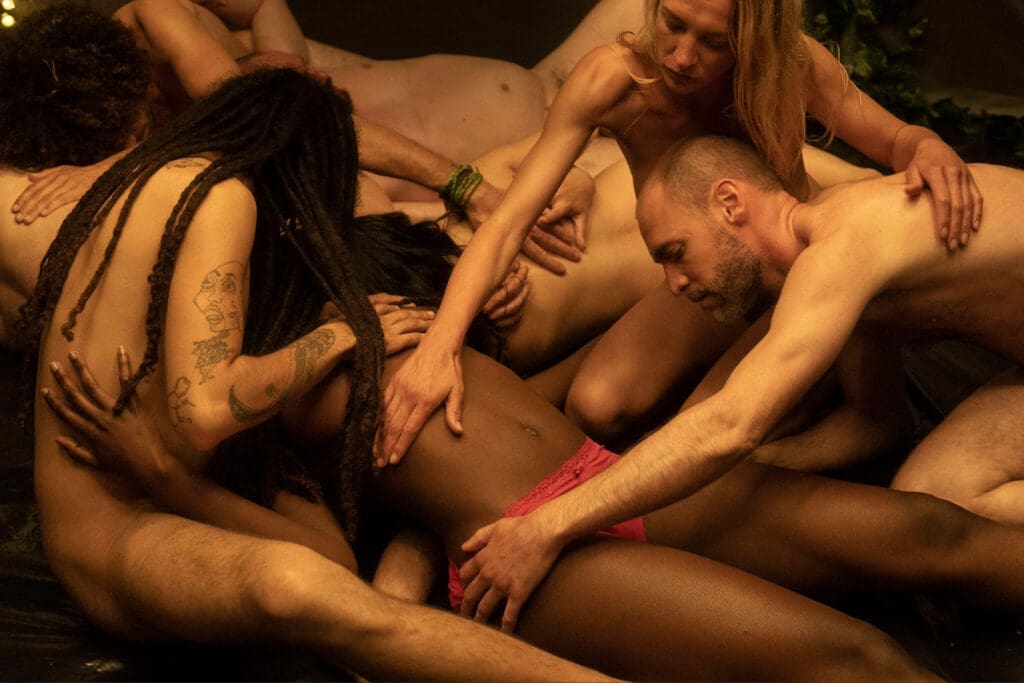
One of the most surprising and inspiring things I’ve learned through XConfessions is how impossible it is to reduce women’s and queer audiences’ desires into a single category. There’s still this outdated idea that these audiences want one particular type of intimacy or one “acceptable” version of sexuality, but all of the submissions we receive tell a completely different story.
Over the years, reading thousands upon thousands of anonymous confessions, I’ve witnessed how extraordinary our imaginations are. The fantasies people share are often playful, emotional, unexpected, intimate, cinematic, vulnerable, funny, adventurous and sometimes various combinations of those things all at once. In a way, I think XConfessions has become a document of contemporary desire. You can see cultural shifts reflected in the confessions we receive. People are becoming more curious, more open about identity, more interested in emotional connection, role reversals, self-discovery, softness, power, vulnerability, and experiences that move beyond traditional scripts around sex and relationships.
How do you think about casting – in terms of body diversity, age, race, disability – and what still feels like an ongoing challenge to get right?
Casting is one of the most important creative and ethical decisions we make because it shapes not only who gets seen, but also whose sexuality is considered visible, desirable, and worthy of an audience’s attention. From the beginning, I wanted to move away from the very narrow visual codes that have dominated porn for decades. I’m interested in casting natural people in real situations. People with different body types, ages, racial and cultural backgrounds, genders, sexual identities, and experiences. Not diversity as decoration, but because that reflects reality and creates richer stories.
At the same time, I think representation is an ongoing process rather than a box you tick and move on from. Disability is one area where I think the industry, including alternative spaces, still has work to do. Age diversity is another, especially creating room for sexuality beyond youth without turning it into another “Sex Over 60” category. The challenge is to keep expanding who gets represented without making people feel tokenised.
You’ve spoken about the dominance of what you call “Big Porn” behemoths. How does an independent studio like yours compete and survive against platforms with effectively unlimited free content?
For a long time, the conversation around independent adult studios versus “Big Porn” was framed as if the only answer was to stay outside of those ecosystems completely, but the reality is more complex than that. A huge portion of people discover and consume porn through these bigger platforms. We can disagree with aspects of that economy and still recognise that it’s where audiences already are. If your goal is cultural change, you have to ask yourself whether you want to speak only to people who already agree with you, or whether you want to reach people who may not even know alternatives exist.
That’s part of why we decided to launch official channels on some of these sites. Historically we stayed away, but over time – especially following changes in ownership and ongoing conversations around standards and accountability – we felt there was an opportunity to participate differently and make our work visible to audiences searching for alternatives. I don’t see that as giving up independence. I see it as expanding access. You can’t reach for something if you don’t know it exists.
For us, competing isn’t about trying to out-scale platforms with unlimited content. We’ll never win on volume, and that’s not the point. We compete through the unique perspective of our films; ones that through an artistic and cinematic lens challenge gender stereotypes, support fairer production practices, and normalise the diversity of human sexuality.
You’re a mother of two daughters, and you’ve spoken about concern that young people are using mainstream porn as sex education. What role do you think ethical producers should play in that conversation?
Becoming a mother really changed the way I thought about sex education. My concern, of course as an adult filmmaker, has never been that porn exists. My concern is when porn becomes the default form of sex education because nobody else is having the conversation.
That’s why my husband Pablo and I created The Porn Conversation as a way to support families and educators in talking openly with children and teenagers about pornography, sexuality, media literacy, and the messages they absorb online. The goal isn’t to shame curiosity or create fear. It’s to help young people think critically about what they see. I think ethical producers have a responsibility here but not as sex educators, but in the way they contribute to a broader culture of honesty and media literacy. We should be transparent about how porn is made, acknowledge that it is fantasy, and participate in conversations about consent, communication, and representation.
What’s the one thing you wish parents understood about porn and young people that they currently don’t?
The one thing I wish more parents truly understood is that porn is not the problem in isolation. It’s the silence. Too often, we approach the subject as something dangerous that we hope young people will simply avoid, but the reality is that most children and teenagers will encounter porn long before any meaningful conversation about it takes place at home or in school. When that happens without guidance, our kids are left to interpret what they see on their own.
What I’ve learned through creating The Porn Conversation is that young people are not passive viewers. They’re growing minds that are actively trying to make sense of what they see. The issue is not curiosity, it’s the lack of tools to understand it. Without porn literacy, they may absorb distorted ideas about bodies, consent, gender roles, and relationships as if they were reality. I want parents everywhere to understand that, for the sake of our kids, we need to move away from avoidance and towards engagement. From silence to dialogue. Because young people are already in conversation with porn. The question is whether we as adults choose to join them in those conversations.
Where do you see the biggest gaps still – in terms of stories that aren’t being told, or communities that ethical porn still isn’t reaching?
Even though there has been a lot of progress in the last years, I still think the biggest gap is representation that goes beyond tokenism in terms of stories and access.
On the storytelling side, we are still far too limited in how we portray desire. A sizable majority of the porn that people encounter relies on repetitive scripts and power dynamics that don’t reflect the full range of human sexuality. Ethical porn has started to open that up, but there are still many experiences that remain underrepresented or simplified. The other gap is in our audiences. The ERIKALUST platform still doesn’t reach everyone who could benefit from it. A lot of people don’t even know that alternative films like ours exist, or assume that “porn is porn” and there is no difference in how it’s made. Closing these gaps isn’t about making different kinds of porn. It’s about making sure the stories we’re telling can actually be found.