TW: This article contains discussions of mental health disorders and there is mentions of suicidal ideation. Reader discretion is advised.
For two weeks out of the month I don’t recognise myself. Uncontrollably crying, wanting to break up with my boyfriend, ignore my friends, and basically ruin every area of my life. The scientific diagnosis is PMDD, premenstrual dysphoric disorder, where during my luteal phase of my cycle it feels as if I have been given a different brain. I become a completely different woman.
At its peak, it becomes an alienating out of body experience where I am consumed by intrusive thoughts, suicidal ideation, chronic fatigue. All the habits including showering, eating and even doing things I love become impossible, I feel as though I am completely stuck.
Then I see red, a sigh of relief. When menstruation comes and I bleed the switch in my brain is flicked and I’m back to my “normal” self again, as if nothing ever happened. At times yes it feels like a really bad hangover but mostly I am back to feeling lighter.
However the countdown begins, and we go again every month for the next 30 years of my life. As if I’ve been cursed! I know it’s a lot, but I am not alone. For thousands of women across the UK, PMDD is not just bad ‘PMS’ – it is a severe hormone linked disorder that has devastating impacts.
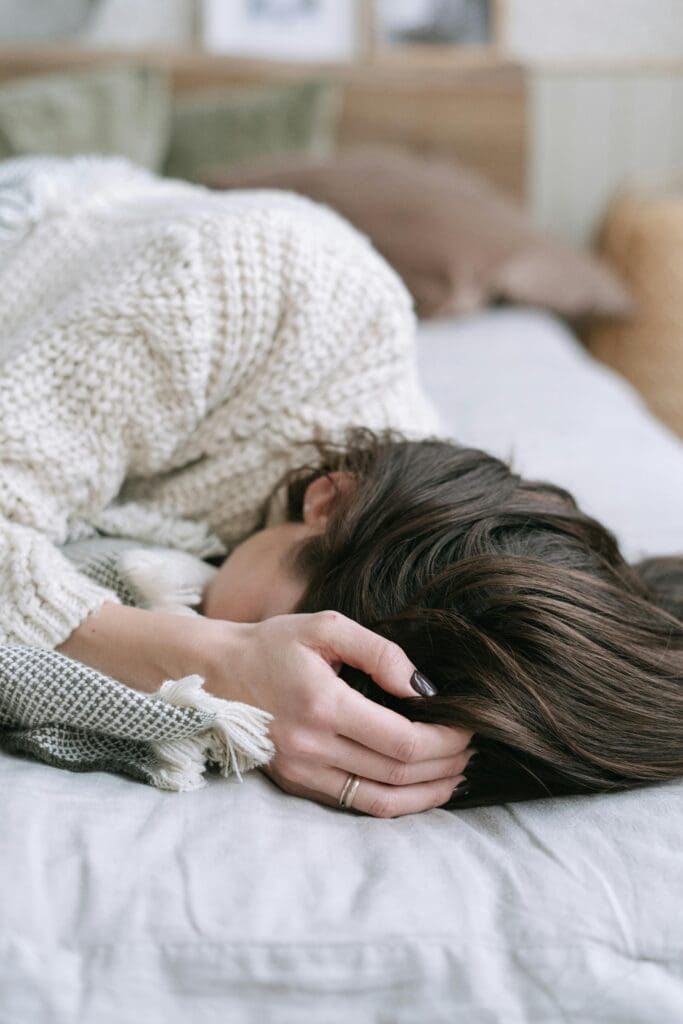
I spoke to other women who like me, have suffered with PMDD but have felt wider society is less educated on the subject. Katie Cook, shares her experiences on social media, raising awareness calling it her PMDD diary but there was a time in her life PMDD consumed her.
“PMDD has impacted almost every aspect of my life, even the way I viewed myself growing up, there were periods where I genuinely struggled to imagine a future because everything felt too overwhelming during certain parts of my cycle,” she says, “but I think one of the hardest aspect of PMDD is that because symptoms fluctuate so people can dismiss or not fully understand how dark it can get during that phase.”
Katie is not alone, Frej told me how they would spiral every month convincing their relationship was ending and their life was over, causing them unable to “interact with other humans in a normal way.”
“Imagine half of your life spent fearing your period and then the other half actually having it. When it comes it turns you into a different human being, one who is unrecognisable,” they say “your period is bad, yes, but the sudden deep depression, severe fatigue and brain fog sticks around for 2 weeks out of the 4 weeks every month.”
According to the Royal College of Nursing, around 1 in 20 women and people assigned female at birth are estimated to have PMDD but 90% go undiagnosed due to the lack of research, but that’s not unusual with women’s health.
For me, it took years to be taken seriously and heard by my doctor. Even though I have struggled with my mental health since I was young I could never differentiate between the two, but when I got a grasp on my mental health in the beginning of my twenties it became apparent this was different.
I was doing every self care ritual possible, reading every book, going to therapy and doing everything for my mental health I could, but I noticed every month around the same time all that work was useless and I didn’t know why? I felt like I was going crazy.
Going to the GP was daunting, as a woman you often feel unheard and rushed when it comes to hormone health and that is what exactly happened to me. It was passed off as PMS and you guessed right they put me on the pill. No further questions, no tests or even a follow up appointment.
The pill didn’t work and killed every sense of my personality, and my instinct was telling me this isn’t just PMS. Sadly it took me to breaking point, and I wasn’t taken seriously until a phone call to the crisis team at 1am on a Saturday night two years ago. I felt so angry that I had to almost lose everything to gain my diagnosis.
I wasn’t the only one, Katie felt dismissed by health professionals and it took her a few years before she got a diagnosis. “Some professionals were supportive, but there were also times I did not feel fully heard or understood,” she says, “and I think many women with PMDD experience frustration.
Women and those assigned female at birth are often neglected within our health care system, and researchers from the University of Oxford warned there is still “little training around PMDD” and there is inconsistent GP knowledge. Frej sees that frustration, even though they were heard by their GP they believe if there was more research less lives would be lost.
“It is a serious life changing condition that has been overlooked for too long, causing delayed diagnosis and limited treatment options.” They say. “Awareness must be raised and stigmas smashed because we can’t be having taboos around periods anymore; lives are being lost to suicidality and self harming behaviours this condition can trigger.”
Even throughout the black fog PMDD causes for half of the month, women have rallied together to support each other. Every time me and my friends go for coffee the talk of hormone health comes into the topic of how their period is affecting them, contraception concerns and just the general pissed off mentality that women’s hormone health is just not taken seriously. Yet being a woman or a female assigned at birth, we are ruled by our cycles and our hormones.
Katie expresses the importance of speaking out about PMDD and through her own advocacy has seen thousands of women reaching out to her expressing how they no longer feel alone with their own experiences with the disorder. “At first my page was just a place for me to vent but it became a supportive community,” she says, “women are finally saying they feel seen, understood, encouraged to seek help and this always reminds me why I will keep talking about it.”
Despite the lack of understanding from health care specialists, women are rallying together to bring support to each other. PMDD can be so isolating, I know at times I have laid staring at a blank ceiling wondering what my life would be like without this curse tied over me.
It wasn’t until I accessed a support group and joined a group chat where I felt seen. A place where people who have PMDD can just chat without judgement and the scared concern looks. It was nice to feel normal again.
Frej highlights the importance of support groups and how reaching out can be a lifeline for those with PMDD.
They said: “Reach out and speak to someone, if you notice a difference that is impacting your quality of life for 1, 2 or even 3 weeks, it is worth taking action over because you deserve to feel better and live a normal life without feeling shame around PMDD.”
It has taken me a long time to understand my cycle, come to terms with having PMDD and how to not let it take over every aspect of my life but I can’t lie it is not easy and for anyone reading this who feels the same you are far from alone.
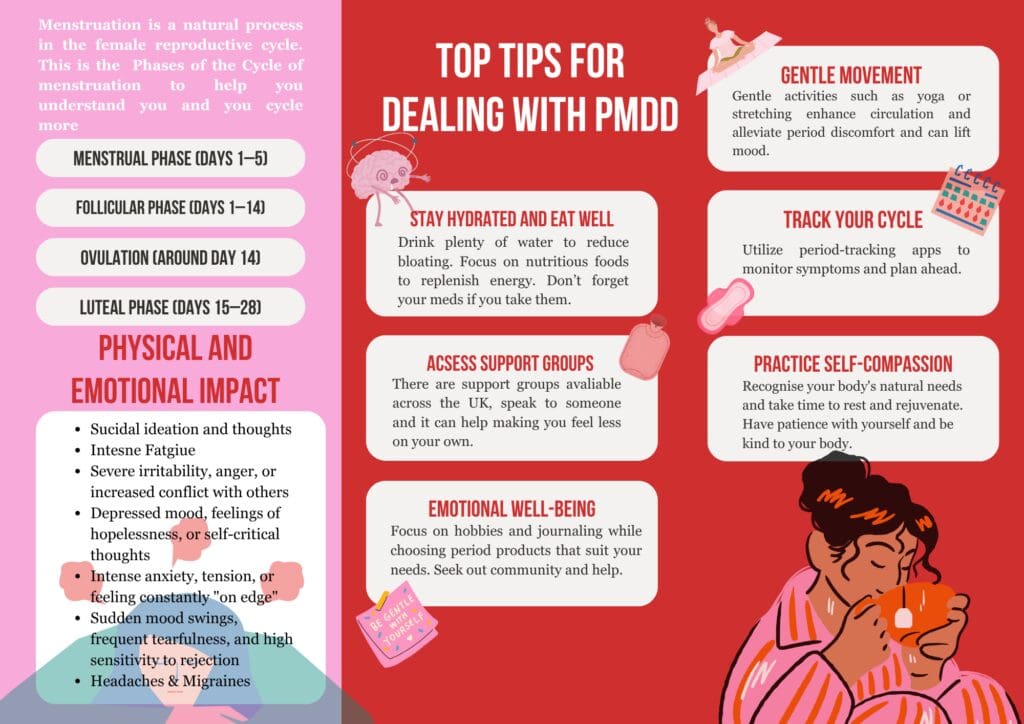
One of the best pieces of advice I can give you is for every woman or person who has a period to track their cycles, and understand each phase. Make note of how you feel during each phase and through that you can work out what you need for yourself, to make you feel better. For those with PMDD give yourself grace, be kind to yourself and if you feel your life slipping away from you get help.
From Frej, Katie and the other women they leave you with a piece of advice for anyone struggling or thinking they may have PMDD.
“It can be classed as a disability and therefore your workplace has a duty to put reasonable adjustments in place if you are finding it hard to work.” Frej says. “You are not alone and even just the simple things can help. I send a blood emoji to my friends who know what’s going on as my way of telling them I need help, It doesn’t have to be complicated.”
“Please do not suffer in silence. Track your symptoms, speak to someone you trust and connect with support groups. Remember how you feel during a bad PMDD phase is not always the full picture of reality.” Says Katie.
“Practice self compassion and patience with yourself – women have been let down by the healthcare system and deserve better evidence based attention and support.” Says Emma, PMDD sufferer and advocate.
“It can be exhausting, but keep advocating for yourself because we all deserve to be heard.”Says Lucy, who was recently diagnosed with PMDD.
Multiple women reached out to me, too many to fit into this article, showing the scale of this cruel disorder. It can be powerful and beautiful to have a cycle, but that comes with understanding and not dismissing the dark side of it, now more than ever education is needed. This is not a new diagnosis, we are now just fighting to be heard.