This article contains discussion of self mutilation. Reader discretion is advised.
To Be Seen is Catherine Opie’s first major UK exhibition but to understand her fully, Ro Wallace is taking a look beyond the gallery’s walls.
There is a particular kind of courage in making yourself visible. The kind that plants your body, scarred, desiring, queer, butch, into the permanent record of the judging human eye. This is how Catherine Opie’s art makes lesbians feel, it’s how her art makes me feel: visible, reflected, seen.
Catherine Opie. has spent more than thirty years doing exactly this, and the National Portrait Gallery’s To Be Seen, the first major UK museum exhibition dedicated to her work, is a long-overdue homecoming.
Opie was born in Ohio in 1961 and has spent her career creating work that asks a deceptively simple question: who gets to be seen, and on whose terms? Her subjects have ranged from gay and lesbian friends in early-1990s San Francisco, to surfers off the California coast, to high school football players, to portraits of her own domestic life. In many of her portraits, she captures her often dismissed and sidelined subjects with deliberate poise, precision, and dignity, mimicking portrait styles traditionally reserved for the likes of kings and aristocrats.
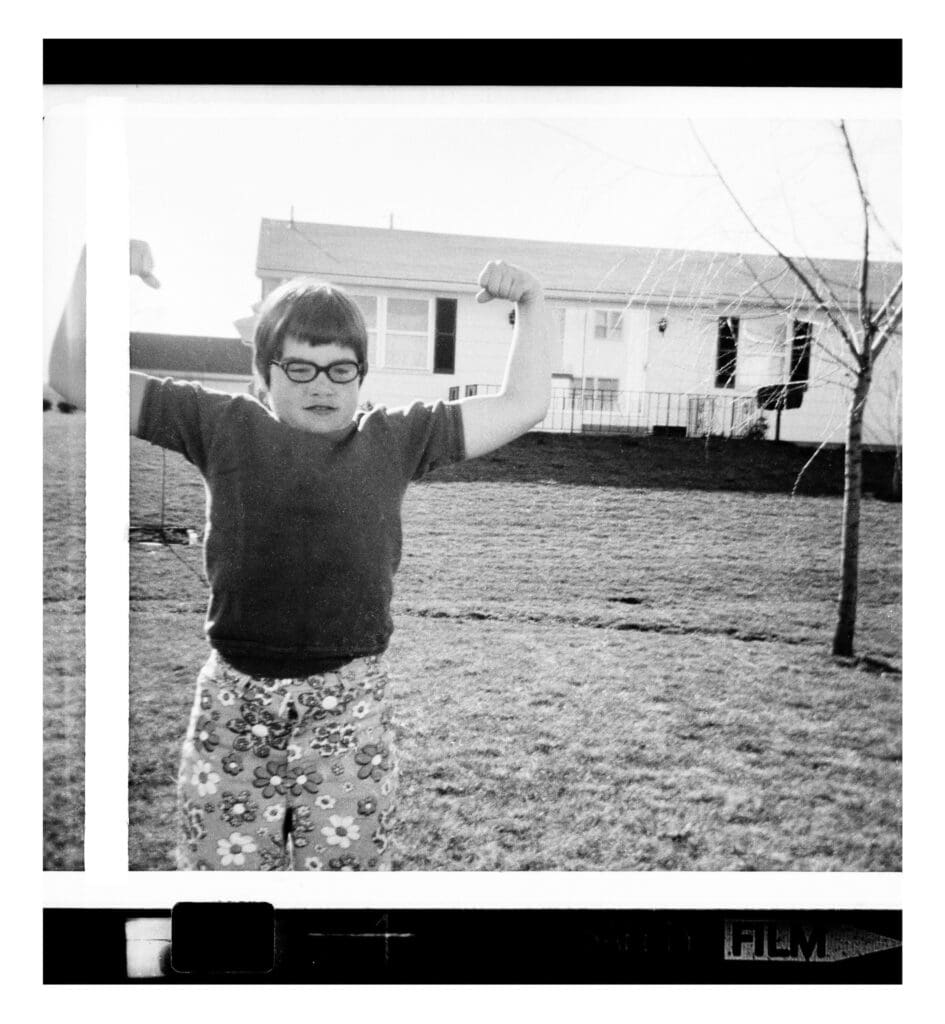
To Be Seen was curated in close collaboration with Opie, who arranged the work as a series of conversations, between images, between eras, between private life, and public statement. The exhibition opens with Self-portrait (1970) made at the age of nine, taken with a Kodak Instamatic camera she received as a birthday gift. It shows us the tender beginning for a passion that would go on to confront some of the most contested questions of American identity and sexuality.
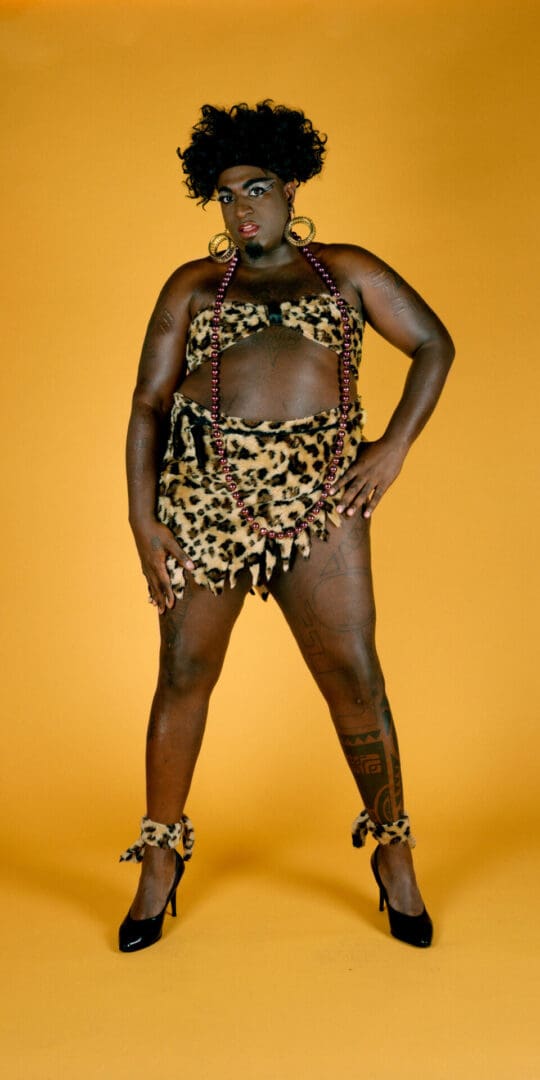
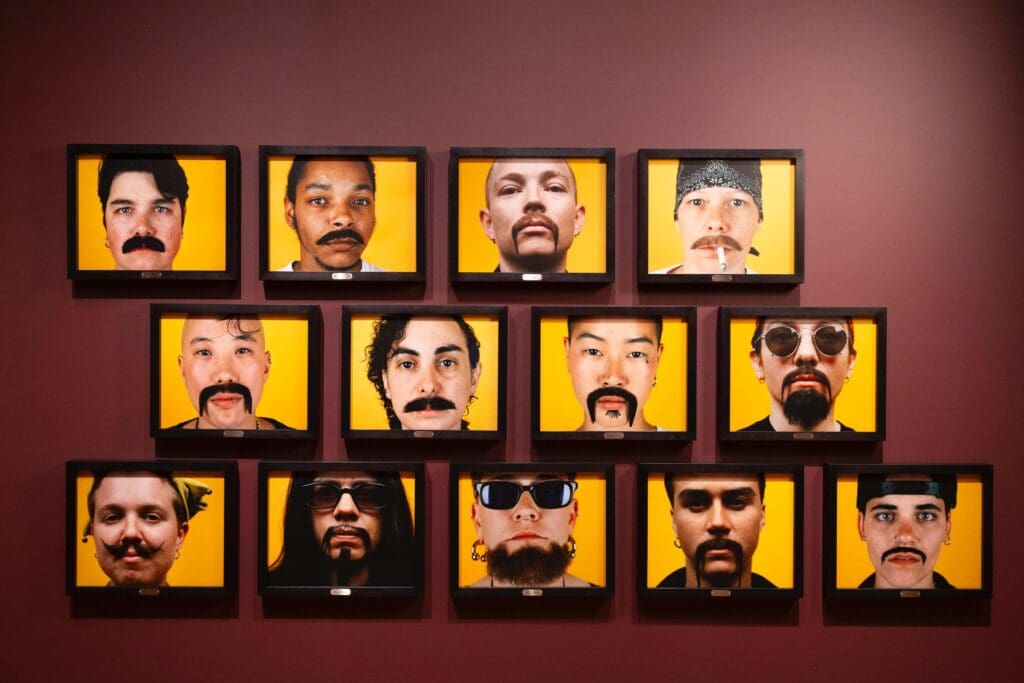
The rooms that follow chart her career. Featured pieces included some of her most striking work, Being and Having (1991), Opie’s first major series, presents close-cropped portraits of her lesbian and queer friends styled with moustaches and other markers of masculinity against flat, bright yellow backdrops. The work is playful and sharp at once.
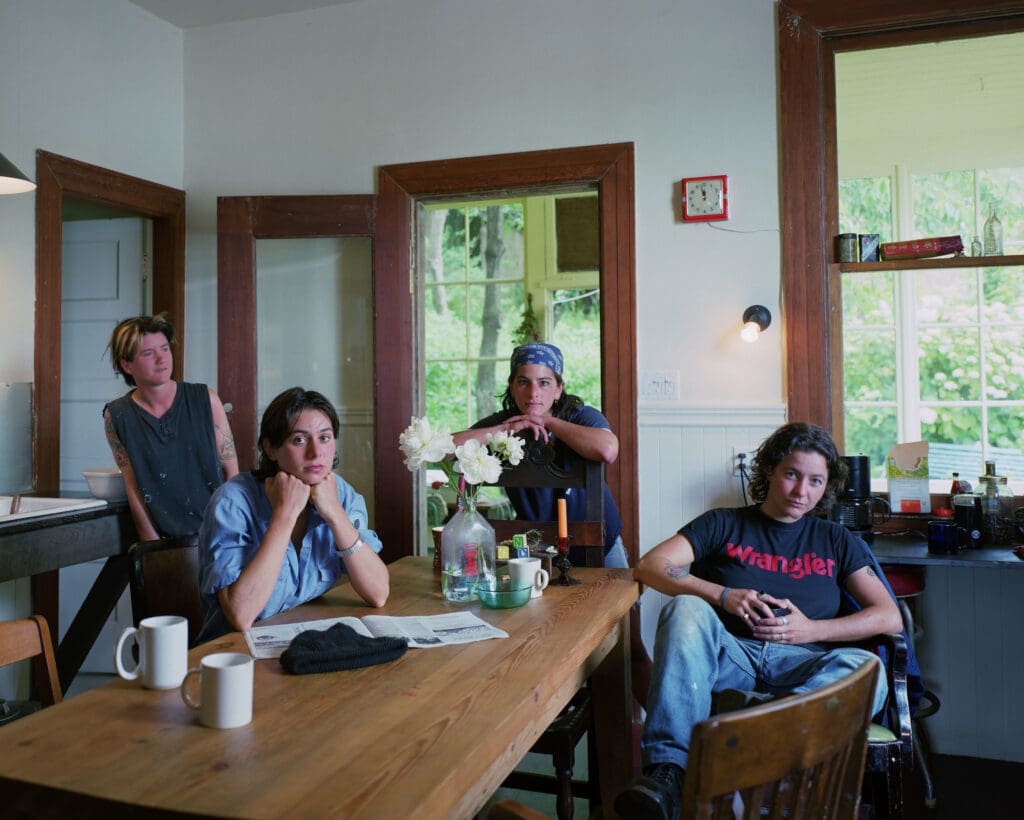
In another corridor, Flipper, Tanya, Chloe & Harriet, San Francisco, California (1995) captures two couples in their shared domestic home, a portrait of community that feels both documentary and deeply tender.
Towards the end of the exhibition, Self-Portrait/Cutting (1993) stops you in your tracks. In it, Opie had a design cut into the skin of her back with a scalpel, a simple house, two women holding hands. The image of domesticity inscribed in blood, still dripping onto her own body. It is one of the most devastating and powerful works in the show, and it calls forth the long fight for the queer family life.
To Be Seen is a curated portrait of a career, not a complete one, and I want to shed light on some of the work that sits outside the gallery’s walls. Opie’s practice has always held desire at its centre, and her explicitly erotic work is not a detour from the political project on display here, it is part of its foundation.
In 1999, Opie spent a year photographing San Francisco’s leather and bondage community, producing the series titled ‘O’. She invited friends into her studio, constructing the images and rendering them in a fuzzy black-and-white palette. The series does not photograph sex as spectacle, it captures intimacy, a thigh, a length of rope, interlaced fingers, the aftermath of sensation. Opie was interested in the beauty inside BDSM, in the tenderness that exists alongside transgression. The work was, inescapably, political. The late 1990s were still shaped by the shadow of AIDS and the ongoing political war against LGBTQ+ rights. The leather community occupied a contested position even with the queer community, where an emerging push towards assimilation was already drawing internal fault lines. Opie understood this, she had felt it personally, which is why five years earlier, she had made what is perhaps her most famous single image.
Self-Portrait/Pervert (1994). In the photograph, Opie poses in a formal composition, arms pinned, wearing a black leather hood, her torso covered in needles, literally piercing through her skin through to the other side. And then, the word PERVERT carved in letters across her chest, her skin still red and raw. It is an image of extraordinary control and vulnerability. It’s another one of her images that sits in conversation with the history of portraiture, with its sitters dignity, formality, and insistence on being looked at, applied to a society that would rather look away than deem the subject worthy of that treatment.
Pervert insists itself on being seen through extremity. The word carved into her skin was a reclamation. The scar it left was still faintly visible ten years later, in a piece featured in the exhibition, Self-Portrait/Nursing (2004), where Opie holds her infant son nude. The etching still visible on her chest combined with the tenderness and love she shares with her child echoes the screams and shouts of her past. The scar left on her chest is a line of continuity between the sexually transgressive and the maternal, forging them together in blood.
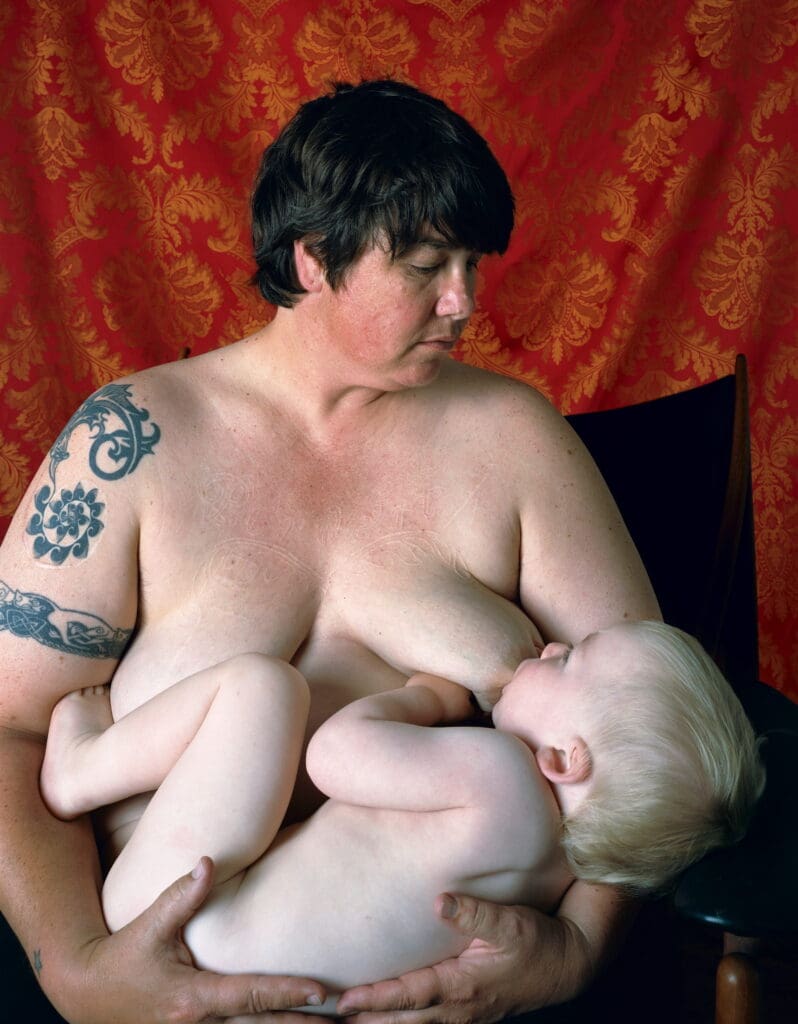
Self-portrait/Nursing by Catherine Opie 2004 © Catherine Opie
The exhibition makes visible the full arc of a practice built on the conviction that desire, queerness, community, and the body are worthy of attention, that they belong. Opie composes her subjects with a heightened sense of care that she expects you to reciprocate. To be seen, really seen, not sanitised, not made palatable, remains a radical act.