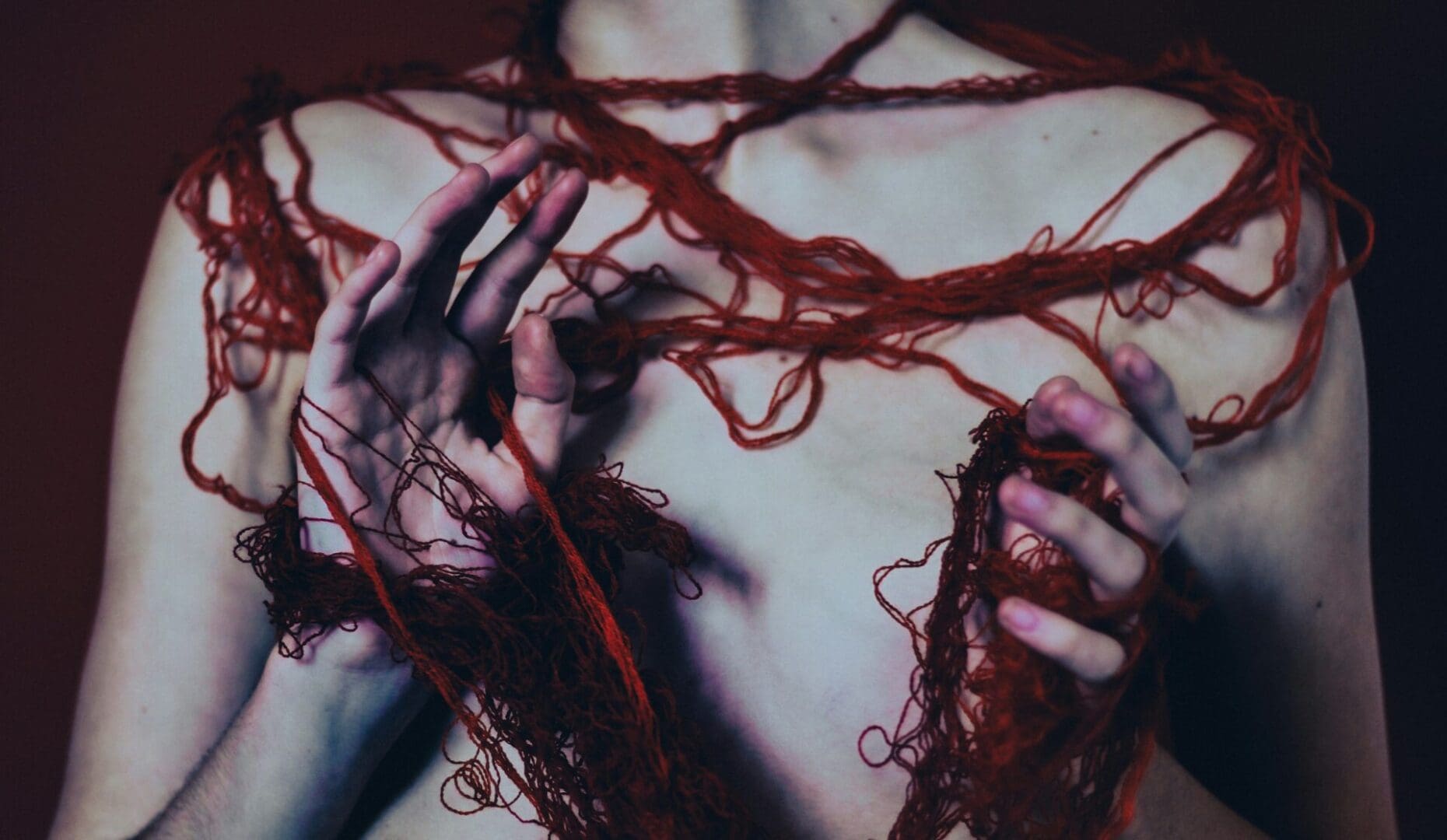
This article contains discussion of BDSM, blood play, sexual roleplay, consent, coercive online communities, and reference to a murder case. Reader discretion is advised.
For vampire kinksters, the allure of the undead goes far beyond a TV crush. This kink subset taps into vampire symbolism both in sex and psyche: think fangs, biting, hypnotic control, and yes – drinking blood. Pomegranate explores.
“I don’t know what it is about a pair of fangs that makes any woman automatically attractive to me!” says vampire kinkster Noah, who is using a pseudonym.
For the 31 year old Reddit moderator at r/vampireporn, the kink holds both sexual and romantic appeal.
The vampire kink centres on the eroticisation of the vampire archetype across sex, porn, and audio erotica. Some people enjoy roleplaying. These scenes could include hypnosis, where the ‘vampire’ exerts control over their human partner, and primal play, where the vampire ‘hunts’ the human. More broadly, vampire kink encompasses a wide range of practices, with sensory play, BDSM and more falling under its umbrella.
Noah continues: “I consume vamp erotica and porn constantly. What you’ll find is it boils down to the vampire turning or draining their partners. For me, the appeal is the fantasy of eternal bonding, that I’d be hers and she’d be mine. That idea of giving yourself to your partner forever.”
“Vampire kinks are really diverse,” Evie Lupine, a US-based online kink educator, tells Pomegranate. “For some kinksters it’s about blood or biting,” says Evie.
“People use tools like needles and scalpels to draw blood, or use fake blood. It’s often more about the sensation than the blood itself. Vampire roleplay gives people a way of approaching blood that can feel intimate and romantic.”
While Noah has never drawn blood himself, 39 year old Celeste has. Having spent years in the vampire community, she shares blood with her partner.
She says: “It is very small amounts, not buckets or wine glasses, like some folks might imagine.”
“Blood is the essential force that keeps us tethered to our bodies and to this earth. Sharing that with someone is taboo, so there’s an intense intimacy around breaking that taboo. It’s like merging your life essence with theirs. I think it’s one of the most intimate things you can do.”
Naturally, activities like blood play come with health and safety considerations.
Evie highlights the risks involved, saying: “Risk is dependant on how blood is drawn. For example biting carries different risks than using a scalpel or needle. STIs are common blood borne pathogens and drawing blood or using sharp objects is an advanced kink practice.
“Participants may explore specialised classes on biting for blood or safely handling sharp objects, and may choose to get a blood test before engaging in blood play.
“They might also use alternatives like fake blood packs to create the sensation of dripping blood. And for the ‘vampire,’ putting a penny in their mouth can give a taste similar to real blood.”
Kayla, 25, speaking under a pseudonym, incorporates BDSM and fake blood to enhance role play with her partner.
“I’ll always be the submissive human while my boyfriend plays the vampire,” she explains. “I love acting as his source of energy and his plaything.”
Does this dynamic spill over into their everyday relationship?
“Not at all,” Kayla says.
“I’m the one wearing the trousers in our relationship outside the bedroom! I know some kinksters like the power exchange to be part of their daily life, but I think that’s less common. For me anyway, balance is key.”
But where does this kink come from? From the brooding Dracula to the glittering Edward Cullen, experts suggest vampire kink has roots in gothic literature and modern media.
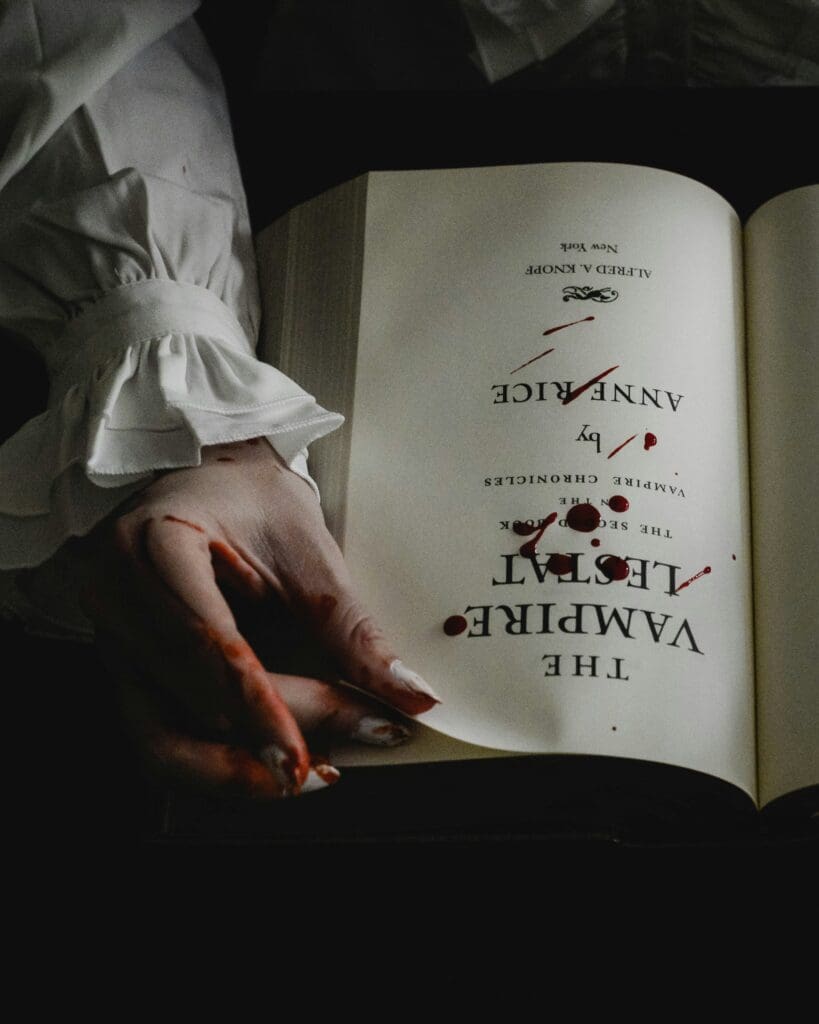
Dr Kaja Franck, a senior literature lecturer at the University of Hertfordshire whose work focuses on gothic monsters, says: “People have a clear sense of what a vampire is due to popular culture. Bram Stoker’s Dracula, in many ways, laid down the blueprint.
Much of it centres on sexuality, sin and desire. Recent texts such as Stephenie Meyer’s Twilight took this one step further by making vampires sympathetic, and reinforcing their romantic appeal.”
“Biting is close to kissing,” continues Kaja. “Transgression and sin are tempting. Pain and pleasure are often intertwined. As with any fantasy, for some, reading about it will be enough, for others, they’ll want to take it a step further.”
Kaja suggests the fascination goes beyond popular culture too, tapping into something deeper in the human psyche: “I think humans will always like things that are a little naughty or taboo.”
The dark romance genre actually moves beyond vampires to other morally grey love interests, who commit condemned acts yet are framed sympathetically. Examples include Joe Goldberg from You and Christian Grey from 50 Shades Of Grey, famously inspired by Twilight. This interest in danger and taboo echoes in society’s obsession with true crime also, indicating a substantial demand for darker narratives.
Kayla addresses aversion to the vampire kink, which she believes stems from media-driven misconceptions. She references the case of Welsh teenager Matthew Hardman who, obsessed with vampires, murdered an elderly woman and drank her blood in the belief it would ‘turn’ him.
“Some people do take their fantasies too far,” Kayla says. “But publicised cases like that are rare and exactly why those into vampire roleplay get judged. It gives the impression that we’re extreme or unhinged. But for me and my boyfriend, we’re both consenting adults. We know where the line is.”
Irrespective of the Hardman case, skeptics worry vampire kink can escalate into unsafe territory, raising concerns about consent and harm.
While many kinksters do keep things fantastical and don’t genuinely believe they’re vampires, Celeste says she has seen firsthand what can happen when those boundaries begin to blur.
In her younger years, she became involved in an online group that she says operated more like a cult. Its moderators claimed to be real vampires and told members they were watching them, insisting they would eventually transform as well. The experience created a lingering sense of paranoia and fear for Celeste, who has since spoken about it publicly.
She says: “Not having a clearly delineated line between fact and fiction is very dangerous, because there’s no opportunity to decompress from situations that might distort someone’s reality.”
While the group Celeste joined was not explicitly kink-based, there was sexually charged roleplay, and many of the participants had a kink for vampires.
“That group, just as an example, was neither supportive nor safe. Sadly, because it’s more underground, I think this kind of kink can be primed for the presence of unstable, unwell, and abusive people. That’s obviously not a blanket statement about all participants, or even all communities, but it’s an aspect that ought to be acknowledged.”
Consent and communication are vital to a positive kink experience.
Jody Sill, a UK-based psychosexual therapist, explains: “In primal play, the fear of being hunted might simulate arousal. But the key word here is play. Fear should be premeditated and consensual, with boundaries, safe words, and clear communication.
“Consent also means that minds can be changed at any point, which helps to keep people safe. All kinks have the potential to do harm if not thoroughly researched and practiced in a way that is considerate of a person’s physical and mental health, needs, and limitations.”
Noah echoes this: “Consent is king, as is maintaining the line between fiction and reality. I know for a fact that vampires don’t exist. I know it’s fictional and that I’m not going to become a vampire one day. I can recognise it’s simply a kink.”