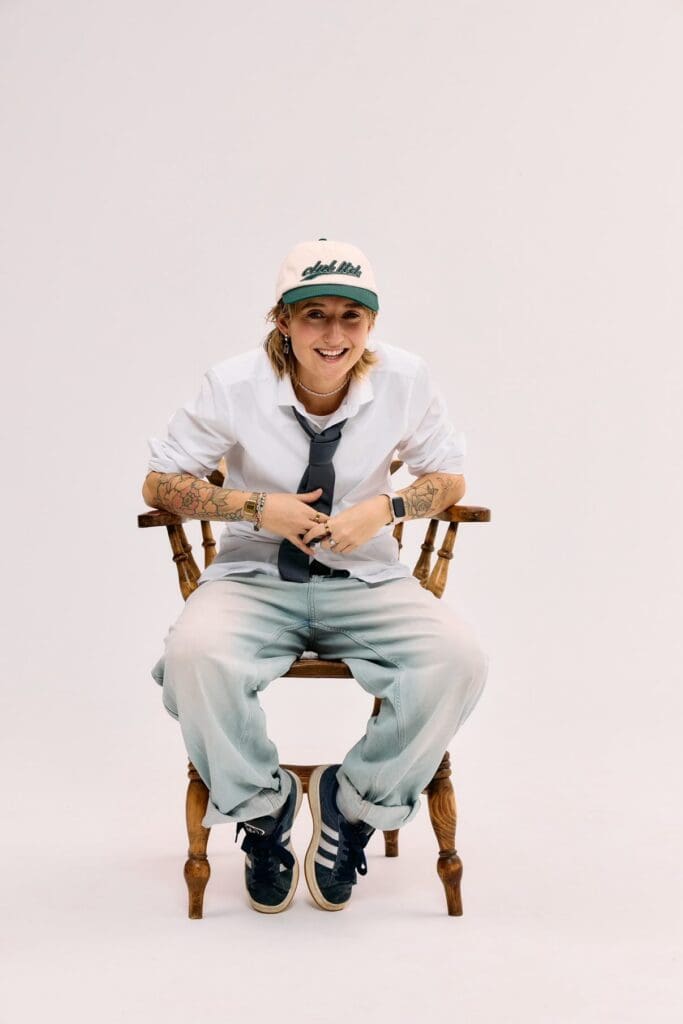
The global sexual wellness industry is worth an estimated $26 billion and is only continuing to grow, with new brands and products entering the market every single year.
For lesbian and sapphic women, however, there is little to no acknowledgement that they exist as a consumer in this market at all. The reality for many is shelves flooded with products that were never designed with them in mind. A gap that has, for too long, gone entirely unaddressed.
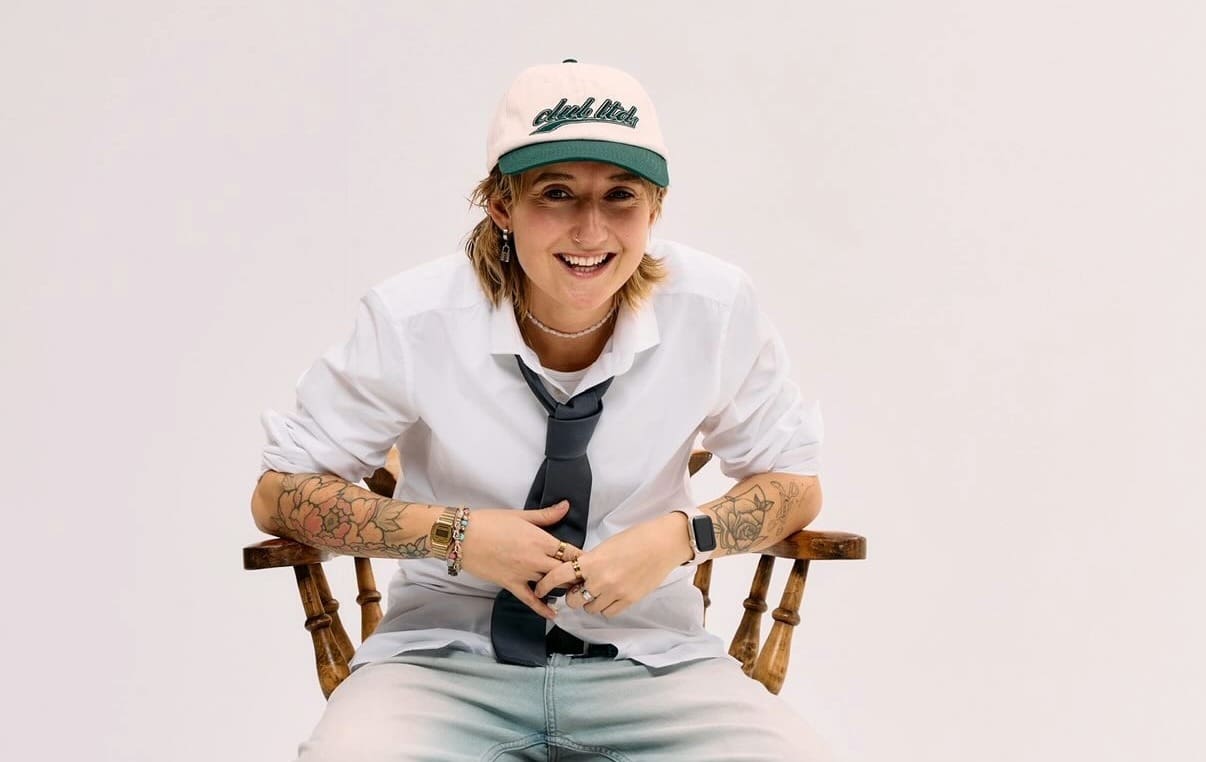
And for one lesbian woman named Katie Norman, that reality became the reason to act.
Labeless is the UK-based lesbian-owned sexual wellness brand she founded with one clear purpose – to bring authentic lesbian representation to the forefront of an industry that has always been seen through an entirely male lens, and to ensure that lesbian desire is no longer overlooked.
Speaking about what led her to start the brand, Katie explains that the decision came directly from her own experience.
“‘I was looking to purchase some toys to bring into intimacy, but there was a lack of anything I felt represented by,” she says.
‘Instead of waiting for the big companies to try and pass us as a subcategory – as an afterthought – I thought, you know what, I’m just going to do this myself.”
Even the brand’s name, she explains, speaks directly to the community it was built for.
“Within lesbian culture, there has long existed a pressure to define yourself – top, bottom, switch – to claim a label before intimacy has even begun, “It can just put you in a box,” Katie says.
“When it comes to intimacy, you don’t have to feel like you have to fulfil a certain role.”
Running the brand is also entirely Katie’s responsibility, managing everything herself from social media to product development to campaigns.
With the support of her partner of four years and a trusted female photographer who brings her creative vision to life, Labeless is female-dominant in every corner of its workspace.
“It really does help having that support system around you,” she says. “If you are so passionate about something you are building, the people in your life will see that passion and just jump on board with it.”
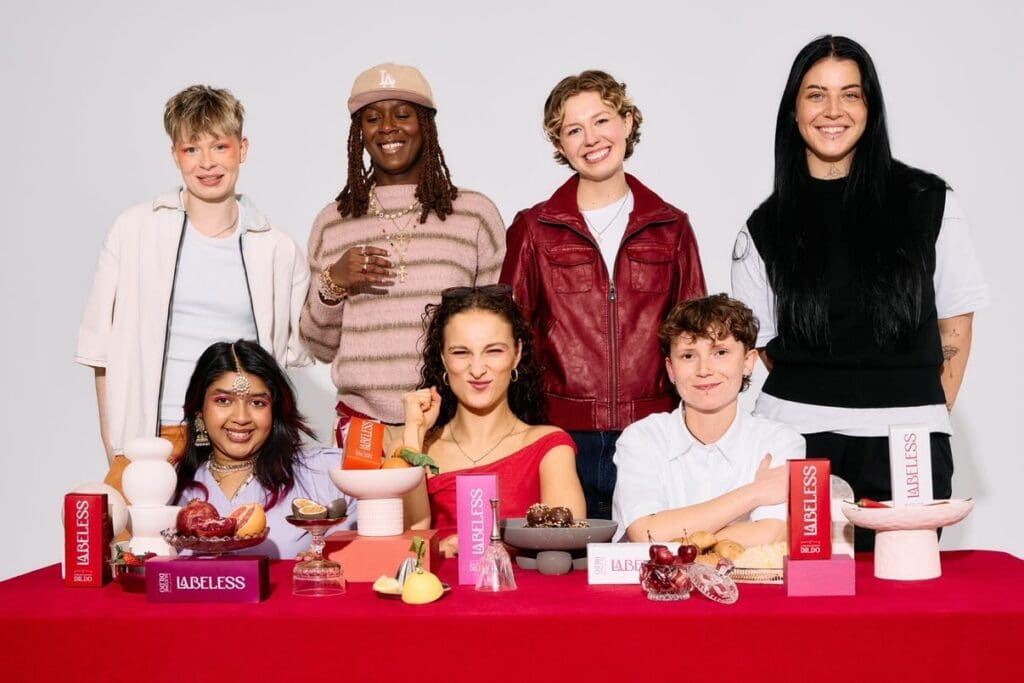
It is a stark contrast, she argues, to the big corporations that have long dominated the industry.
“You’ve got all these massive corporations probably run and dominated by people who haven’t actually had a lived experience,” she says. “If you don’t have that, how are you ever going to know what truly works?”
Nowhere is that lived experience more visible than in the products she has created.
The Labeless product range spans from toys, accessories to self care, each designed with the same meticulous attention to detail that goes into every corner of the brand.
Among the range, is the dildo collection that speaks most loudly to what Labeless is all about.
Spanning from a five-inch slimline to a seven-inch, the collection offers something the industry rarely has.
“They’re always just assuming people like us are going for a six or seven inch – and then we have nowhere else to go if that doesn’t suit us,” Katie says.
“I wanted to make sure that if someone wants to start from the beginning, they can – and then work up from there at whatever pace suits them.”
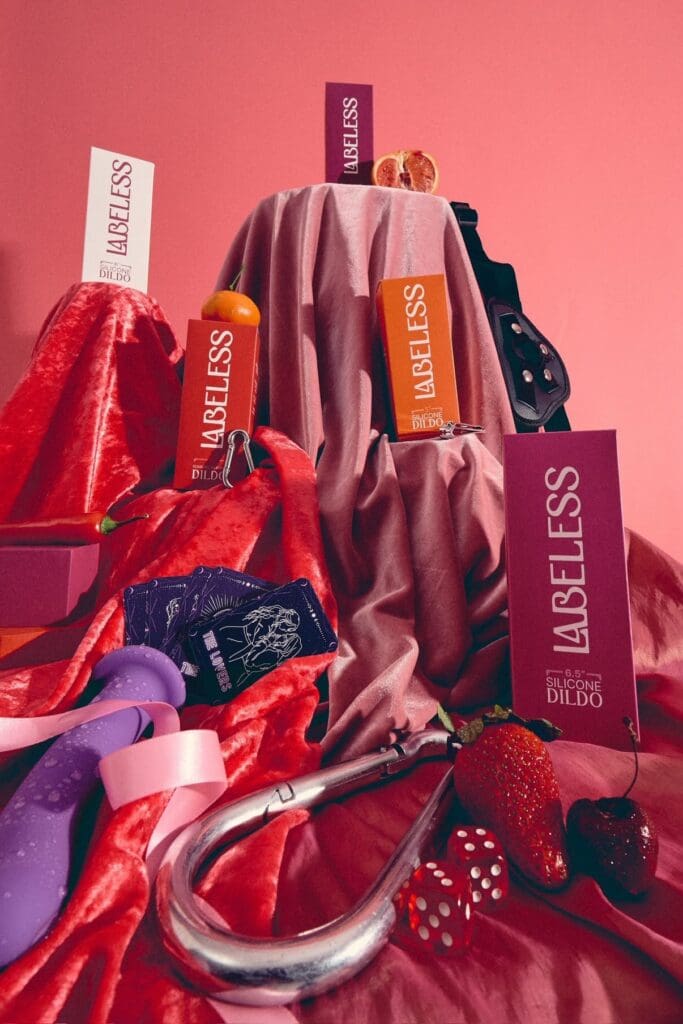
Credit: @visionrhi on Instagram
Research from Lovehoney found that most dildos sold, sit between six and seven inches – a range that, for many lesbians and sapphic women, simply does not reflect what they actually need.
The design of the toys themselves is just as deliberate, rooted in her determination to move away from what the industry has long defaulted to.
“‘The toys are either made from the male gaze or just not really thought of at all,” she says. “You don’t want the veins; you don’t want anything that is represented from the male gaze – you want something that feels authentic to yourself.”
Every product in the Labeless range has been held to exactly that standard.
“It is not designed from the male gaze,” she says. “It is designed from the lesbian eye.”
Whilst the products themselves are where that ethos is most visible, Katie’s efforts don’t stop there. The packaging, she explains, was given the same level of scrutiny. Where most brands display the toy’s silhouette front and centre on the box, Labeless choose deliberately not to.
“You don’t want to be scared off the first thing you see,” she says, “I wanted to make sure people know it’s designed for lesbians, by lesbians – without that being the first, intimidating thing you encounter.”
The toys are also harness-compatible for strap-on play and feature a suction cup for solo use, designed around the way lesbian women want to experience intimacy.
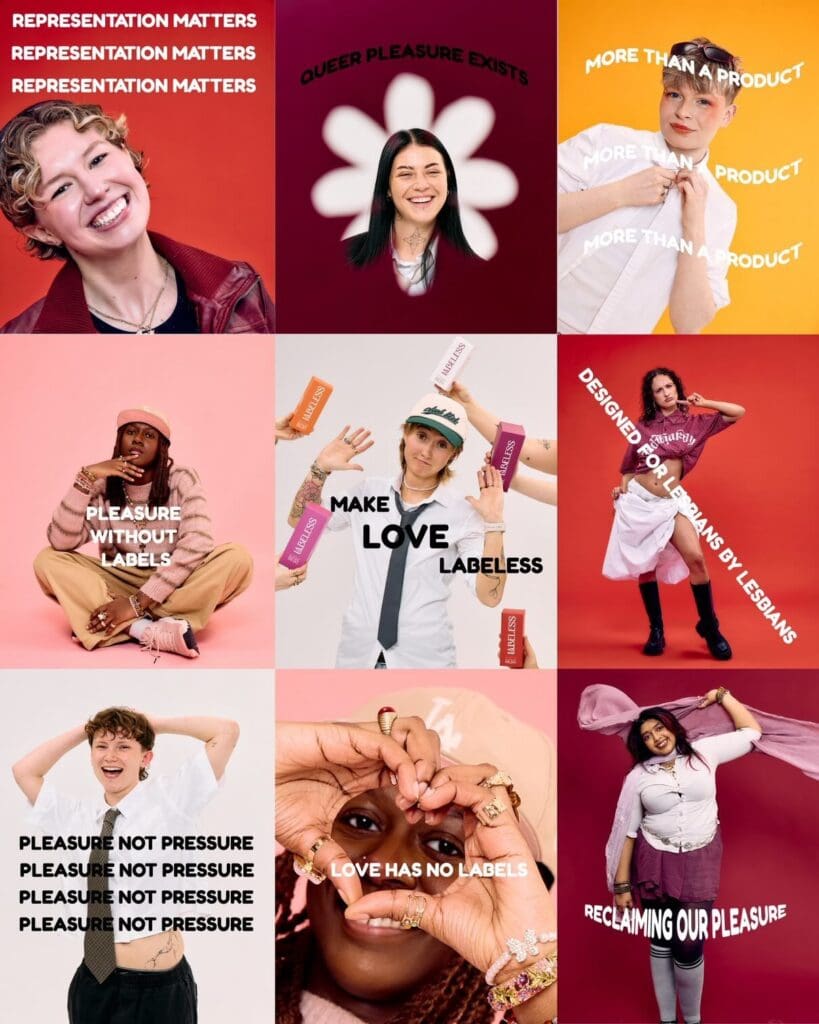
The wider industry, however, remains a very different story. The same corporations that have long dominated the sexual wellness space continue to profit from lesbian and sapphic women without ever authentically representing them.
Part of the problem, Katie argues, is how deeply fetishised lesbian and sapphic sexuality has become – so much so that it has turned into a taboo even within the community itself.
“Where we’re so sexualized through the male gaze, people are also sometimes scared – from a lesbian or sapphic point of view, if they start talking about it, people are going to look at them and sexualize them. So it’s also come as such a taboo.”
A recent report that Pornhub plans to launch a lesbian-specific platform, framing it as representation, has only highlighted just how deep the problem runs.
“It’s just complete fetishisation,” she says. “They think they’re doing something well by putting people at the front line – when it’s not. Last year, they made the most profit off the search bar being lesbian sex. If they don’t have a lived experience, they’re just going to keep seeing these numbers and think, I’m going to keep doing these things – even though they have no idea what it relates to. But they can see it’s making numbers.”
Beyond the sexual wellness industry, the absence of authentic representation within the media has proven just as damaging.
“Growing up there was no representation – nothing shown in the media. And when it was shown, it was shown in a sexualised way. That is why people never speak up about their sexuality or lesbian sex, because the only thing in the media currently is from the male gaze – the sexualisation of two girls kissing.”
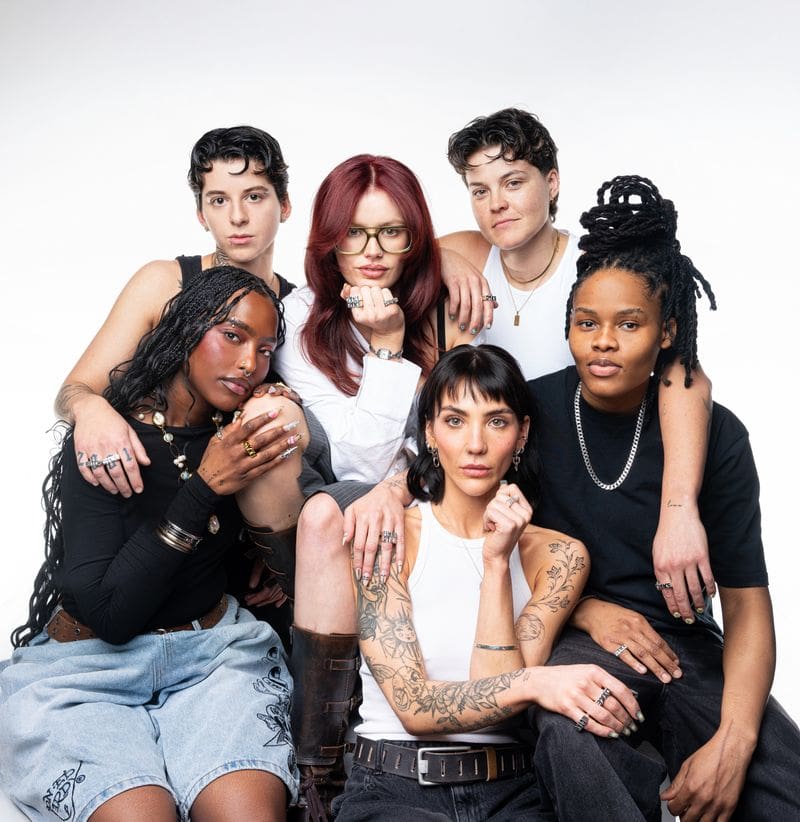
Credit: Danni Jones @danniijophotography
When BBC Three’s I Kissed a Girl debuted in 2024, it outperformed the channel’s slot average by over 100% – and yet it has since been axed, alongside its male counterpart I Kissed a Boy, with the BBC citing funding challenges. Netflix’s The Ultimatum: Queer Love met the same fate.
“Those shows were designed specifically for us – not for the male gaze – but when it is designed for us, it just gets cancelled,” she says. “It is just like always going back so many steps. We are trying to show ourselves in the media because there is still such a lack of it.”
All of this, Katie says, is exactly why Labeless exists, and why creating a genuine safe space for lesbian and sapphic women has been at the heart of everything she has built.
“If someone is exploring their sexuality or taking the leap of bringing sexual wellness products into their life, I want to create that safe space for them”, she says. “So they are not influenced by something made from the male gaze, or anything that doesn’t truly represent them because they don’t feel they are living up to the stereotypical lesbian type.” She says.
“I want to have representation at the forefront – not just as a subcategory.”