This article discusses BDSM, rope bondage (kinbaku), power dynamics and potential physical risks including asphyxiation. Reader discretion is advised.
“Tying together is like taking an adventure together,” says Shin, “We both know that it’s risky and that we’re vulnerable – yet we’re willing to take that risk and have fun.”
Shin Nawakiri, 52, is a renowned kinbaku rigger and performer currently based in Taiwan.
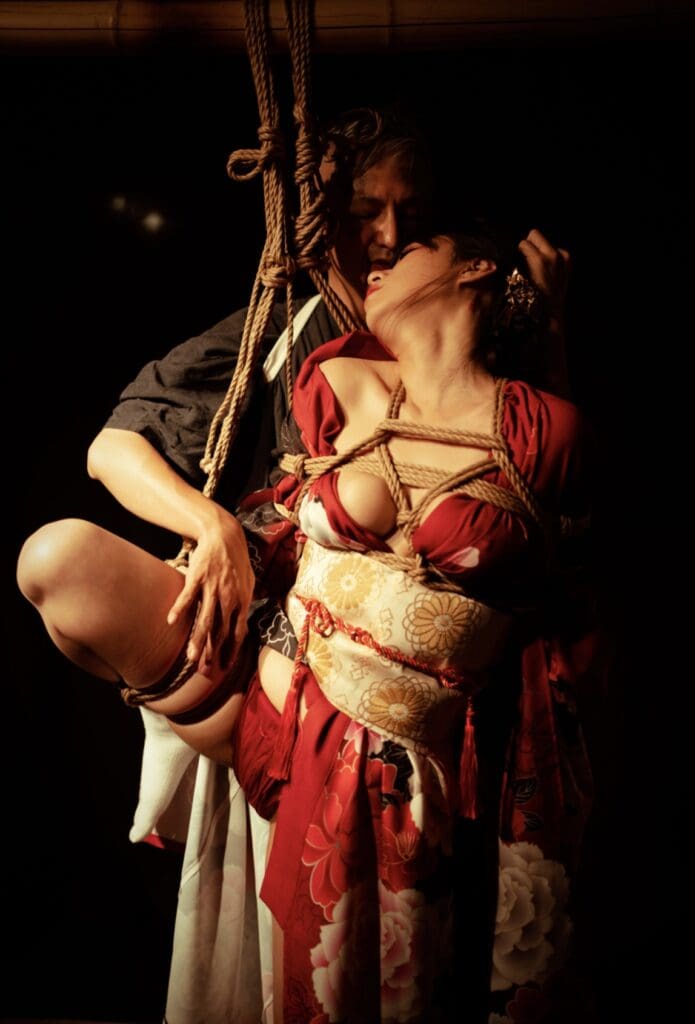
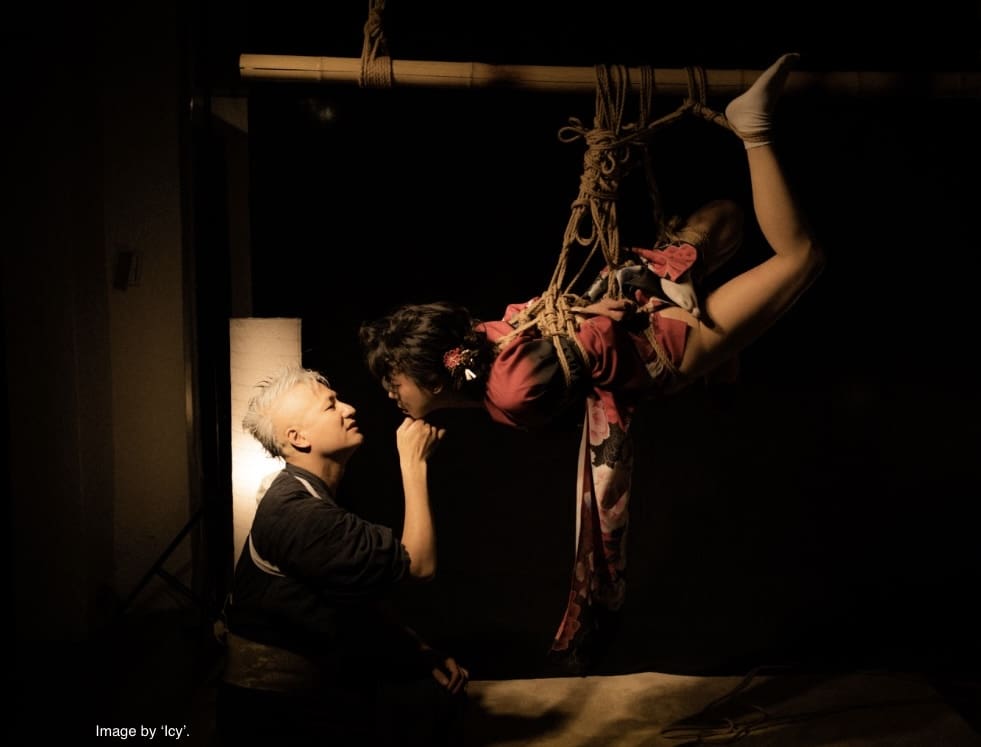
Kinbaku, translated as ‘tight binding,’ is the traditional Japanese art of rope bondage. It blends intricate rope work, aesthetic expression, and a powerful sense of connection between the rigger and the person being bound.
Associated with meditation, art, and often erotic expression, practitioners place significant importance on communication and safety. The practice involves wrapping and securing the body in visually intricate geometric patterns, and can include physically demanding positions such as suspension.
“I started learning kinbaku in 2003 when I stumbled upon a series of classes being held at a bar,” says Shin. “At first, it was just to learn some cool new tricks. But when I saw how intricately other people were tying, I started taking it more seriously and wondered if I could become as good as they were.”
Shin certainly did.
In 2004, he and his friends established Taiwan’s first BDSM advocacy group, at a time when the local kink scene was still in its early stages. Early gatherings were small, informal spaces where he occasionally demonstrated tying techniques to curious attendees. “People told me I looked like a natural when I was tying, so I started tying in front of people more.”
By 2011, as his practice developed and he began teaching more regularly, Shin was invited to perform in Tokyo at Toubaku, an international event known for featuring some of the world’s most experienced rope performers. It marked his first international appearance and, he says, the point when his practice became more serious and established.
Shin has since become an internationally acclaimed kinbaku artist and instructor. He has authored an instructional guide on rope bondage, performs globally in cities including London, Moscow, and Macau, and regularly leads educational workshops.
For Shin, rigging is a form of self-expression.
“I feel as though I reveal who I am through tying and express desires I might not share in other settings,” he says. “When the person being tied enjoys what I do, I feel accepted for who I am. That’s a very beautiful experience.”
He says people derive pleasure from being tied for many different reasons. “It is not only only an erotic practice but an art form, so I always ask what someone enjoys about rope before I tie them,” he says. “Some enjoy the feeling of being dominated. Others enjoy trusting the rigger and feeling safe and cared for. Some enjoy the intimacy it creates, and others say it makes them feel empowered, because they could do something difficult when suspended.”
He adds that experiences can vary widely from session to session. “It’s like dancing with somebody – not everyone will be the perfect dance partner.”
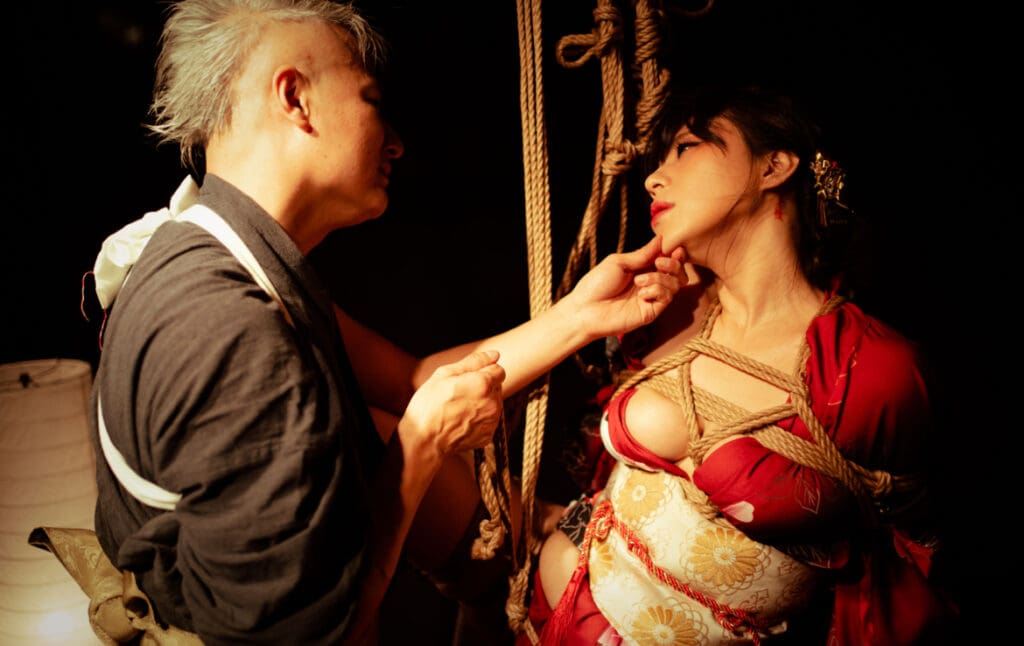
When the connection is right, Shin says, something magic happens. He describes it as a form of non-verbal communication.
“I’ll express something through rope – like strongly embracing someone or signalling desire – and my partner will respond through their body, with sounds, small movements, or facial expressions,” he says. “Then I respond to that in turn. It becomes an intricate, ongoing dialogue.”
But this approach has evolved over time.
Early in his practice, Shin’s performances relied heavily on spectacle: fast tying, difficult suspensions, and striking transitions. That changed after watching a performance by Naka Akira, a celebrated kinbaku master.
“It was completely different… slow, quiet, emotionally charged,” he recalls. “The moment they stepped on stage and looked at each other, his partner began to cry.”
Shin says he was struck by the intensity of the moment.
“The whole space was filled with shared emotion. It was simple, but deeply honest. It felt like something only possible between people who truly know and trust each other.
“I realised I didn’t really understand kinbaku at all before that performance. I had been hiding who I truly was by showing only technique. From that moment, I wanted to tie differently.”
Shin notes that kinbaku can be dangerous without proper training, with life-threatening risks including asphyxiation and circulatory blockage due to intense compression.
“Both parties are in a vulnerable position, particularly the person being bound, who is at risk of physical harm. While kinbaku can be benign when practiced with consent and good intent, it can become oppressive depending on the dynamics between the people involved.”
Kinbaku should only be practiced by those who are suitably trained and knowledgeable in safety, consent, and respecting boundaries.
“It’s a courageous practice,” finishes Shin. “We do our best to take care of each other, we experience all the emotions along the way, and we come back together safely. That whole experience is beautiful to me.”