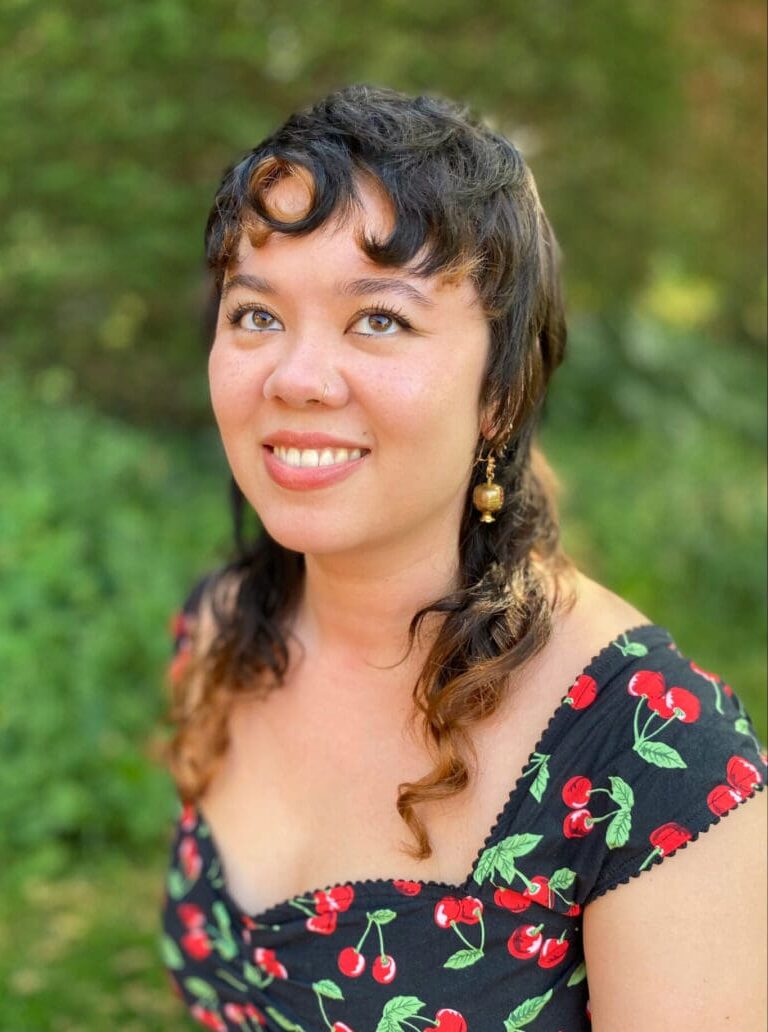
After teaching sex education sessions to teenagers, Elyssa Rider began sharing the questions young people had asked her that day – funny ones, surprising ones, the kind that made you stop and think. But the people responding in her DMs weren’t there to laugh along.
“What kept happening was my friends and followers would message me being like – and what did you say the answer was? And if someone was in that experience, what do you think you would advise them?”
These weren’t teenagers who’d missed a class. These were grown adults, ranging from 28-40s, who had been through school, through relationships, through years of navigating their own bodies – and still didn’t have the right information.
“I realised adults are being failed,” Elyssa said. “We had this really lacking sex education and there are these huge gaps in our knowledge. There is a need, a hunger and people really want to know.”
That hunger is what led Elyssa and her co-founder Sophie to build Softcore Sex Ed in 2022 – a candid, trauma-informed, queer-centred adult sex education platform hosting in-person workshops in London and recently, Tokyo.
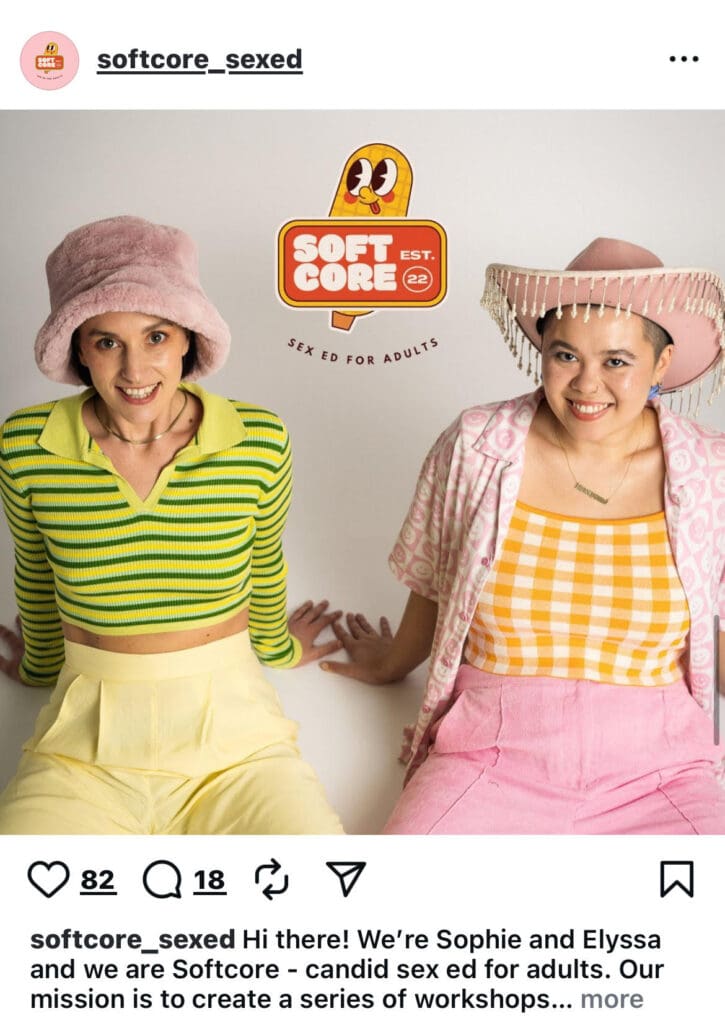
Elyssa grew up with an unusual advantage – her parents had an open-door policy on questions about sex and relationships. From there she became a voracious researcher, spending hours online and pouring over the work of American sex educator Betty Dodson.
“When Dodson wrote that the hymen as we knew it wasn’t real, it sparked this curiosity in me that I followed for the rest of my life.”
Most people didn’t have that. You may have had a consent video, or a lesson on how to put on a condom, and then nothing. And underneath even that thin provision was something heavier – a cultural architecture of shame that made sex unspeakable and a persistent belief that adults – particularly women and queer people – weren’t supposed to want to know.
“Shame is hard to shed. It leaves deep roots and it stays.”
Elyssa speaks about this with particular weight – having grown up in what she describes as a high-control religion, the impact on how she understood her own body, her own desires, her own identity was profound.
“It wouldn’t be an exaggeration to say that sex education changed my life. The power of accurate information about sex, relationships, and bodies is enough to challenge your whole world view.”
That shame, she is careful to point out, isn’t unique to any one faith or culture. It crosses communities and continents, carried forward by generations of families who were themselves never told the truth.
“When there is shame, it breeds secrecy. And secrecy is really the polar opposite – things can go under the radar that are not okay and none of us benefit from that.”
The failure to question long-held assumptions has deepened the gap further. Elyssa points to puberty resources that told girls they would grow breasts, as though that were a fact about girls rather than about bodies in general.
“Is that something that only happens to girls? No – there are plenty of boys who also start to grow breast tissue. And I’m sure that’s also the case for other genders and intersex people – so why not rewrite the resource.”
The cost of that secrecy isn’t small. It lives in people’s bodies and relationships, often for years before they even have the language to name it.
Elyssa talks about adults who arrive at workshops carrying complicated histories – survivors who have learned to leave their bodies during intimacy, people who have spent decades viewing themselves through the lens of performance rather than pleasure.
“As someone who was raised a woman within heteronormativity, it has taken me so many years to learn how I actually feel about things, because this whole time I’ve been viewing myself through the lens of performance. But why am I performing, when pleasure should just be me being happy?”
That question is at the heart of what the adult gap produces – a fundamental disconnection within people reaching adulthood, not being told that their bodies belonged to them, that their pleasure was legitimate, and that what they experienced in relationships had a route to healing.
“The older we get, the more people we meet who are also survivors.
“There just isn’t necessarily always this acknowledgement of the fact that this is a very common experience. So why are we not making space for it?” Elyssa said.
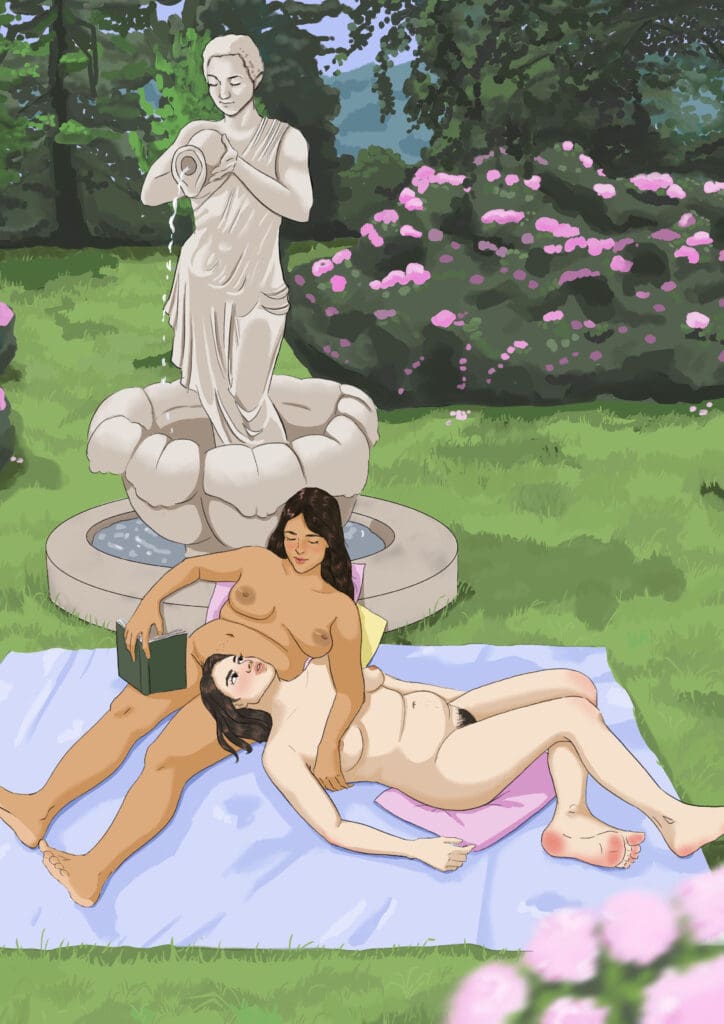
The answer to this gap, increasingly, is people like Elyssa – independent sex educators working outside the structures of government funding to build the provision that institutions either can’t or won’t.
“We’re not a charity, we’re not funded by the government, so we don’t have to have a political alliance. We can say what we want to say without the threat of our funding being revoked – which is no small thing.”
In practice, that means Softcore can acknowledge and unpick systems of oppression, ensure provision is decolonised, and stand up for trans, Black and global majority, and queer communities without consequences.
The reach of that independence has already extended beyond London. When Elyssa and Sophie took their pleasure workshop to Tokyo, they found that the adult gap is not a British problem. In Japan, Elyssa encountered beliefs she hadn’t anticipated, including the idea that STIs were something only foreigners contracted.
“Of course it’s not true – that’s a myth, but it made me realise how much the surrounding beliefs about sex can vary.”
Despite the differences, the hunger was the same: similar questions, similar gaps, and the same relief at finally being in a room where these things could be discussed plainly.
A Softcore workshop is deliberately designed to avoid slipping into lecture mode, with interaction and comfort coming first.
“Often teaching happens after people have been at work so they want to have fun.”
There’s a group agreement at the start, setting the expectations of the session. This is followed by games, activities, and discussions, with education woven throughout- and consent present at every stage.
The trauma-informed framing is equally deliberate. Elyssa and Sophie work from the assumption that someone in the room will have had difficult experiences – not because they want to make the space heavy, but because pretending otherwise does those people a disservice.
“We’re really careful about how we set up the space. It’s not a space for disclosure – but our signposting is really good, so if things come up for people they know where to go.”
Practical tools are also offered alongside this in workshops – grounding techniques, EMDR-based physical activities, and ways to stay present during intimacy.
Elyssa is also keen to challenge the idea of the “perfect victim.”
“What you might imagine a survivor’s reaction looks like isn’t always the case.”
Central to everything is Softcore’s queer-centred approach.
“This means that to be queer is essentially to question everything, the things you’ve been taught growing up. Maybe there isn’t a gender binary. If that’s not right, then what else isn’t? What if these are just frameworks I’ve been taught? So instead of having ‘straight person content’ and ‘queer person content,’ everything is inclusive.”
In practice, this means no assumed sexuality, no assumed relationship structure, no assumed body.
Elyssa is also an illustrator, which means when inclusive visual resources don’t exist, she makes them, showing genitals as a whole range, including intersex and gender-variant bodies. “We don’t want to box things that don’t need to be boxed.”
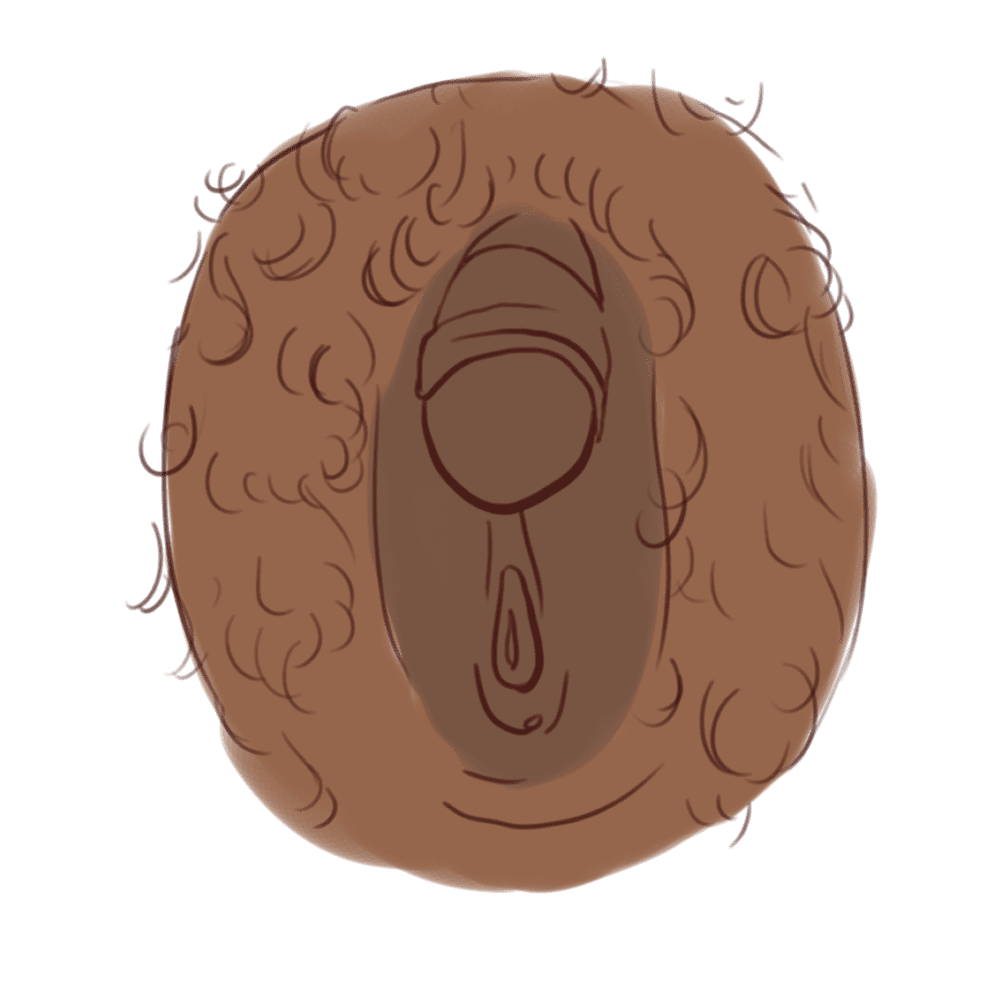
“We all have a right to pleasure and it doesn’t have to involve someone else.”
None of this is happening in a vacuum. The forces that created the adult gap are still active and in some ways getting louder.
Elyssa points to the current political landscape – the rise of the far right, the surge of anti-trans rhetoric, the slow erosion of what sex education is permitted to include.
“When we allow accurate sex education to be watered down or minimised, we do all young people a disservice. There’s a real-life consequence – not only for trans people’s lives and trans kids growing up, but also on what educators are able to teach.
“As soon as you start putting those restrictions in place, sex education becomes inaccurate, or gets used as a tool of silencing. Our primary focus should be on accurate, age-appropriate sex education – not a political tool.”
The digital landscape offers no respite as independent educators often find themselves being censored or shadow-banned.
“Why are we all out here writing sex like ‘s3x’ and using the grape emoji? It’s ridiculous. But if I don’t play by those rules, my stuff gets hidden or deleted.”
She also notes the bleak irony of this censorship – independent educators free themselves from institutional control only to find themselves subject to the content policies of billionaire-owned platforms.
The adult gap is real, and it costs people – in their bodies, their relationships, their sense of what they’re allowed to feel. But it can be filled, not by government mandate or a social media algorithm but by platforms like Softcore: people in a room, being told the truth, and having the courage to ask questions.
“Nuance and unlearning are hard,” Elyssa said. “But that will be the thing that brings us the most joy in the end.”
To see Softcore’s work, visit their instagram.