*No image contains any blood
You’ve heard the saying, ‘beauty is pain,’ but few would think that could mean having over 100 temporary piercings done in one sitting just to be taken out a few hours later.
But for some, this is the exact thing that makes their body feel beautiful, a temporary artform based in expression, strength and a celebration of the human form.
Whilst many assume they are only for kink purposes, known as needle play, many body piercers actually separate themselves from this and perform them as a form of artistry and to try new skills, or even for someone to push their body’s limits.
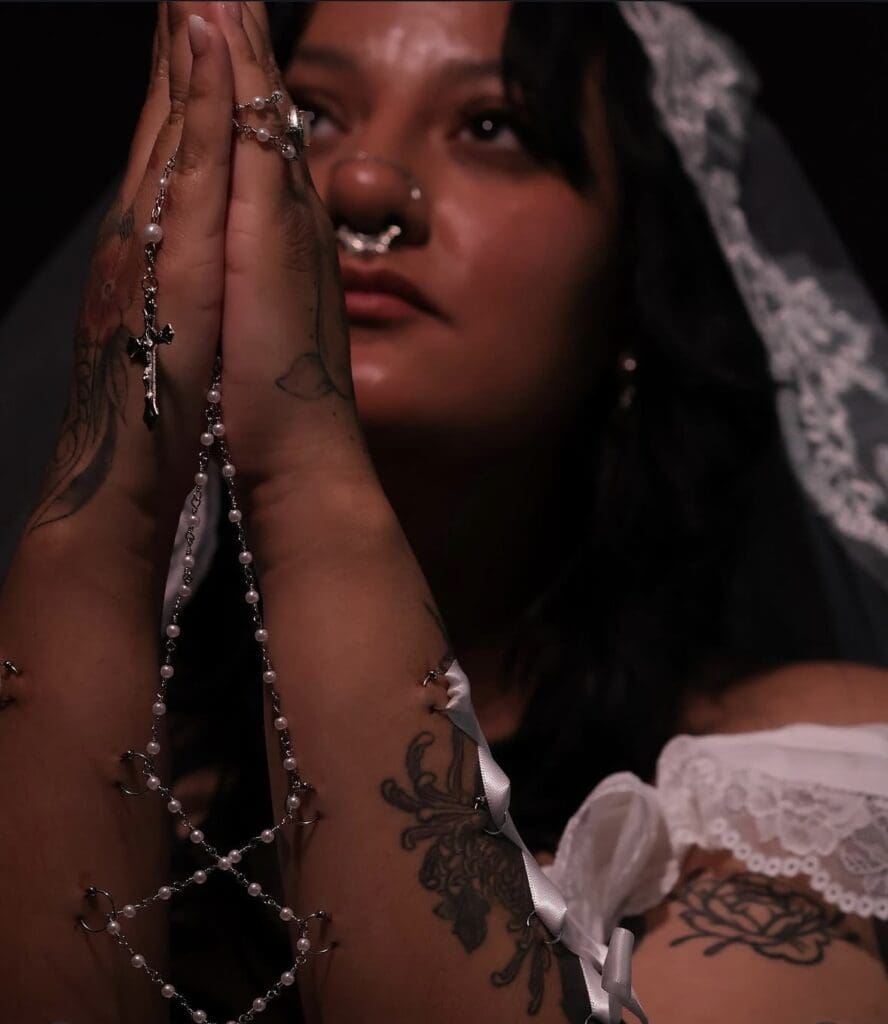
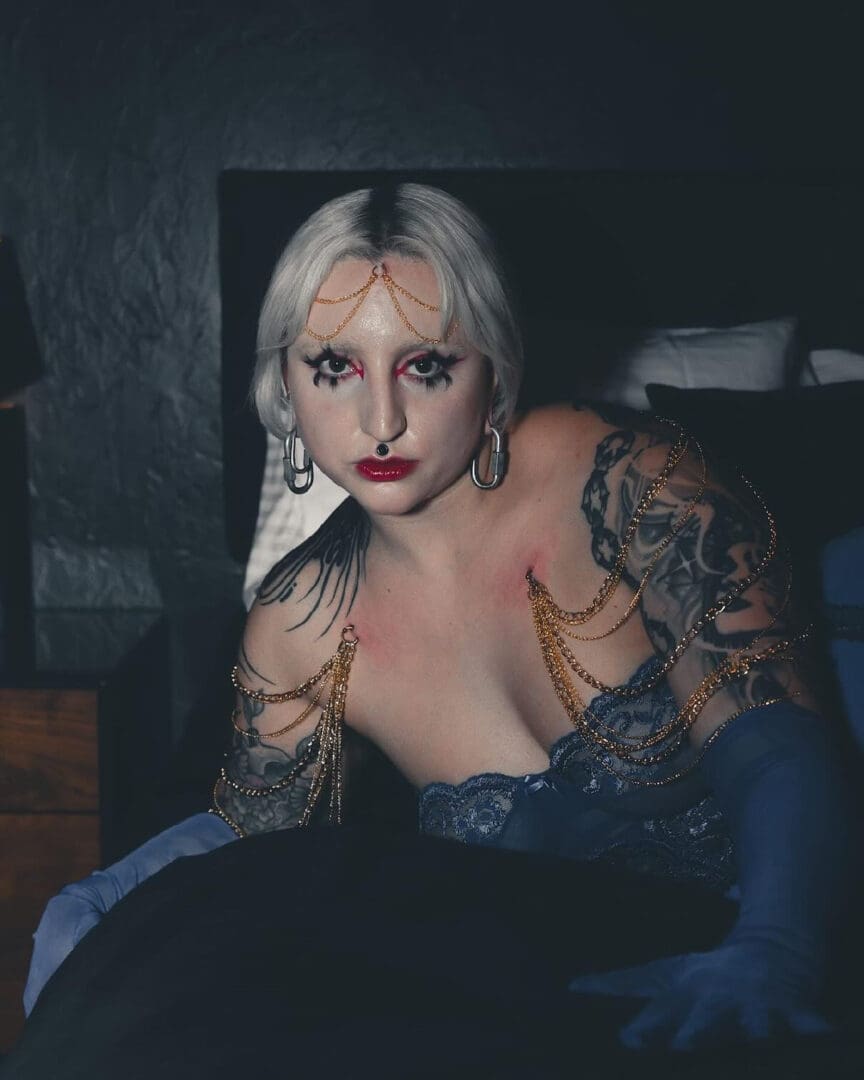
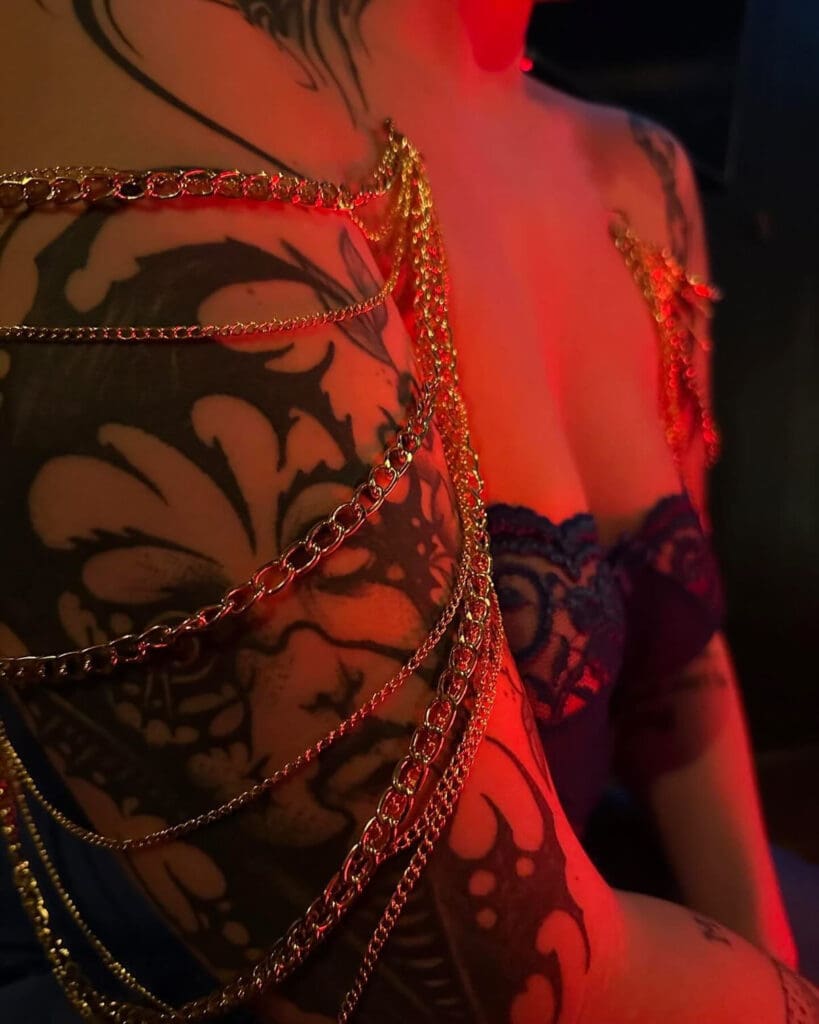
Play piercings are a set of temporary piercings, often arranged into intricate designs or incorporating different elements such as flowers, jewellery, chains and so on.
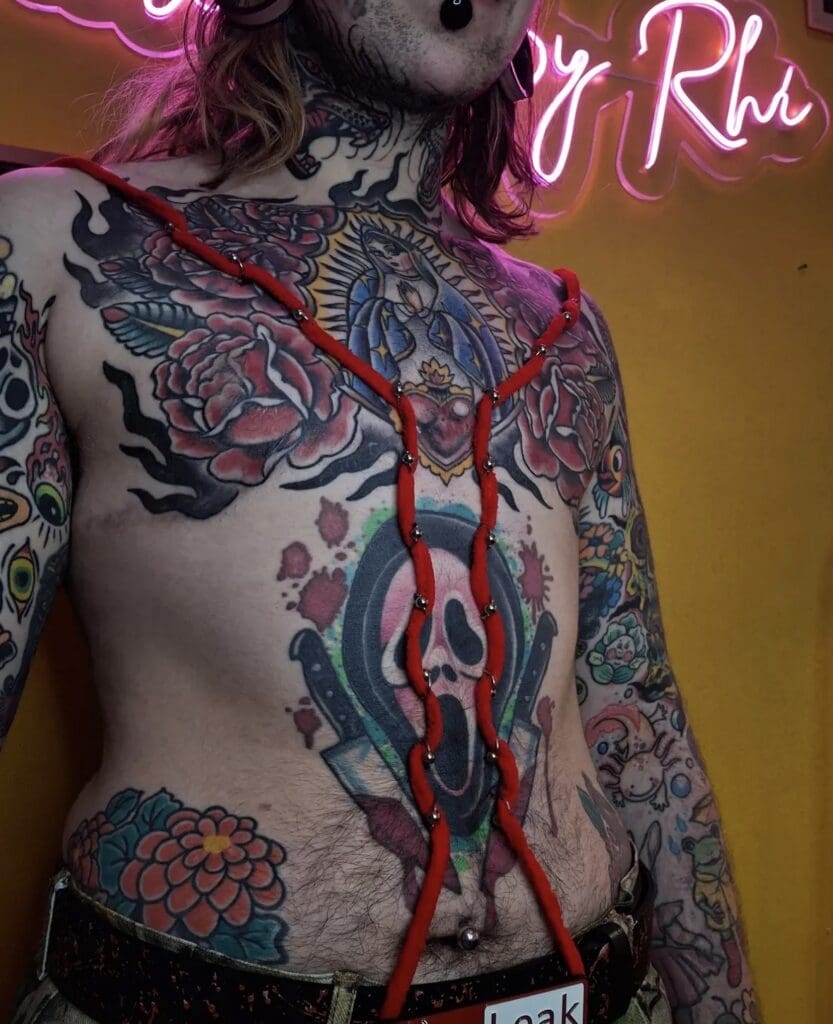
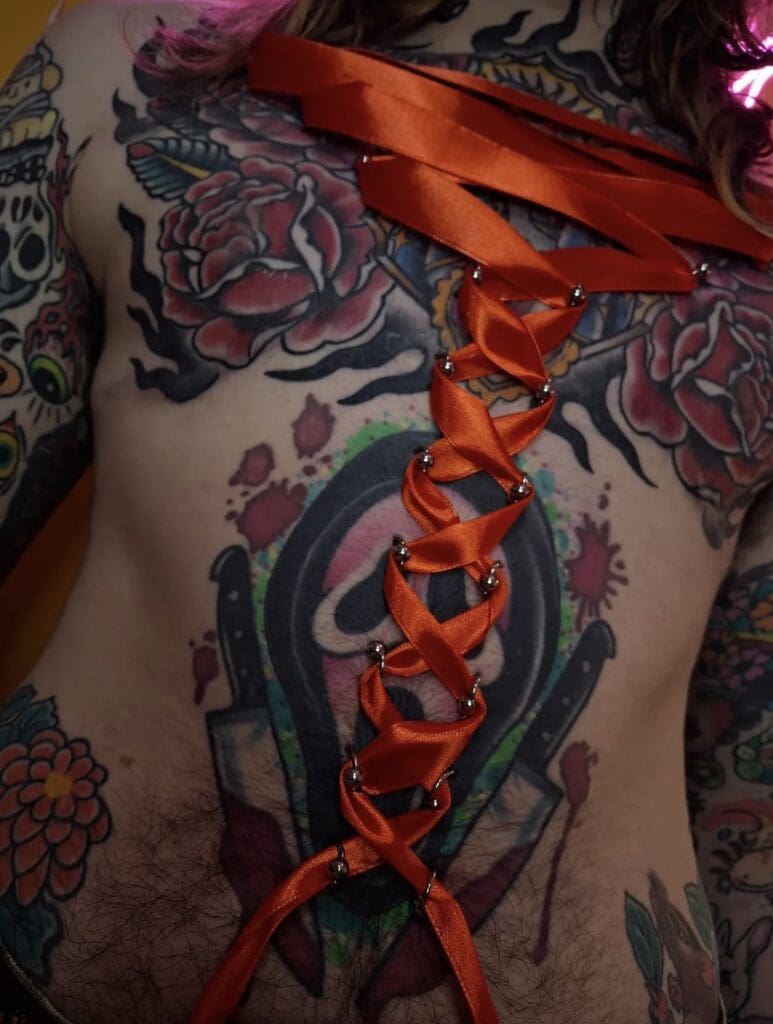
For Zak Saturn, a body piercer based in Colorado, body art is the exact reason he performs play piercings, with some of his work including attaching chains or creating swirl-like patterns down the back.
He got into piercing as an apprentice in 2022 and was encouraged by his mentor to try play piercings, something he never thought he would do.
“The appeal of play piercings for me is being able to express myself more freely through my chosen craft. Play piercings allow me to find and then push the limit of what I can do as a piercer and what I can do with the skin I work with,” he says.
Uplifting the relationship between self and body is one of the most unexpected appeals of having a play piercing done.
Piercings, and general body modifications is something Zak emphasises as a form of full self expression and transformation.
“I believe that piercings and body mods allow us to look how we want. Giving us our most ideal version of ourselves. Being able to look into the mirror and be happy with who is looking back at you is very important,” he says.
“If a little sparkle on your nose or 100 needles in your back makes you feel better about yourself then hell yeah! I also feel that piercings help ground us and be present with our bodies.”
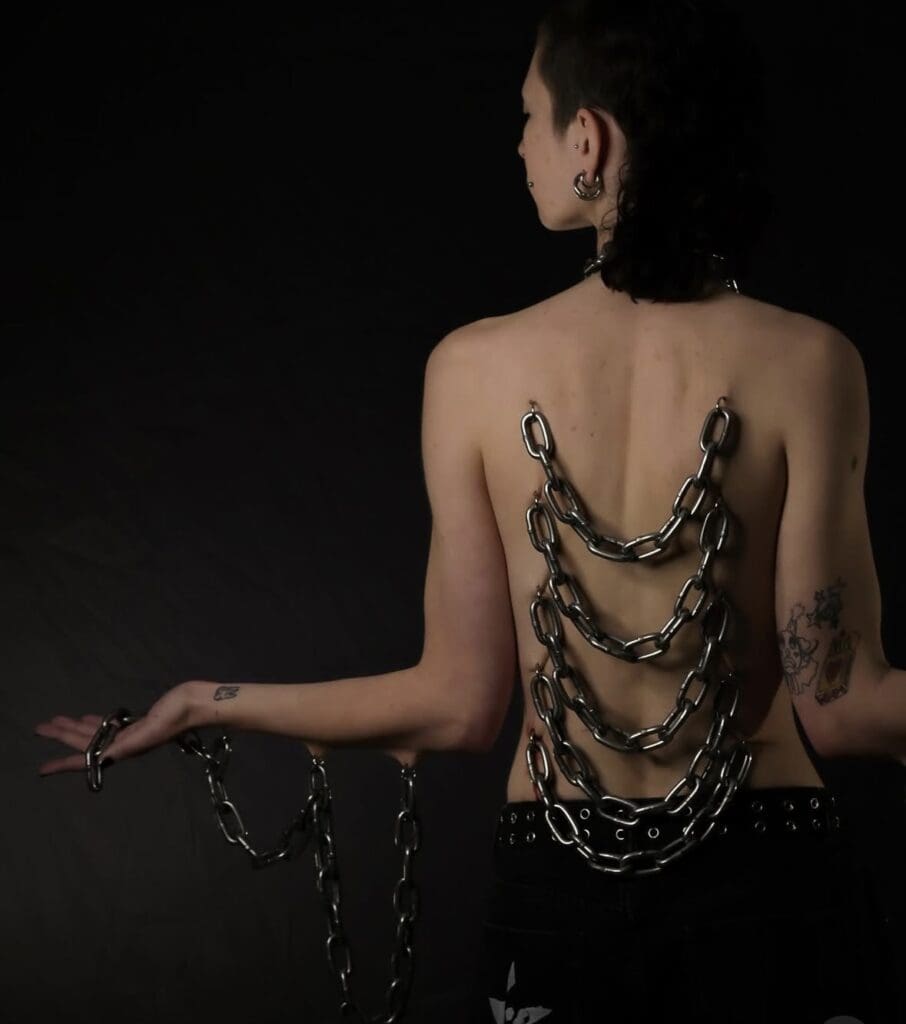
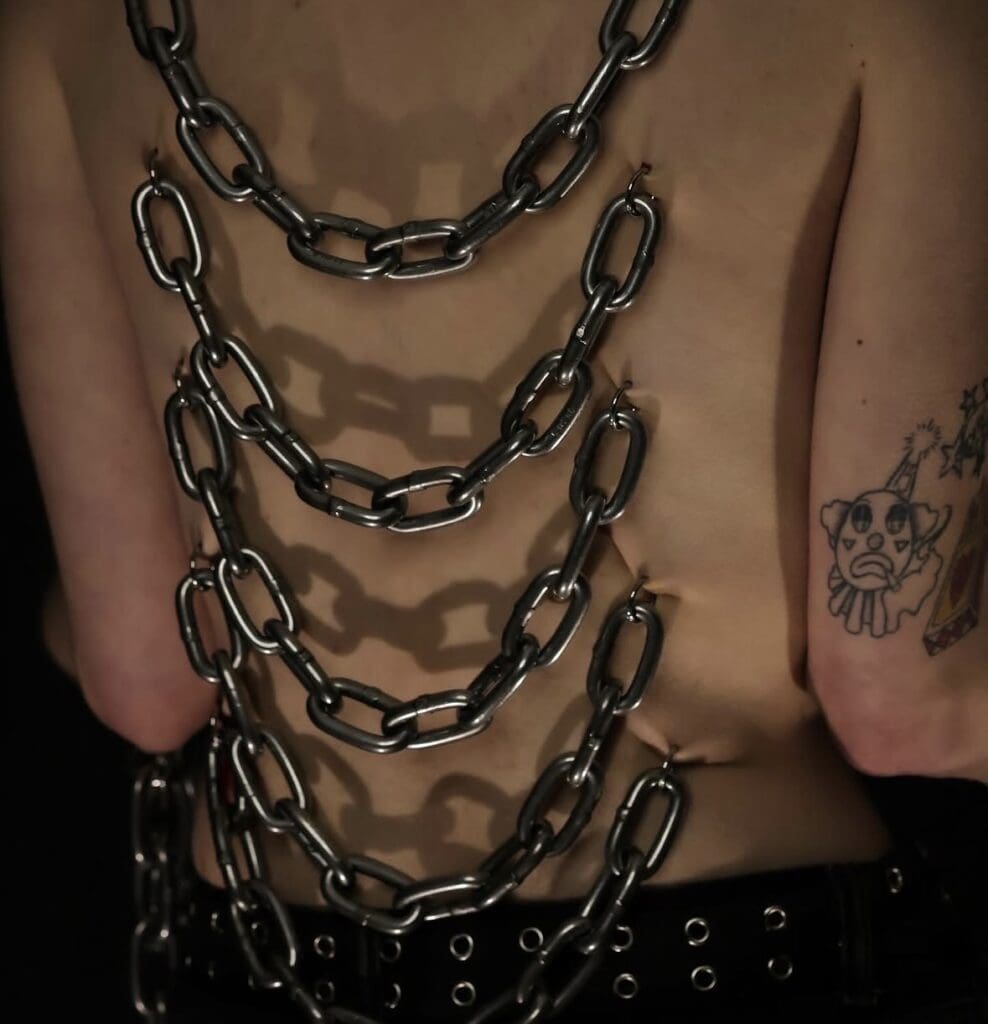
Rhiannon Blandford, 25, and a body piercer based in Sheffield, explains that piercings and body modifications can be freeing for a lot of life events, for example, healing from a break-up or reinventing yourself after a rough patch in life.
“Body mods and piercing can help massively with how people experiment with their own bodies. It may be something they want to try out and experience just once or feeling a sense of freedom to express how they are feeling at a certain time in their lives,” she says.
The creative process of play piercings actually coming to life can look different depending on each artist.
For Zak, first in the creative process comes the inspiration, which he explains can sometimes come from a design vision he gets when listening to a song, watching a movie or anything interesting he sees in day to day life.
Afterwards, he looks for what piercers call ‘a skin donor’ who Zak explains is “someone that’s feeling brave enough to get jabbed a lot!”
For other piercers, teamwork with their clients is what forms the majority of the artistic outcomes.
Whereas for Rhiannon her process largely comes from clients bringing the inspiration and then her collaborating with them to produce her artwork.
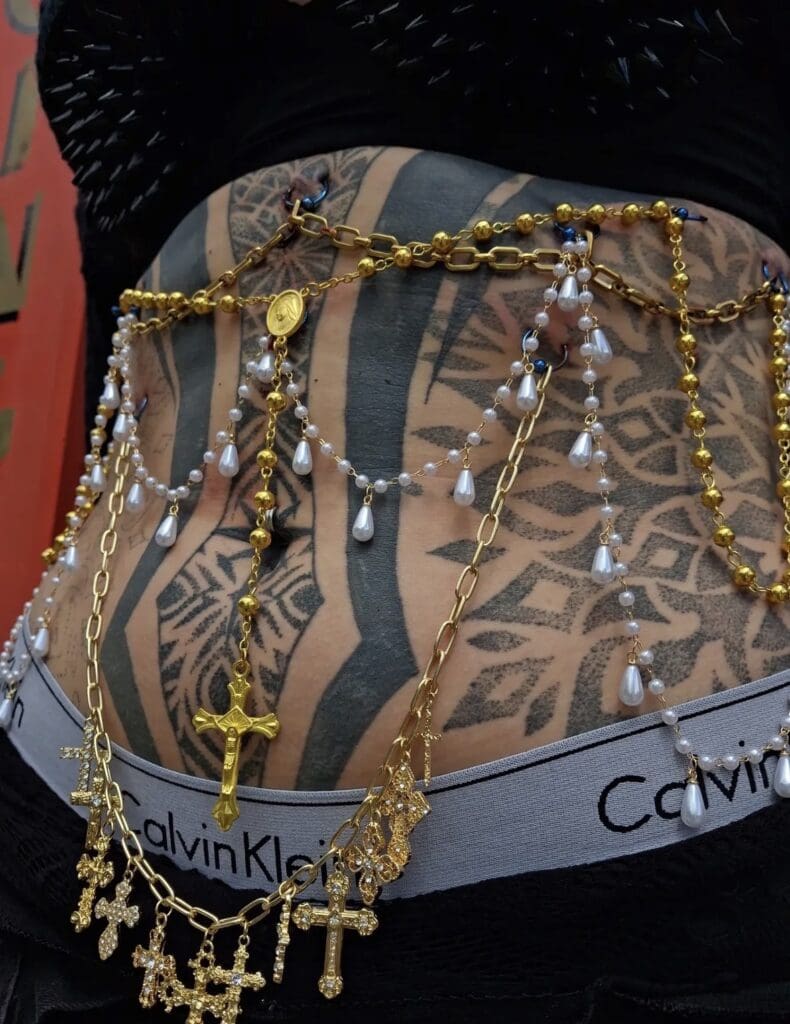
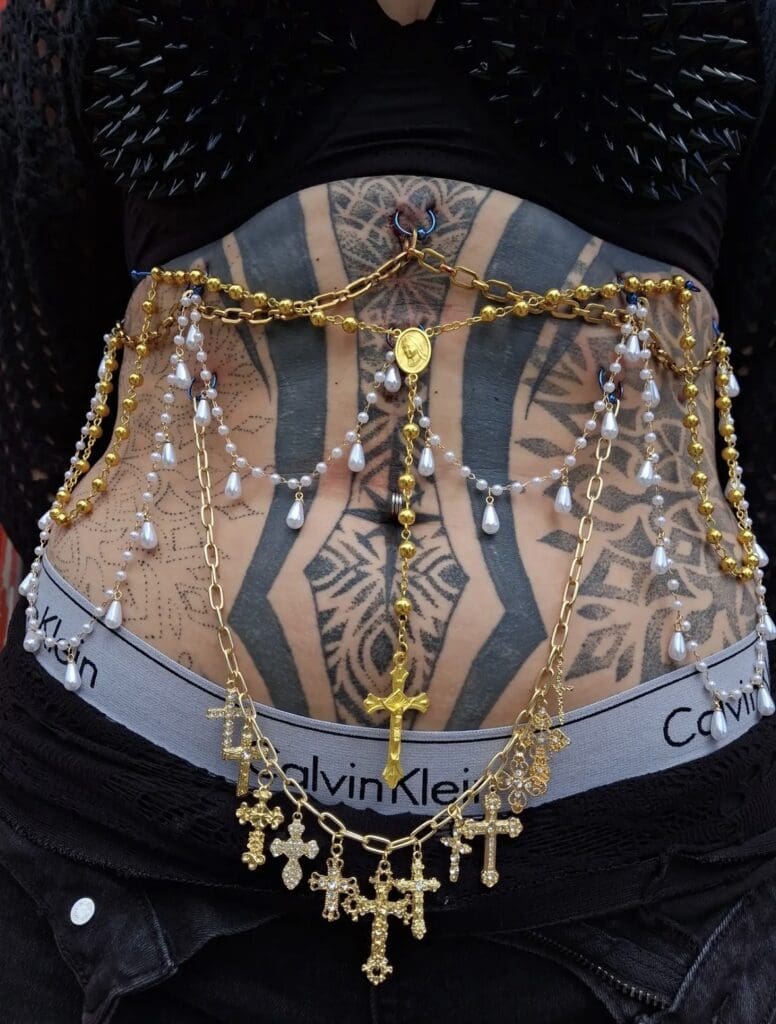
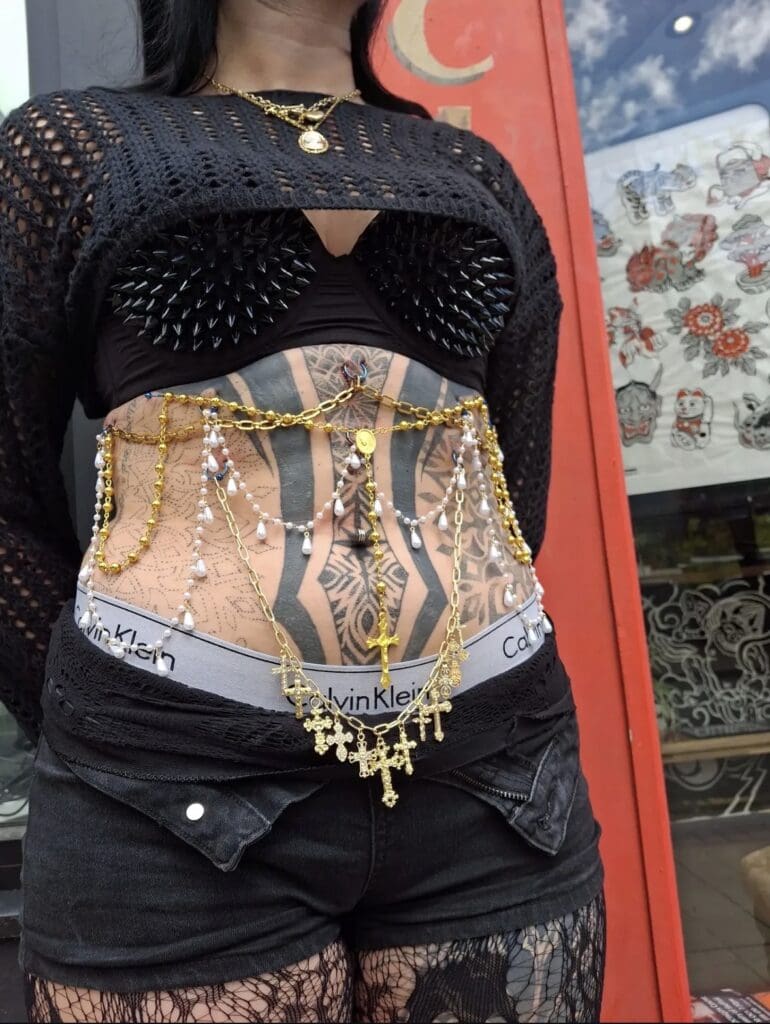
“I do have some play piercing ideas ready to go, more so smaller ‘tester’ pieces. For larger scale work, my clients either send me ideas that they’ve mocked up themselves or show certain pieces of jewellery they want attaching to their bodies and we will work together to bring it to life. I’d say my clients do the design work and I pierce it, more of a collaborative project.”
She’s worked with pieces such as decorative stomach jewellery which involved attaching gold and pearl chains across the abdomen to designing rope to cascade down the chest.
Pushing the body’s strength is another appeal, Rhiannon explains she sees in her line of work, especially the sense of pride that comes from overcoming the pain to have the artwork.
“Play piercing is pushing the boundaries with their bodies. Having piercings in general is very popular, most people have them now. But play piercings is more of a shock factor, having insane photos to show how far they’ve pushed themselves to get that photo at the end of it,” she says.
“Others may do it to release some inner emotion which the semi-permanent piercing(s) can give that feeling of ‘my body is pushed to its limit, this is how strong I really am.”
The obvious downside for many though, is the pain of having them done, which Zak explains is important to discuss and gain full consent about.
‘Piercings hurt. There’s no way around that, and being able to willingly get hurt shows a great deal of courage from a person, regardless of age. It is my goal when doing any piercing that the person I am working on and working with feels safe and secure in our shared space,” he says.
“Consent is always the most important. I need my client to understand that they are going to be semi-nude and then pierced sometimes nearly 100 times. That’s a big time commitment and a long time to be in a vulnerable state, so I need them to be 100% on board the entire time. If at any time a client revokes consent, then absolutely we stop.”
Understanding bodies’ limits and setting realistic boundaries of what each individual’s body can handle is another vital factor Zak emphasises before any play piercing can take place.
“I know how much I can pierce, but not everyone knows how much they can tolerate getting pierced. Part of the challenge of play piercings is creating a cool design that’s still within my client’s comfort limit,” he adds.
Lynn Loheide, who has worked in piercing for 15 years and is based in Seattle, has a community of almost 100k followers on Instagram, and emphasises the individual empowerment that can come from having play piercings.
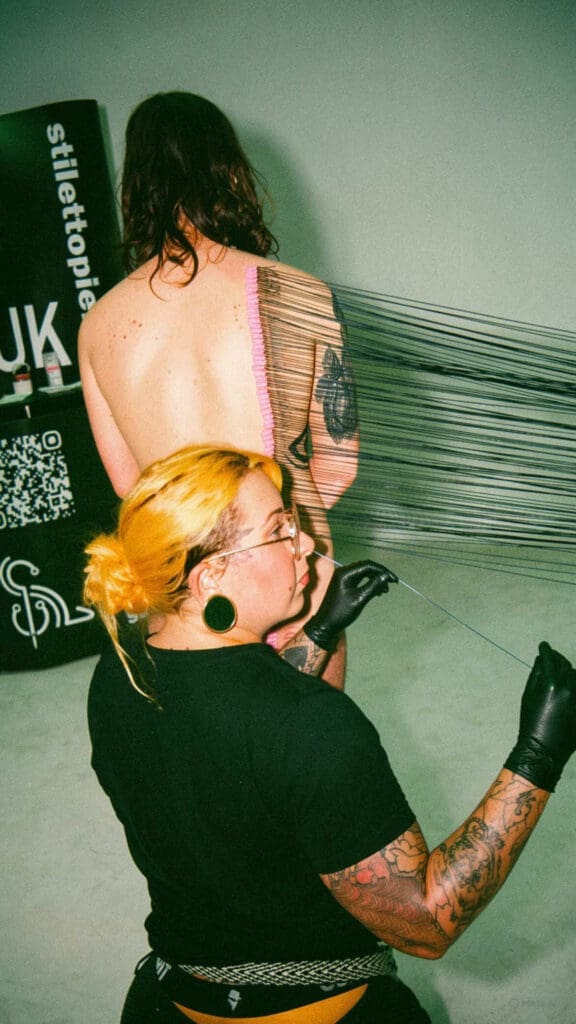
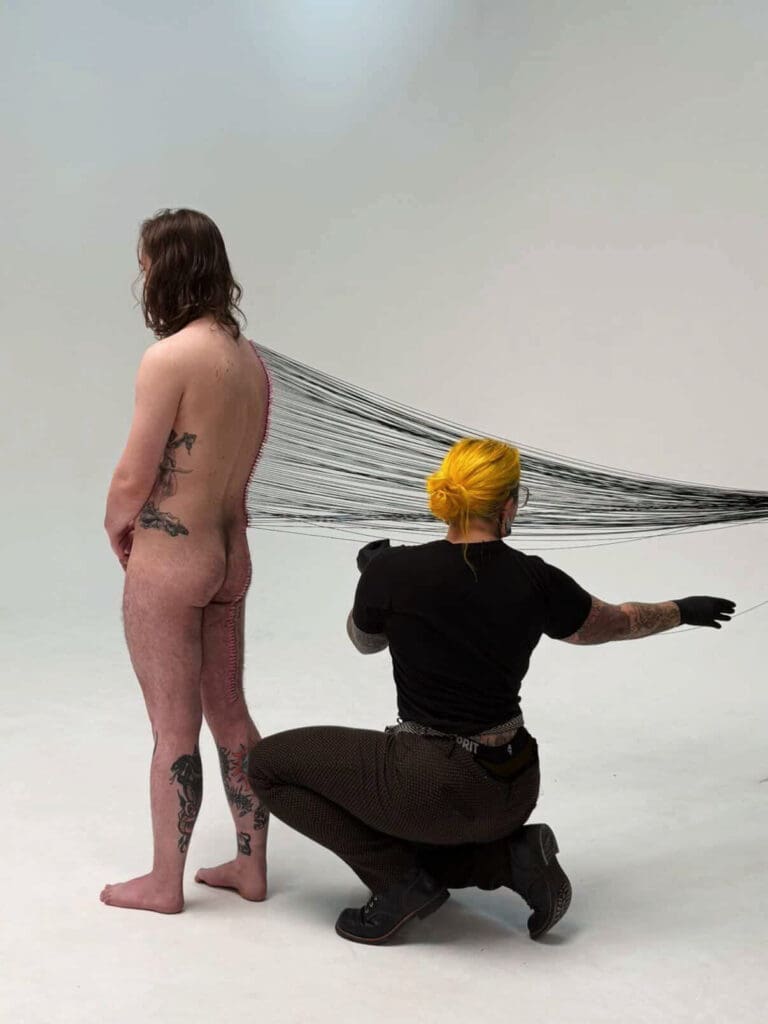
Their work includes art pieces such as attaching yards of threads down the back to creating Christmas wreaths on backs and even structural pieces that can hold testosterone hormone vials.
“I think people often misunderstand and assume people do it for attention or because they love the pain. I won’t pretend this isn’t a reason for some people but those folks are a minority. Most individuals with tattoos and piercings actually don’t want much attention. They aren’t doing this for anyone else. They are doing it for themselves,” they explain.
“And many don’t enjoy being in pain. I mean come on, who is excited to go to the dentist or get a shot at the doctors- no one! But pain is a necessary part of the journey and the process that we have to pass through to get to the other side.”
For some, balancing the measured pain of piercing can also act as part of a connective ritual amongst other reasons, which totally depend on the person, as Lynn also explains.
For example, piercings have a basis in many cultures and spiritual practices, in ancient Egypt, men and women would wear body piercings to symbolise power or beauty and connect them to certain Gods.
Meanwhile, in Hinduism, nose piercings are connected to symbolising marriage or enhancing fertility.
For others, particularly in Western cultures, they are seen as forms of self-expression, reinvention or even rebellion from social norms.
“There is wisdom to be learned when we can sit with pain. Like grief, loss, sadness, and rage, pain is a part of being human. Pain on purpose lets us explore this part of our humanity and see what lessons it holds for us,” they explain.
“There are as many different reasons for play piercings as their are people who like them. Some enjoy the artistry, the final image. Others crave the adrenaline rush or head space. Others do it as part of a cultural or religious ritual. Others still may do it for bodily reclamation, for performance, for fun, just to see what’s possible. There’s so many different reasons and mentalities behind it!”
And play piercings, for all the various reasons, may be on the rise.
For Rhiannon, she’s noticed a slow rise in people seeking play piercings with some even travelling across the country to have them done, with her most popular design being her ‘birthday candles’ where rows of piercings are placed in the arms and topped with lit colourful candles.
Zak too, has noticed an increase in actual play piercers too, which he credits to social media and being able to share artwork and what they’re up to in their studios.
“It’s nice to see other artists trying new stuff growing the art form!” he says.
And as the final piercing is removed and the photos are taken, many leave with a sense of strength and empowerment they didn’t walk in with.
This allows for people to be grounded, push their limits and become a human canvas for perhaps the most misunderstood artform.