All images from Mubi.
This piece contains discussions of body horror, body dysmorphia and eating-disorder–adjacent pressures, misogyny and strong language. Reader discretion is advised.
Everyone agreed with The Substance. Then everyone carried on as normal. Almost two years since Coralie Fargeat’s body horror phenomenon, women are still trapped in the same impossible double bind the film condemned.
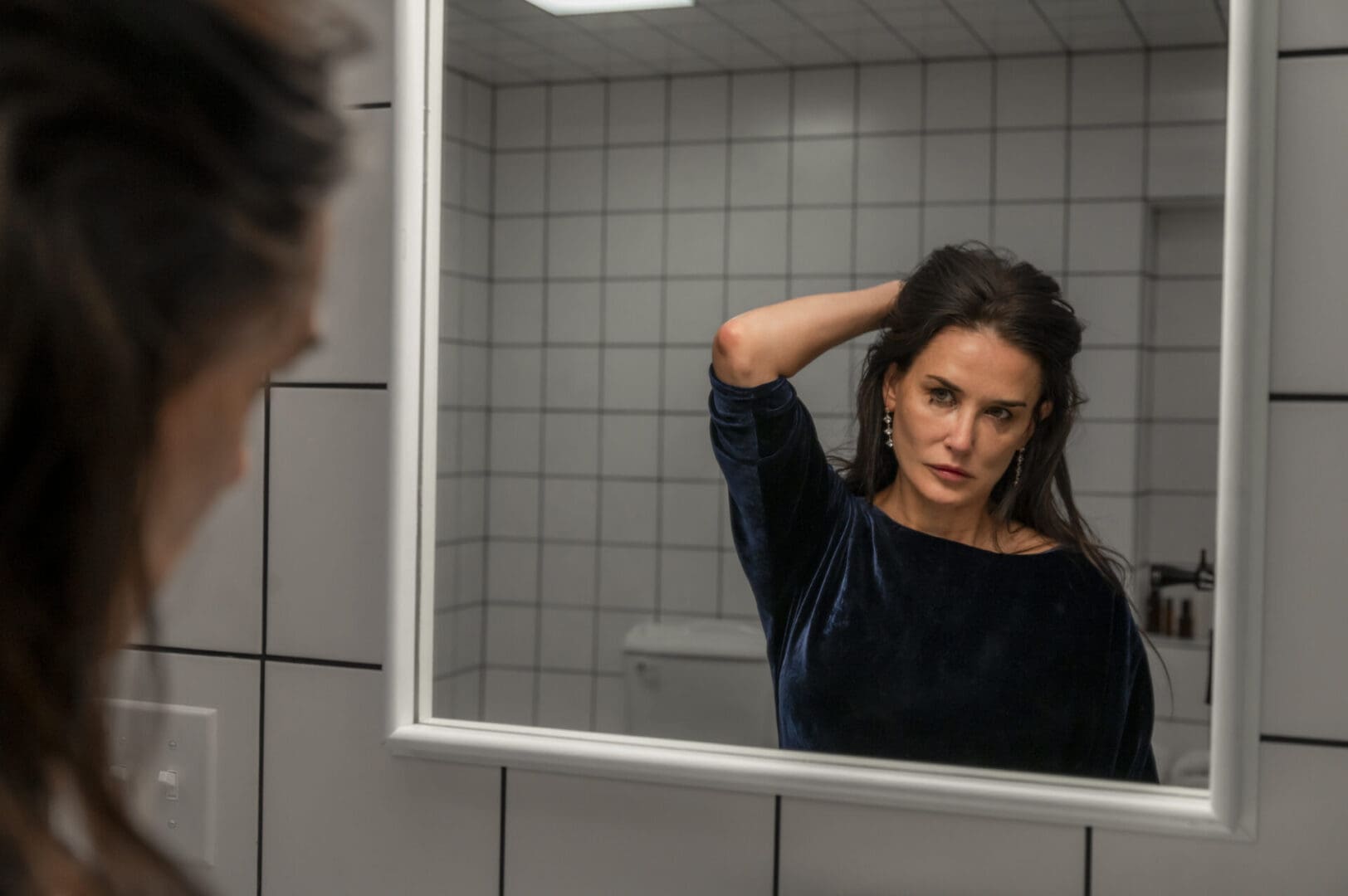
The Substance (2024), starring Demi Moore and Margaret Qualley, is an insane body horror depicting how the pressure to conform to impossible beauty standards can strip women of themselves.
Protagonist Elisabeth, played by Demi Moore, endures vicious ageism and objectification when her successful career as a television fitness star is abruptly discarded in favour of a younger replacement. Desperate to reclaim her relevance, the fifty-year-old turns to a mysterious black-market serum that splits her (yes, literally splits her body open) to birth a ‘better,’ younger version of herself: Sue, played by Margaret Qualley.
It’s a tragically relatable, gory exploration of the horror of living in a woman’s body while constantly scrutinised by society’s ever watchful glare. Themes of body dysmorphia run throughout, with camerawork intensifying this discomfort through extreme close-ups of body parts, not to mention the sound design’s cacophony of dripping blood and gore. It’s invasive, to say the least.
A major inspiration for The Substance was Lynch’s The Elephant Man (1980). Elisabeth’s final transformation into “Monstro Elisasue,” brought on by her overuse of the serum, results in a creature whose deformities resemble those of the character in Lynch’s film. The Elephant Man was based loosely on the life of a real person named Joseph Merrick, who was exhibited in freak shows in the 1800s due to his physical condition. Now widely described as a gentle and kind man, Merrick was categorised as monster. Not because he was one, but because of society’s inability to look past the superficial.
The Substance portrays that women undergo a similar, if less literal, process of dehumanisation. Women who do not conform to society’s expectations are often treated as their own kind of monstrosity, with visible signs of ageing in particular framed as unacceptable or transgressive. The male gaze demands perpetual youth and desirability, yet women are mocked for the methods they use to pursue it. Age naturally and you are accused of ‘letting yourself go’: seek cosmetic intervention and you are labelled vain, artificial, or desperate.
Women are paraded in freak shows of a different kind: tabloids, gossip columns, and social media platforms that ridicule and relentlessly scrutinise them under the guise of public interest. The pressure to conform to impossible beauty standards is so intense that cosmetic procedures are normalised as routine. Yet women are mocked when those procedures fail, go ‘too far,’ fall out of fashion, or no longer align with whatever standard is currently in favour.
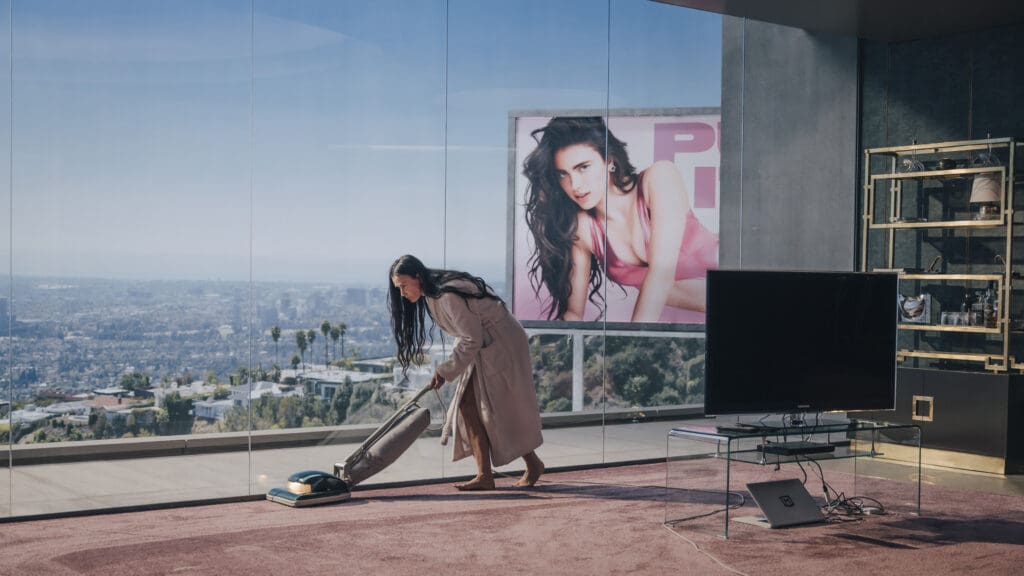
Don’t get me wrong, there is completely nothing wrong with choosing cosmetic procedures – or rejecting them – if that is what one wants. The problem is society’s obsession with monitoring those choices, turning them into public spectacle and using them to eclipse everything else about a woman.
Women are judged for exercising and for not exercising, for dieting and for not dieting, for ageing naturally and for attempting to resist it. Whether they choose surgery or reject it entirely, public opinion finds a way to condemn them. There is no ‘correct’ choice because the rules are constantly shifting.
In Hollywood especially, a man’s work is often allowed to exist separately from his appearance. A woman’s rarely is. Public conversation remains fixated on how she looks; reviews, interviews, and media coverage continue to dwell on it often as much as – or more than – what she has achieved. It’s a never-ending, dizzying carousel of scrutiny.
The monster at the end of the film was never Elisabeth, but a culture incapable of seeing women as anything other than their appearance.
So, some time after The Substance splattered our cinema screens with body parts and bile, have we stopped treating women’s bodies as public property?
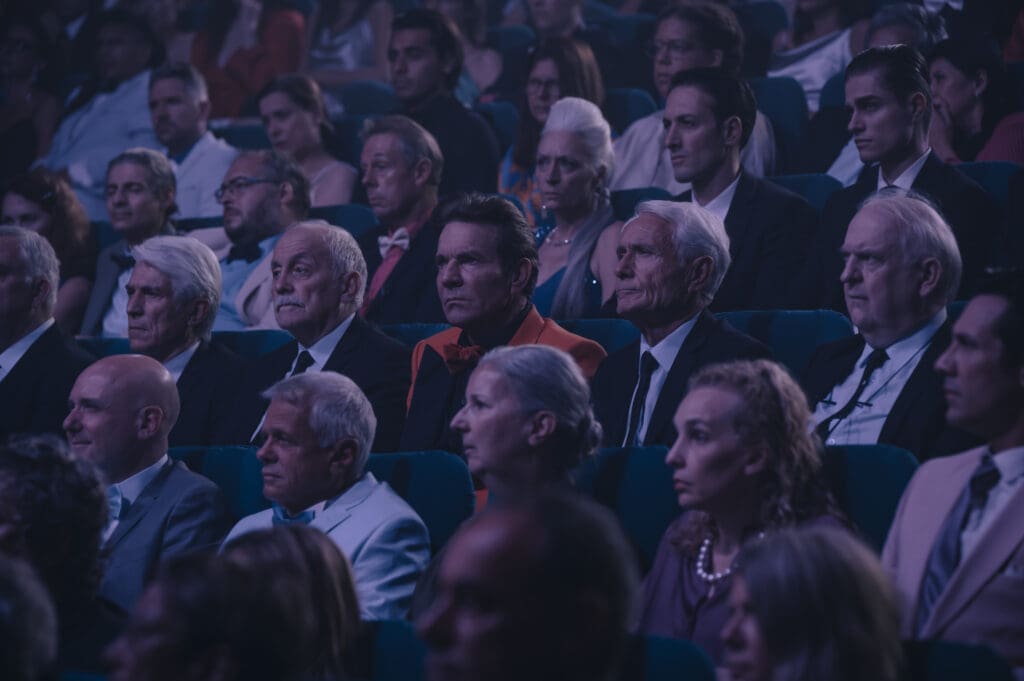
Looking at celebrity coverage, tabloid headlines and social media discourse, the answer appears to be no.
The commentary surrounding Wicked (2024) stars Ariana Grande and Cynthia Erivo frequently veered away from their performances and towards analysis of their weight, facial expressions, and perceived interpersonal dynamics.
Pamela Anderson’s makeup-free red-carpet appearances were widely praised and rightly read as a statement. The uncomfortable part is that it had to be one.
The discourse surrounding Ozempic pressures women to lose weight, but when they do, speculation begins immediately. The conversation rapidly shifts from health to accusation, judgment and scrutiny: Did she use Ozempic? Is she too thin? Has she gone too far? Either way, she’s got it wrong.
The Substance is a gory critique of how the pressure to conform to societal beauty standards can strip women of themselves: because a woman can never win.
Of course, I know none of this is groundbreaking. We all know women are judged relentlessly for their appearance. We all know the standards are impossible. We all know one film was never going to dismantle centuries of sexism and the objectification of women.
But if we already know all of that, why the fuck are we still doing it?