
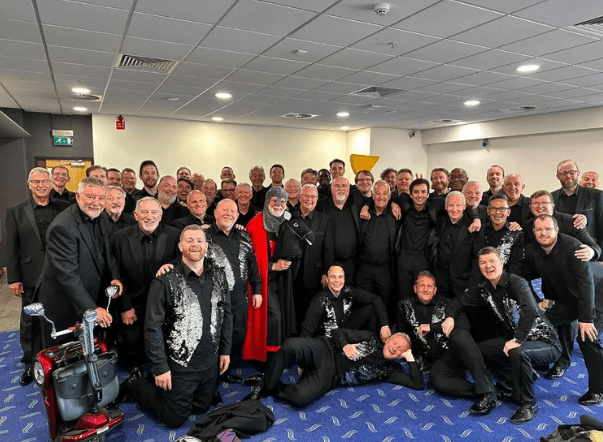
Singing creates human connections like no other, with music forming strong, often emotional bonds. Barbershop singing is no different, with some even meeting their lifelong partners through it.
This style of music focuses on a specific four-part harmony, most commonly sung in choruses and quartets, who compete in various competitions across the world.
But for many barbershop singers, it’s not just about the music, but the connections that you make.
“Barbershop is like a massive extended family to me, I know that there are people there when I need support,” says Charlotte Knight, 37, from Derby.
“It’s how I met my husband and now we have two children, one who is now singing with the youth chorus. No matter how you feel, you know that people are there that have your back. They support you through your ups and downs.
“No matter how anxious I can feel, I know that my chorus and extended barbershop family will be there. It’s the best therapy in the world.”
And Charlotte isn’t the only one who found her husband through barbershop.
It has been known to form a lot of romantic connections, with many singers meeting through the hobby and eventually starting a family.
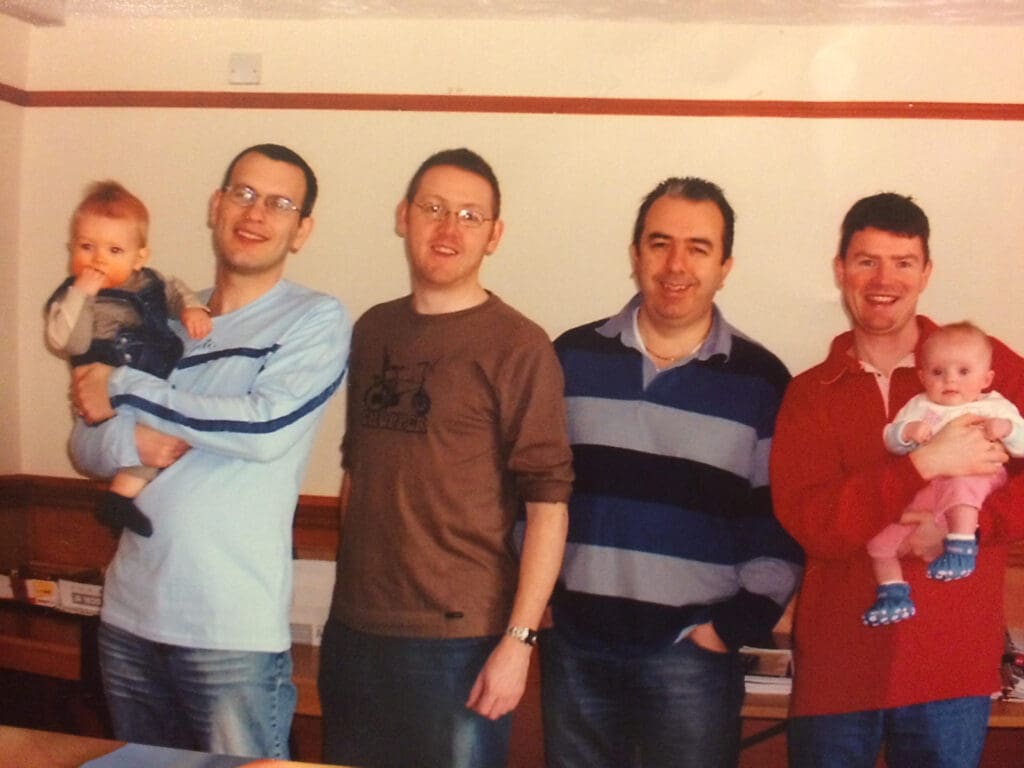
This is the case for Jennie Potts, 50, from Kent, who met her husband Michael at a convention in 2001 after watching him win a gold medal with his quartet, Matrix.
“He proposed to me at a LABBS (Ladies Association of British Barbershop Singers) convention on stage in front of 2,500 people by rolling out a huge banner asking me to marry him!” says Jennie.
“Luckily I said yes. Then we had a wedding filled with barbershoppers who are all our closest friends. Our daughter is 13 and has attended 25 conventions since she was born. She loves the atmosphere and friends she makes.
“The barbershop world really is like no other, filled with people you see sometimes on a regular basis or sometimes 6 monthly yet you still have a fantastic friendship with them. I have so many special friends in my world because of barbershop.”
Around 70,000 people take part in this genre worldwide, and only 6,000 of those are in the UK according to The British Association of Barbershop Singers.
I am part of this small statistic, as someone who has grown up in the community, with two parents who also met through this hobby.
As I’ve gotten older, it is striking to see how intensely this hobby brings people together and just how tight-knit the community really is.
Over 21 years, I have travelled to countless national and international conventions to watch my parents compete, but it is only recently that I realised just how fortunate I have been to grow up in this environment.
From the late-night ‘afterglow’ where everybody is socialising and singing in the bar, to forming close relationships with the people who took care of me as a child when my parents were busy rehearsing. It certainly is a unique experience, but one which has shaped my childhood and given me friendships that I know will last a lifetime.
Research shows that singing in a group can also have health benefits, particularly on mental wellbeing.
In the Being Seen, Being Heard, Feeling Connected 2026 report, they highlight how singing stimulates parts of the brain that trigger the release of oxytocin and dopamine. It also results in synchronising heartbeats and breaths, which creates natural connection.
David Mitchell, 47, from Oldham, started singing with Cottontown Chorus after finding himself in an unhappy place and coming across the chorus online.
“I turned up to a rehearsal and have not looked back. It has genuinely helped me turn my life around,” he says, “I have something to focus on, challenges to meet, support and a huge new group of friends who I look forward to seeing every week.
“We all compete at those events but we are also deep friends with so many people in ’rival’ groups. That only happens through respect and care.
“Locally the singing groups we are all in are like extended family. At Cottontown we call each other our brothers. We get together in many ways outside formal chorus activity, we support and laugh via the multiple WhatsApp groups, we even attend each other’s family events.”
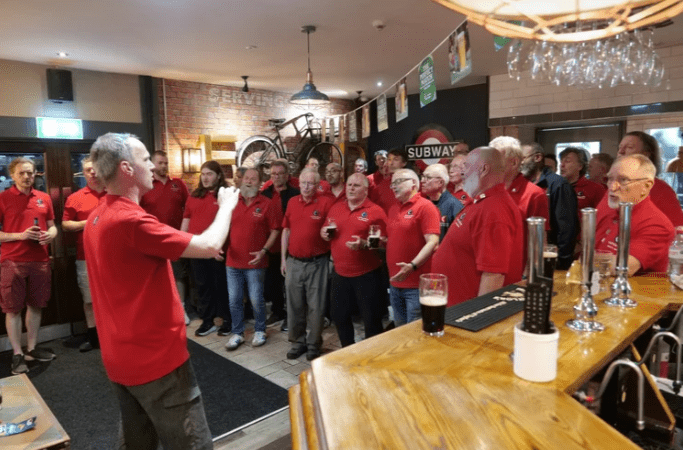
Many assume that this hobby is purely for the older generation, however, people of all ages enjoy singing barbershop. Many people have found out about the genre through university, like Nathan Rose who is 24 and sings with Manchester University Barbershop Society (MUBS).
“Barbershop is incredibly effective at bringing people together because you’re rehearsing so often with this group of people, you really learn a lot about them and want to succeed with that group,” he says.
“These experiences that you have in the barbershop chorus or quartet, doing choreography, singing tags together and going to socials afterwards, creates a really strong bond and friendship that you keep with you for life.
“Barbershop is really beginner friendly too, you don’t need to be an expert performer or incredible singer, you can just get started and immediately find a home regardless of your level. I love barbershop more than I thought I would, but it’s really the community that keeps me coming back”.
Across the different barbershop associations, there are youth choruses, mixed choruses, small choruses and everything in between. They strive to be an inclusive and welcoming community, which is another way of connecting people as there is something for everyone who shares the love of singing.
“Singing together in any format I think brings people together because it’s a shared experience where you have to work together to achieve a goal,” says Greg Nixon, 47, from Macclesfield, “It’s unifying and I guess is similar to being on a sports team.
“I suppose the difference with barbershop is that it can be done by people of all ages and backgrounds. In other areas of my life, I probably wouldn’t mix so closely with an 80 and an 18-year-old where they are my peers working together as equals.
“Trust is also a big part of it, particularly in quartet singing, you have to rely on these other three people and trust them to do their role,” he says, “A Cappella singing means there’s no accompanying music to hide behind and you’re exposed so the bond can be developed through that.
“Singing emotional songs also really forces people to show vulnerability and that as a shared experience can really help to forge bonds.”
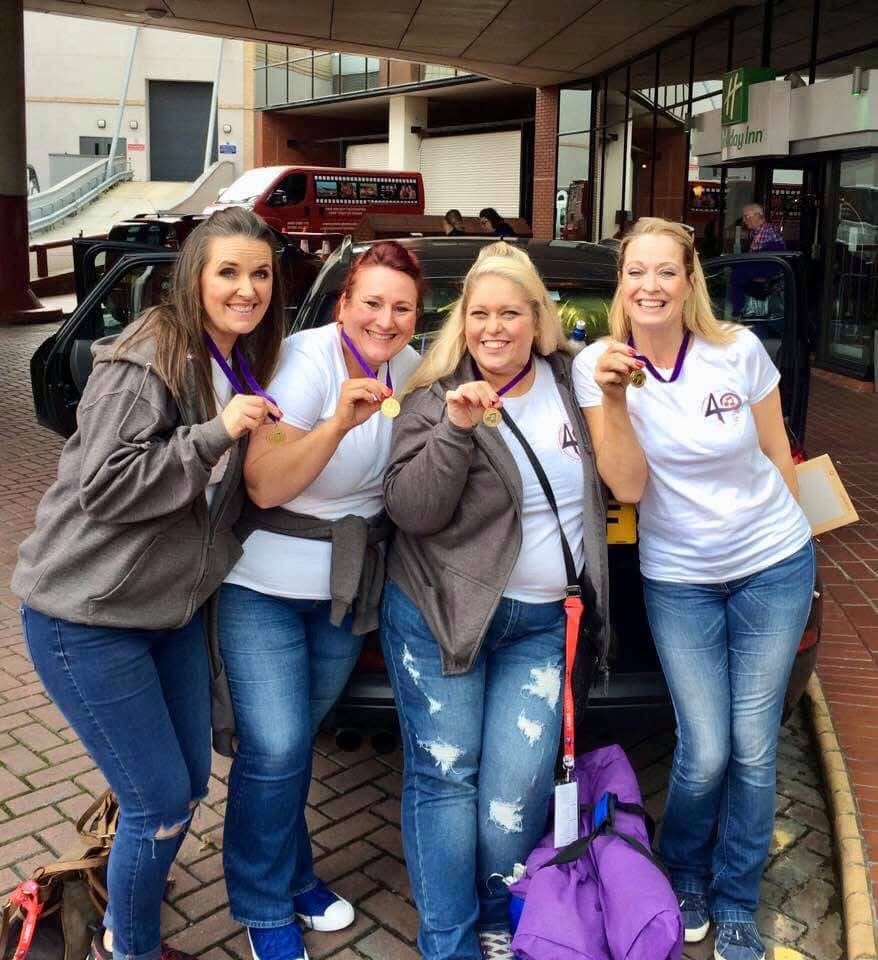
For many people, singing in a chorus or quartet allows them to express themselves creatively in a social environment.
With barbershop, there are so many groups across the country, meaning that everybody is brought together once or twice a year to meet up, socialise and share what they’ve been up to.
This dynamic allows people to forge friendships and connections that they may not ever have made otherwise with people up and down the country.
One of my personal favourite parts of barbershop conventions is singing ‘tags’ in the afterglow, which are short pieces of music, between four to eight bars long. People will get together to teach each other tags and sing together socially, often with people they’ve only just met.
This part of the event means that you’re always meeting, and singing with, new people, naturally forming new friendships.
It really opens up the community, particularly for new singers and ensures you never feel left out. Whether you’ve been singing barbershop for 40 years or 4 months, the community will welcome you with open arms.
Thomas Stephens, 19, from Coventry attended his first barbershop convention this year as a non-performer.
“My first convention was so fun, I felt like people were really close and it was a bit intimidating at first because everyone knew everyone except me,” he says, “but by the second day I felt like I had made it into enough circles that people started to recognise me.
“The second night was the best because I had the confidence to go and introduce myself to people without that worry of being the odd one out.
“Tagging was such a good way to meet people and get talking because it’s a reason to go over to someone without it feeling awkward. Then it usually ends in a friendly conversation anyway. It’s a really welcoming and tight-knit community.”
I’ve often found that once people find this community, they don’t look back.
Music and singing has been proven to bring people together and improve mental wellbeing, and barbershop is a great example of that.
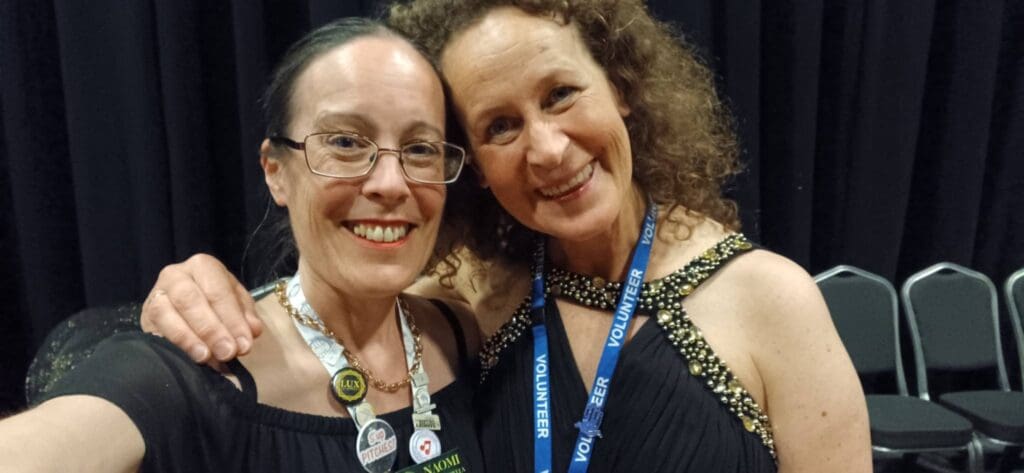
“Singing together and creating something beautiful, binds people in a way that defies biology,” says Naomi Cole, 46, from the South of England.
“Spending time to perfect something and then sharing it with an audience is profoundly satisfying on a deep level and builds trust and affection for those you sing with. It’s not just a hobby, it’s a way of life.”
The connections and bonds formed within this hobby are seemingly endless.
So, no, it’s not just about singing in harmony, it’s about the relationships that form through shared love and passion which stay with you forever, and sometimes even find you a life partner.