

This article contains discussion of sexual assault. Reader discretion is advised.
Ro Wallace shares their hot takes on the movie no one can stop talking about, Obsession, and why the Nice Guy trope might be the scariest part about it. Spoilers ahead!
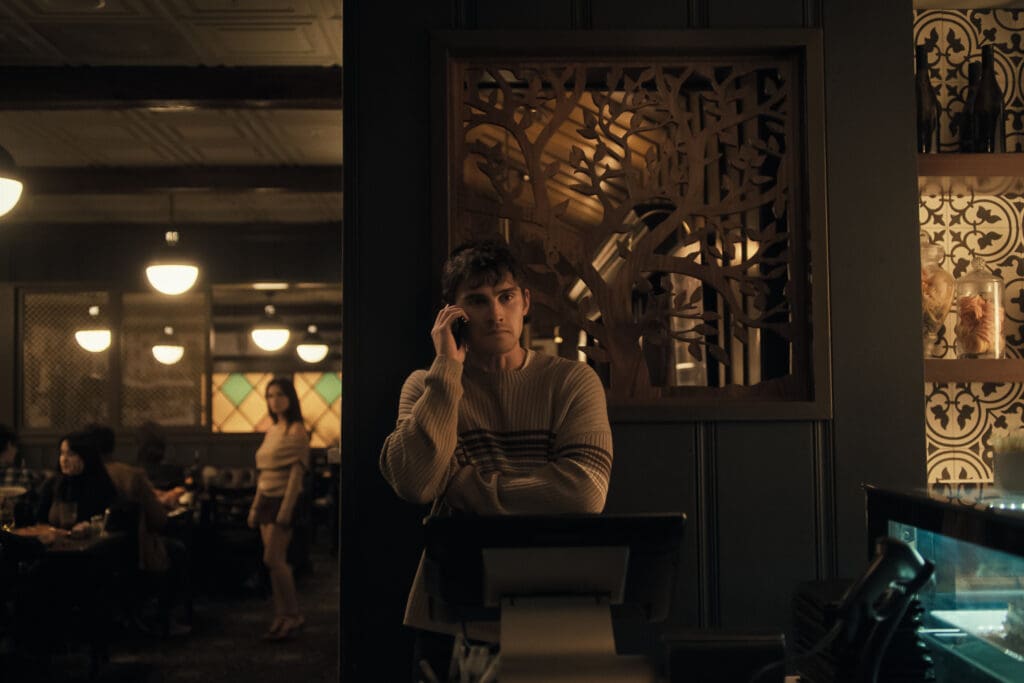
There might not be anything I despise more in cinema than the Nice Guy trope. You know the type, the mopey, self-pitying male who wallows in his own pit of insecurity, convinced that simply not being a villain means he deserves the girl. So you can imagine how my body recoiled when the central character, Bear, played by Michael Johnston, came onto screen in the opening scene of Curry Barker’s debut studio feature, Obsession.
Despite my cringe at Bear’s character, I can not praise enough how Curry Barker executed the lived nightmare of many women: your male friend confessing his feelings to you, no matter how many times you made it clear you saw him as a little brother.
Obsession isn’t really a horror film about monsters or jump scares. It’s about a type of man that most women have already met, in fact, they’re friends with them and believe the friend zone to be more of a state of purgatory, somewhere they can eventually move out of.
In the film, we are introduced to Bear through his longstanding crush on his friend Nikki, played by Inde Navarrette, who can only be described as an ‘It Girl’, she’s beautiful, sharp, and sarcastic, and seems like the type to be completely unbothered by the opinion of men who can’t handle that. She has never given Bear any romantic signal, despite this, he continues to nurse and feed his feelings, desperately scrolling through her instagram at night and waiting for the right opportunity to confess his love for her.
In the film’s central, supernatural turning point, Bear makes a wish on a One Wish Willow, a gift he was going to give Nikki before he chickened out of confessing his feelings, he wishes she would love him “more than anyone in the f*cking world.”
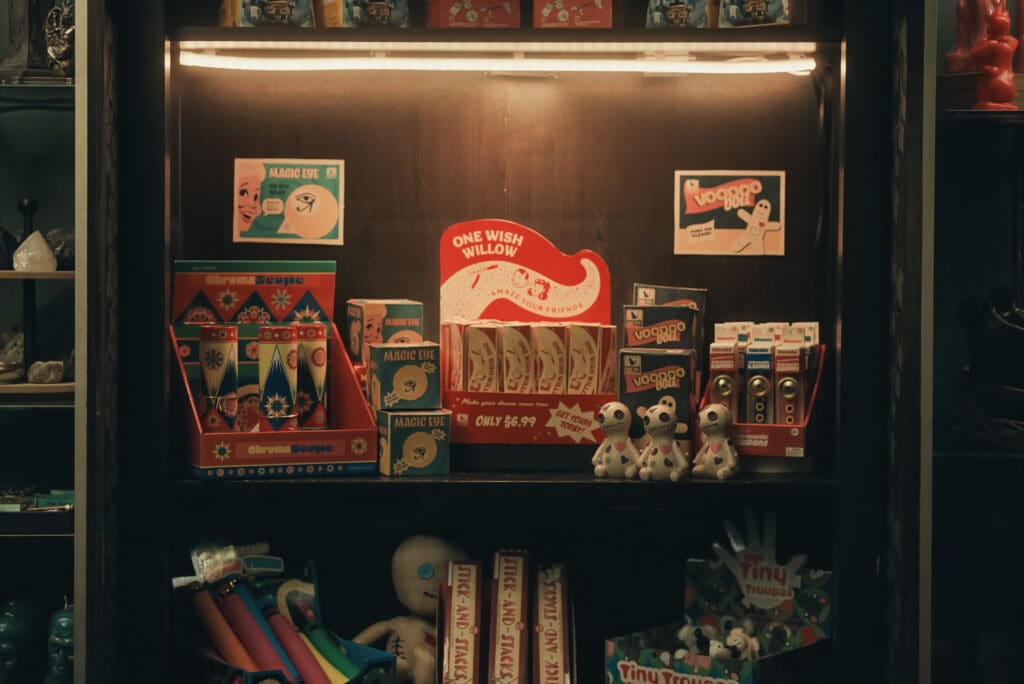
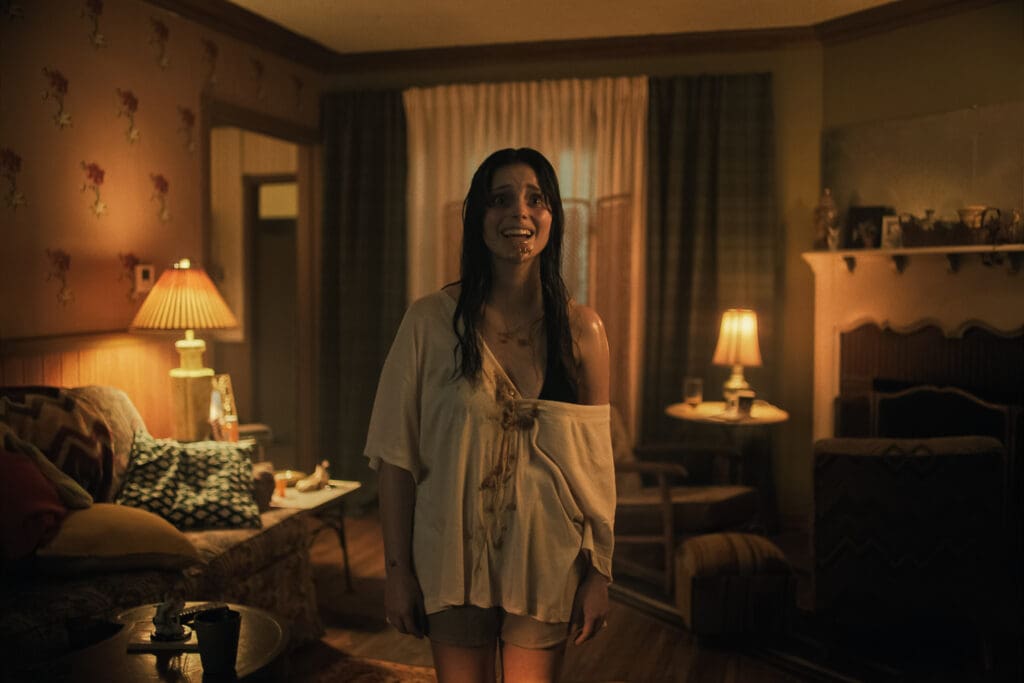
In all fairness to Bear, he was completely unaware that his wish would even work in the slightest, let alone that it would result in Nikki’s personality being taken over by a demonic version of herself that is pathologically obsessed with him, while the real Nikki is being tortured, literally trapped in Hell.
Rather than confessing how he feels, or respecting the friendship for what it is, he violates her, taking advantage of the Nikki who will comply with the fantasy he’s created in his head. And in one of the film’s most distressing moments, the real Nikki surfaces through the haze, lucid enough to beg him to end her suffering and kill her, his response is not guilt or horror, it’s a wounded ego: “What’s so bad about being with me?”
This line is one of the film’s most poignant indicators into the kind of person Bear really is and solidifies the film’s intention of Bear as the ‘villain’ and Nikki as the ‘victim’, even if she goes on a murderous rampage.
Despite knowing that Nikki is not really Nikki and that she never chose to be with him, he still refuses to recognise the girl he has trapped in her own body. He is selfish enough to let Nikki, supposedly someone he cared about, suffer unimaginable torture, if it means he can have what he wants.
It is easier for Bear, in this scene, to believe that her plea for death is because there is something ‘bad’ about being with him specifically; rather than acknowledge for a moment that he has stripped her of any autonomy, like how it would never cross his mind that when they’ve been having sex, he has been raping her, as that would make him a bad person.
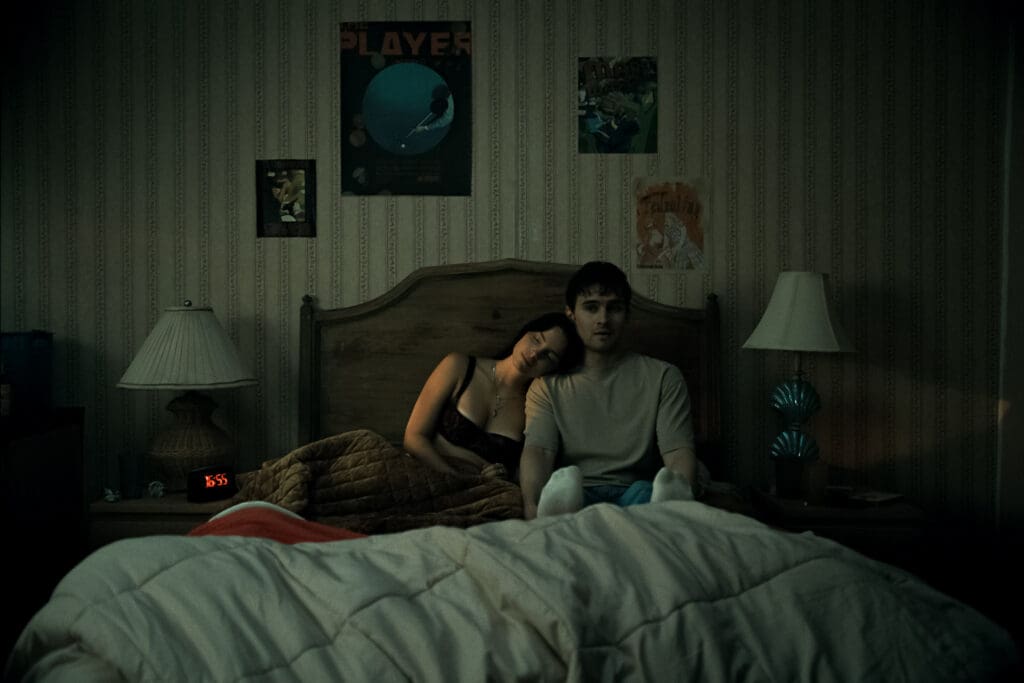
What makes Obsession so uncomfortable, and so necessary, is that it’s not dealing in the kind of violence that’s easy to condemn like the obvious physical or sexual assault that we are constantly subjected to watch as entertainment. Bear is not lurking in the shadows, he’s not waiting for his chance to brutally assault a woman, he’s the guy who your mum thinks is such a sweetheart. His violence is the type that doesn’t see women as people. He never once considered Nikki a full person with interiority and preferences that might conflict with his own, she was always, to him, a romantic prospect who hadn’t come around yet.
Obsession made me reflect on the times I’ve been handed the “not all men” speech as a defense for generalising men when in relation to harming women. But if not all, then how should we determine the good ones from the bad, on the merit of how nice they are? Obsession is here to tell us: Good luck.
It is interesting to consider how this film may land with the young men who recognise themselves in Bear, my hope is that they will start to confront their own insecurities so they can maintain meaningful relationships with those they care about. I believe this is the film’s intention too. And for the female audiences, we can all agree that Curry Barker is invited to the hangout.