
Most of us, at some point, kept a journal. Whether that’s for the gratitude lists, the 3am worry dumps, the dreams we half-remember and feel compelled to get down before they dissolve – or even a diary you had in secondary school that kept track of your playground crushes.
The point is, we seem to write about everything – well almost everything. There is one part of life that almost never makes it into those entries – and according to sexual health educator Elizabeth Ashford, that silence is costing us.
“Sex should not always sit at the bottom of the to-do list,” says Elizabeth, founder of Beyond the Beez, an educational platform on sexual health and self-discovery.
“We are sexual beings – that is part of all of our identities in different ways and it is worth attending to.”
Elizabeth came to this work through Harvard, where she studied Psychology and sat on the board of SHEATH, a student-run sexual health organisation. Later training at the Institute for Sexuality Education and Enlightenment sharpened her thinking further, and in 2019 she launched Beyond the Beez – a name, she explains, aims to look past the obvious.
“We’re fed so many surface-level ideas. That having sex on the first date makes you promiscuous. That sex equals penis and vagina until a man finishes.” She pauses on that one, visibly frustrated that this view still holds space in the landscape of sex ed.
“That’s a big reason so many women lose desire and the orgasm gap is vast. It’s about doing more digging and finding a more truthful reality. Listening to yourself instead of everyone else.”
Central to Beyond the Beez is that pleasure begins in the brain, which means the same tools we use to tend to our minds – reflection, awareness, the slow, unglamorous work of paying attention – apply here too.
“Every single person will go through ups and downs in their sexual life, just like the rest of life,” Ashford said.
“We work on our mental health to handle the lows better. Our sex lives deserve the same.”

Image Credit: Cortnee Daley
That belief gave rise to her Between the Sheets Journal – a guided journal built around the idea that awareness is usually the first thing people need.
“It’s really hard to pinpoint what is wrong, especially when nothing dramatic has happened – when it’s just a slow fade of desire in a long-term relationship,” she said.
“The journal is designed to build the muscle of awareness: consistently checking in on what you’re doing, how it’s feeling, how you’d rate the pleasure and your excitement. It brings your attention to what might be worth tackling.”
Each entry opens with a single word – nervous, excited, euphoric, habitual, lonely – which is chosen by the user to describe a recent experience, whether that’s sex with a partner or masturbation. From there, you note where it happened because location, Ashford explained, creates its own emotional context. If your parents were in the next room, that detail – whether it added a frisson of excitement or a layer of anxiety – belongs on the page. You rate your pleasure and how present you felt. Then come the prompts that reach beyond the bedroom entirely: your stress levels that day, your work, your body, your mood.
“I want people to understand that sex does not happen in a vacuum,” she said.
“Stress is the biggest sex killer. Your boss yelling at you that morning can affect how you show up that evening.”
Every ten entries, the journal pauses for reflection, giving you a chance to look back and spot what the individual entries might obscure. If pleasure has been sitting at a six for weeks, the question becomes: what would an eight look like?
“It’s about chipping away at things gradually,” she said.
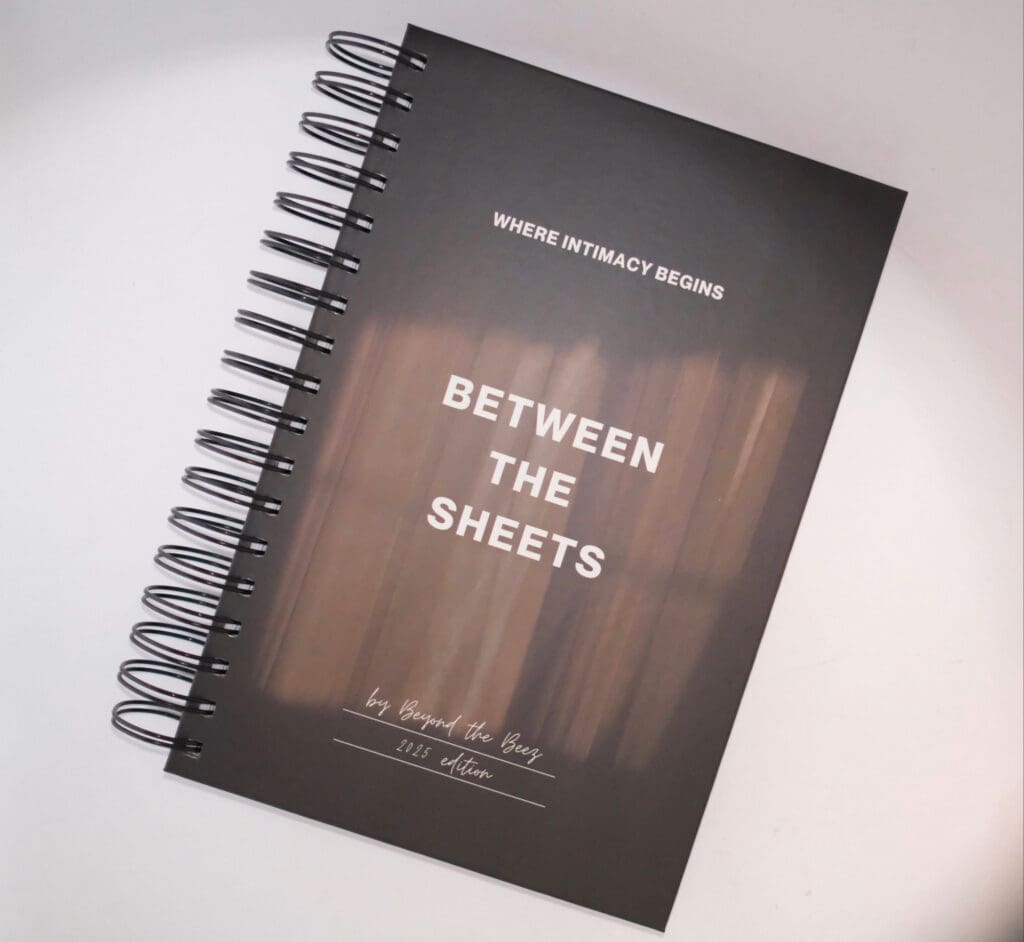
Image Credit: Cortnee Daley
Though the journal is primarily a personal practice, masturbation features heavily, and individual honesty is the point, Elizabeth sees no reason couples can’t use it together after shared experiences.
“Anyone can use it however works for them. If doing it with a partner is helpful, I would absolutely encourage that.”
The feedback she hears most often is not that the journal transformed people overnight, but that it gave them somewhere to start.
“When you’re circling through not being into it tonight, or the night after, or the night after that – it’s exhausting and disorienting. The journal gives you a grounding place to begin untangling it.”
The prompts she encourages users to maximise the most are the ones that zoom out beyond the intimacy – asking about your workout, your family, the particular weight of the week.
“That’s where we really miss the connection. It’s all interconnected, and people don’t think about that enough,” she said.
For anyone who finds even that first step too daunting, Elizabeth’s advice is simply to begin somewhere smaller.
“Whether that’s incorporating lube into your experiences, or just start having more open conversations about sex with your partner. Dip a toe in, take one small step, and then the next until you find a sense of comfort with who you are and what you enjoy.
“Your sexual self is an important part of who you are, and there is nothing to be ashamed of,” she said.