This article references nudity, body dysmorphia, disordered eating, racial stereotyping and objectification. Reader discretion is advised.
Bodies aren’t fashion
“The ideal body is a fallacy,” says Amelia Fulton, “it’s painful how much editing and blatant lying there is about what beauty ‘should’ look like.”
The thirty-year-old, originally from Australia, has worked as a life model for six years. She was first introduced to the craft during a secondary school art class.
“I remember coming home to my mum and telling her how incredible the experience was,” she says. “Our model was a mother of two in her fifties, and she completely captivated us with her confidence, beauty and grace.”
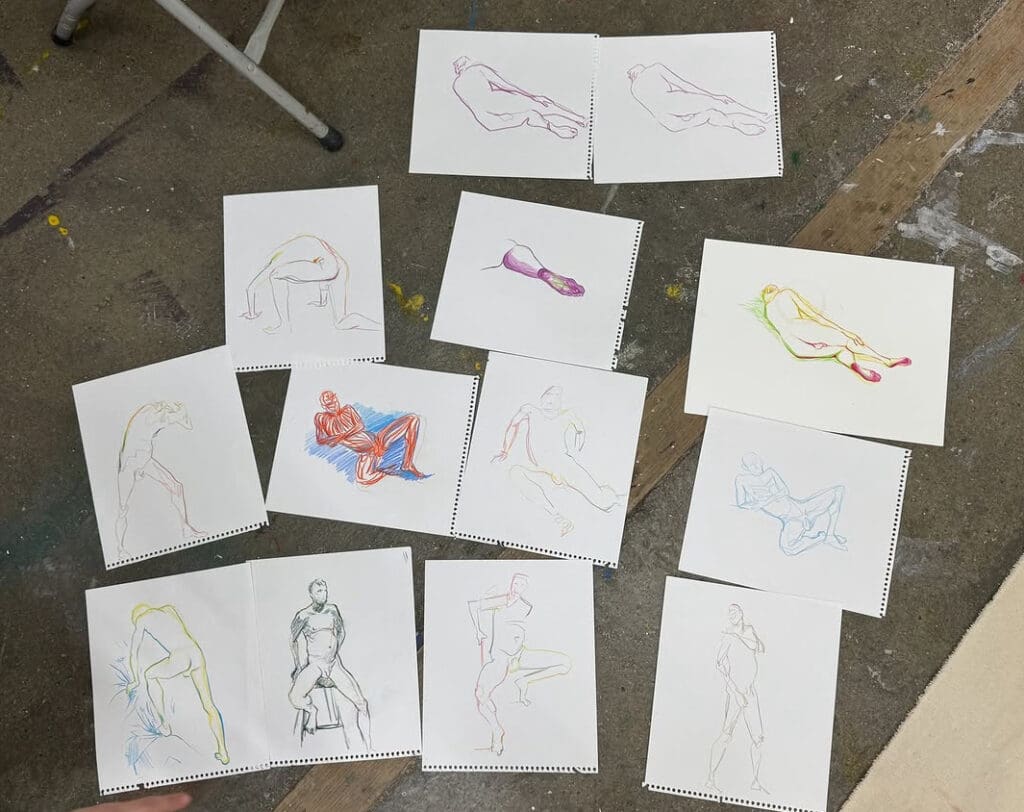
Life modelling, also known as figure modelling, involves posing nude or clothed for artists, students and photographers studying the human form. Sessions take place everywhere from art studios and churches to pubs and online classes. Models hold poses for anything from a few seconds to an hour, often remaining completely still.
“To see a real human body with hair, markings, fat and muscle and to find pure art in it was pretty transformative.”
The memory stayed with Amelia for years, resurfacing after she moved to Cornwall, UK, as she struggled in periods of low self-esteem and disordered eating. One night, she spontaneously emailed a local gallery and asked if they’d let her model at one of their classes. Even though she’d never done it before, they said yes.
“So to combat years of body dysmorphia and fear I got naked in front of thirty strangers and I’ve never looked back.”
An artist herself, Amelia says life modelling teaches you to see yourself through the eyes of creatives, rather than the glare of patriarchal judgement.
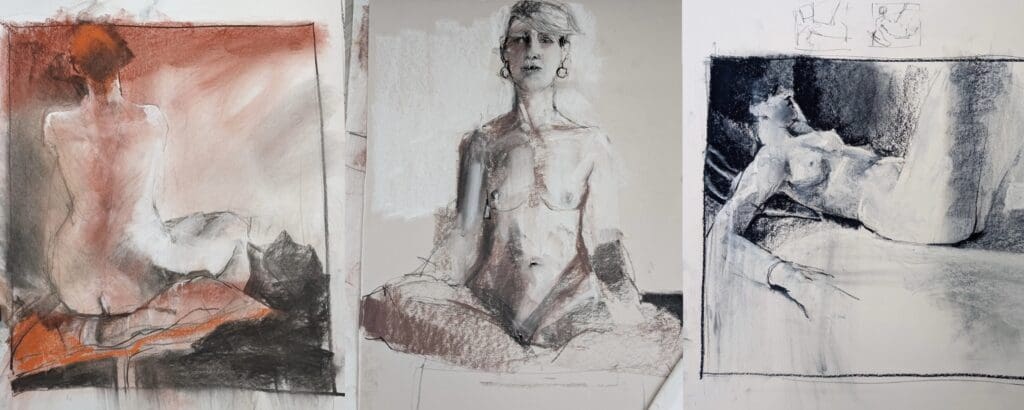
“You’re something exciting and new to immortalise through art!
“When I see myself in drawings I’m in awe, even if you’d call it ‘unflattering’. Those are actually the drawings I find most exciting because they reveal a whole new version of me.”
Over the six years she’s worked as a life model, Amelia says her body confidence has improved hugely.
“I’ve never had such a healthy relationship with my body and I attribute at least 70% of that to life modelling.
“When I was about 7 I joined a new school and one of the very first things anyone said was that I have an enormous nose. So for years I hated my nose. Fast forward and I’ve had so many artists tell me I’ve got an amazing nose to draw. Decades of insecurity become points of pride and joy.
“No matter how I look – how hairy, bloated, rolly, bendy or squishy – I am art.”
Creative Exchange
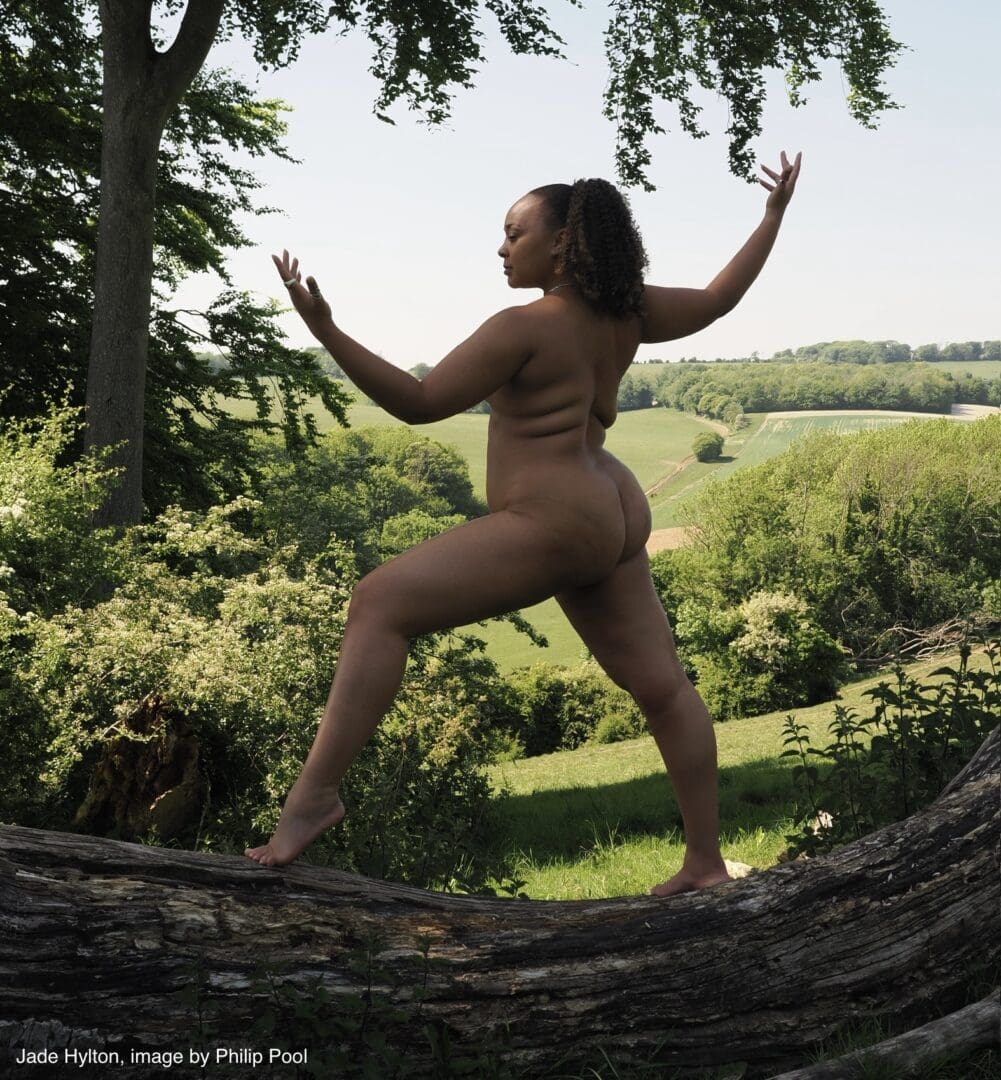
Jade Hylton, 28, based in Brighton, UK, has been life modelling for several years. An artist, she became interested in modelling while she was taking a creative sabbatical in China.
“I wanted to become a self-employed artist and find my niche. I tried fashion and editorial modelling, but it was very different modelling as a Black woman in China. There weren’t many options for me.
“When I came back to England in 2019, a friend suggested I try life modelling. She was a Black woman too, so it felt like it could be a safe space for me to be naked in front of strangers.”
Before that first session at Draw Brighton, Jade had no idea how she’d feel.
“I was a little nervous, but I just told myself that once you drop the dressing gown, there’s no point in being embarrassed anymore. Even if you put it back on a minute later, everybody’s already seen everything.”
Life modelling, it turned out, was the creative niche Jade had been searching for. After that first job, she became a model in demand. She was booked up quickly, working almost every day for a year, sometimes even double sessions.
“I never knew this was going to be the thing I wanted to do. I’ve tried other projects since and they’ve never been as fulfilling. It was just so fun figuring out all these different ways I could hold my body for art. I became addicted to it.”
Jade says professionalism and boundaries are essential parts of the job. There’s a strong understanding that touching the model is never appropriate, and that comments about their body should be kept professional and focused on the work.
“There’s a consensus that people will be respectful,” says Jade, “But obviously you still have to be aware of safety issues. You can end up modelling one on one, sometimes in people’s homes.”
To keep spaces safe and respectful, trustworthy studios have clear rules in place. In some sessions, participants are not allowed to ask the model for photographs or take any themselves.
Jade has a controlled way for artists to work from her image through her Patreon page, where she sells photographs for reference. The approach gives her greater control over how her image is used and circulated.
“In the world of AI, it’s not just about protecting your image but being aware of what photos are out there of you. We’re not bowls of fruit, we’re real life. People have to respect the boundaries there.”
Jade describes life drawing as an exchange of energy between muse and artist.
“One session, I was doing a pose where my hands looked like they could be holding something. In my mind, I was holding magic.
“I never said anything out loud, but afterwards the facilitator showed me her art and had literally drawn magic in my hands. Somehow we’d channelled the same idea!”
Drawversity
When Jade began life modelling, she quickly noticed a lack of diversity in the spaces she worked in.
“There were no Asian models in Brighton and Hove, for sure. There were only four Black models, including me. It was mostly white female models.”
This realisation led Jade to launch Drawversity, a life drawing initiative focused on increasing representation of Black, Asian and ethnically diverse models in the craft.
“Art is a luxury and a privilege, as is having the time and financial stability to pursue creative expression,” says Jade. “For many people of colour, that access has been limited, with families prioritising stable careers such as teaching or medicine.
“I wanted to give people the knowledge that these spaces existed.”
Since 2022, Jade has introduced around fifteen models to Drawversity, many of whom now model regularly. Sessions are open to all abilities, with new models supported through their first poses.
“I also wanted them to feel safe naked, because as a person of colour, your features can be exoticised.
“In historical art, Black figures often had no control over their representation. They were reduced to harmful stereotypes, rarely the protagonists of the piece.
“I think it’s really important we change that. If we want our children to be able to see a reflection of themselves in art, we must have diverse people modelling.”
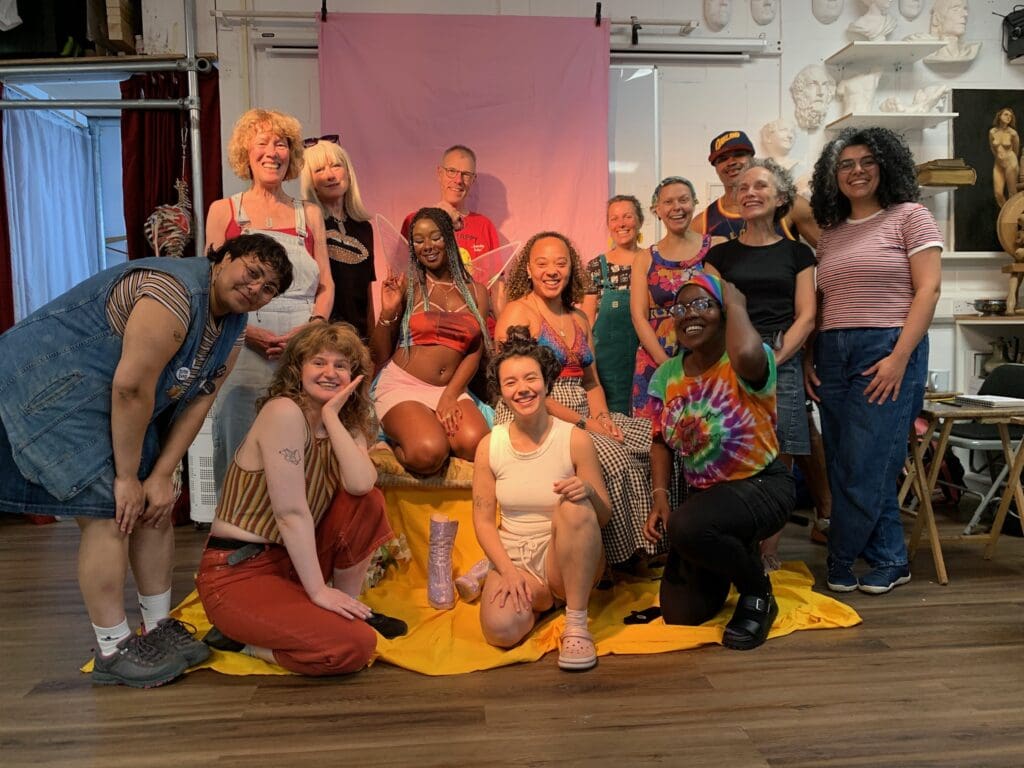
In recognition of her work, Jade was named Brighton Girl of the Year 2024 and has since been nominated twice more.
“Life modelling is an incredible space because it not only captures the way you look, but captures your energy in physical form,” she says, “I think that’s a really beautiful thing to be a part of.”
Nudity ≠ Sex
“Nudity is not always sexual, but society encourages us to think that it is,” says Roy Millard, 65, who has worked as a life model for the past six years. “I wanted to challenge that.”
Based in West Sussex, UK, Roy began life modelling while working as a massage therapist. Alongside the financial benefits, he says the craft aligned with his long-held belief in the “normalisation of nudity”.
“I have been a naturist for many years, and I feel very strongly that society has stigmatised nudity in a very unhealthy way,” he explains.
Naturism – a lifestyle centred around social nudity and body acceptance – shaped Roy’s approach to life modelling. For him, naturism and life modelling both challenge conventional ideas about beauty, ageing and desirability.
“Humans are complex – sex is an intrinsic part of what we are. So, when we look at a nude body, we will inevitably make a judgement about ‘attractiveness’.”
Roy says older bodies like his are often judged harshly by society, leaving many people feeling ashamed as they age.
“I don’t particularly like my body, as I know it’s not an ‘attractive’ one. Older bodies are considered offensive and something to hide.
“But I have learnt that when people stop worrying about ‘attractiveness’, and embrace what they look like, their confidence increases. Nudity is a great leveller. By removing the clothes, we get to see people as they really are.”
Roy believes an appreciation for nude art can ultimately outweigh societal pressures surrounding physical attractiveness.
“Life modelling encourages us to see bodies from a non-sexual point of view. Bodies are beautiful because they’re marvellous and fascinating, not because they’re attractive.”