Jody Sill notices every detail. Hands fidgeting, then folding, then unfolding again. The chair feels too upright, making people suddenly aware of their posture, their breathing, their bodies. The room is quiet in a way that gives thoughts too much space. Whatever sentence people arrived with has already slipped away. What remains instead is something harder to place: a sense that something isn’t quite right, or not yet finished, even if it is difficult to explain.
After years of practice, Jody, a psychosexual therapist in Sheffield, recognises these moments immediately.
“Therapy can be really, really scary,” she says, with a steady voice. “You’re bringing yourself into a room with someone you have not met before.”
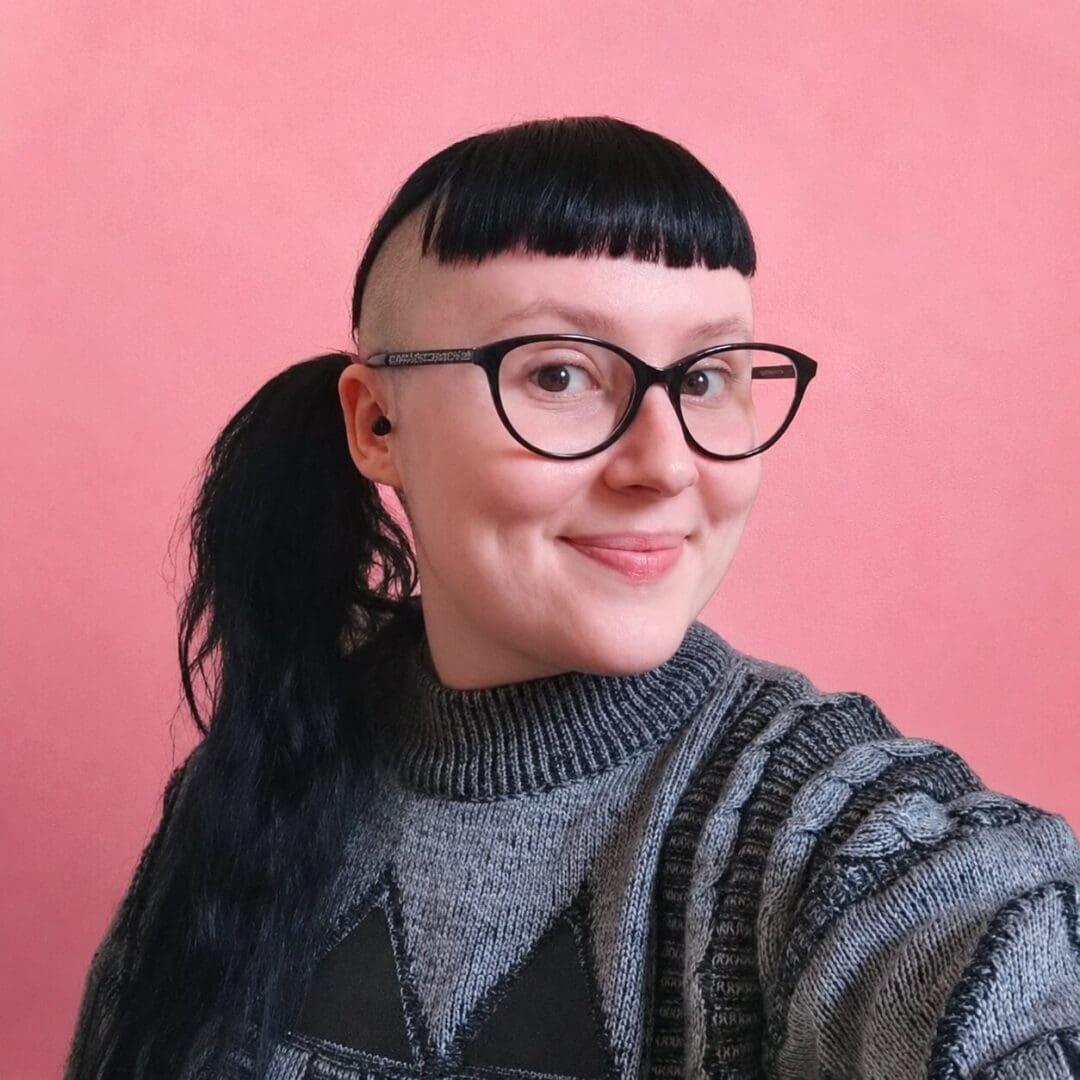
Sitting opposite me, Jody is comfortable with the silence that follows, allowing it to unfold naturally. She listens with her whole body – her shoulders are relaxed, and her hands are still. Her long black hair, shaved at the sides and cut with a short fringe, is pulled back into a ponytail – as always. A soft smile rests on her face, setting the tone early on. There is nothing performative about her presence. She speaks calmly, letting each pause land.
It’s an ease shaped by time spent in rooms like this, sitting with people when words are slow to arrive. Before specialising in psychosexual therapy, Jody Sill worked for more than a decade across the wider mental health field.
Now, based in Sheffield, she works both within the NHS and in private practice, supporting individuals, couples and people in different relationship structures as they navigate sex, intimacy and desire.
“Sex relationships are often really intertwined,” Jody says. “A lot of people experience sexual difficulties.”
Psychosexual therapy is a type of talking therapy that helps individuals and couples work through sexual problems by looking at the emotional and psychological factors around sex. It helps people understand their sexual experiences, resolve difficulties and explore pleasure in a way that feels more authentic.
“People rarely arrive certain of what they need from therapy,” she says.
Some talk about pain or tension, bodies that don’t respond in the way they think they should. Others hesitate around desire – too much of it, too little of it, or simply not feeling what they believe everyone else does so effortlessly. Many arrive without a clear explanation at all, only a persistent sense that something isn’t working.
“I assumed people would find it easy to talk about sex, because I did,” Jody says. “But actually, it’s quite difficult for many people to speak about.”
Jody noticed that silence long before she became a psychosexual therapist.
“When I was a teenager, I realised that people find it really hard to talk about sex, to talk about their bodies,” she says. “And I thought there’s quite a lot of injustice in that.”
Friends would come to her distressed, unsure what to do or who to talk to.
“People would say, ‘I had sex with my partner and the condom split, and I don’t know what to do,’ or ‘I don’t know if I might be gay,’” she says. “They were so upset.”
What stayed with her was not just their fear, but the absence of somewhere safe to take it.
“I kept thinking, why isn’t there somebody you could talk to who could probably do something a bit more than I could at the time?”
Even though sex was everywhere, she kept seeing how rarely people could talk about it without embarrassment or apology.
“It felt like you couldn’t talk about this,” she says. “It was shameful.”
That absence became the foundation of her work.
“I don’t think many people know psychosexual therapists exist,” she says. “I met with more ‘I didn’t know that was a thing’ than ‘oh yeah’ when I say where I work.”
The invisibility of the role matters. When people don’t know that support exists, shame often fills the gap.
One of the first assumptions Jody encounters is about what her work actually involves.
“People assume that a lot of the work I do is around penetrative sex,” she says. “But actually, not at all. It’s about all different forms of sex and how it can be more enjoyable and authentic for people.”
In her experience, penetration is a common reason for people accessing psychosexual therapy.
“People put it on such a high pedestal, but when you really listen to them, there’s a wealth of other sexual activities and experiences they often prefer and enjoy more,” she says.
This expectation creates a lot of pressure and often, pain.
“For women specifically, vaginismus is probably the most common thing I see,” she says. “Any penetration causes a lot of pain.”

Hands resting on a woman’s knees; Image: Tima Miroshnichenko, Pexels
The distress people bring into the room is rarely just physical. Language itself can be a barrier.
“Some people find it quite hard to use the correct language around anatomy and their bodies,” she says. “They’ll use code words or slang for different parts of their bodies because they don’t know how to talk about their genitals, or they feel too embarrassed to use accurate language.”
None of this means someone is abnormal; it shows there is room to understand themselves better.
When Jody talks about change, she doesn’t talk about fixing people. She talks about power.
“It’s when people realise how much power they have within their own body,” she says. “A lot of people come into therapy feeling like their body isn’t really there and that their pleasure is meant for somebody else.”
Watching that shift, she says, is one of the most meaningful parts of her work.
“Seeing people move from feeling quite small and powerless into empowerment and pleasure is wonderful to witness,” she says. “There’s something magical about someone connecting with their body in a way they never thought they could.
“Watching people learn ‘this is my body’, ‘this is how I communicate with it’, ‘this is how I tell a partner to communicate it’ to enhance pleasure in a way that leads to orgasm with someone not having it before. It is very lovely to witness this breakthrough.”
One story she returns to often is of an elderly couple who believed the sexual part of their relationship was no longer possible.
“They thought they couldn’t be sexual, they thought they were too old,” she says. “Through our work together, they discovered they are not too old, and this is actually really fun.
“It was a very joyful piece of work to facilitate and help them to navigate it together.”

A woman holding a flower; Image: Mart Production, Pexels
Most people don’t start therapy knowing exactly what they’re looking for, and that’s part of the work. For those considering therapy, Jody is careful not to oversimplify the process.
“It’s probably unrealistic for many folks to come dancing into the therapy room being really happy to be there,” she says. “Just be curious. Have an open mind.
“Know that you are there for a reason, and these reasons are going to change your life in a really good way. Communicate that reason with the therapist so they can help you.”
What strikes her most is how much goes unsaid – not because it doesn’t matter, but because people don’t know where to put it.
“For some people it takes decades to realise that they need to talk to somebody about their problems,” she says. “For younger people, there can be real benefit in reaching out earlier. When you start feeling unsure, when you don’t know who to talk to, when it’s impacting your sense of self or how you navigate sexual relationships.”
Sometimes, curiosity alone is enough.
“You might not necessarily be upset or feel like you have a problem,” she says. “You might just want to learn a little bit more about yourself.”
Above all, she wants people to understand that there is no single correct way to experience sex or intimacy.
“Normal doesn’t exist,” she says. “I know saying that isn’t necessarily going to make that belief sit with people.”
She pauses, holding the moment with a calm she’s learned to trust.
“But knowing psychosexual therapy exists, knowing there are people out there who can catch you and tell you, ‘that’s okay’ – that can help.”
Sometimes, getting past the fear is not about finding the right words – just about saying something out loud for the first time.