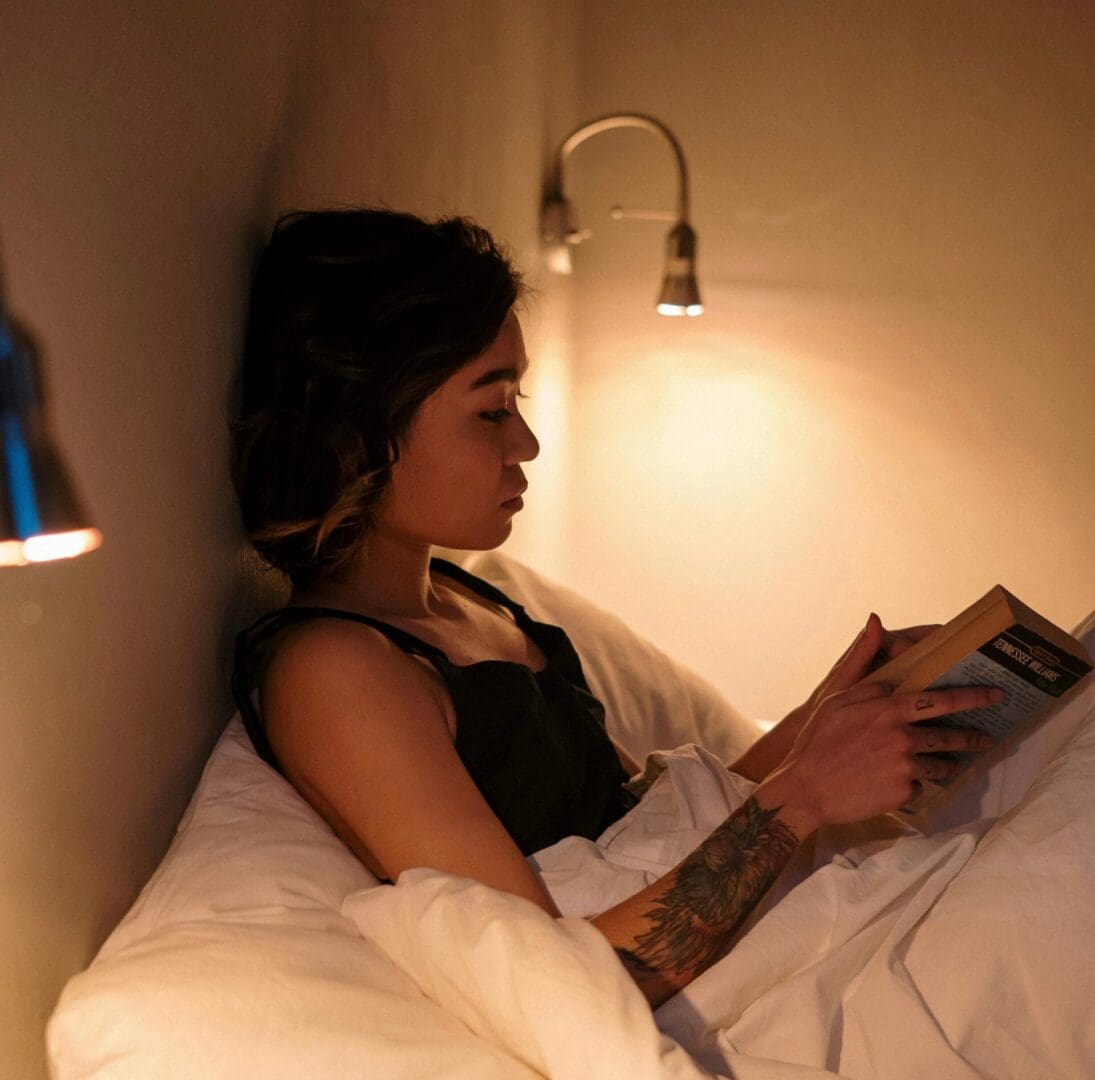
It’s past midnight. The room is silent, lit only by the faint glow of your phone on the ceiling. You tell yourself it’s just one more chapter. It never is. Two male characters, sketched in black ink, stand on the edge of something. Fingers brushing, tension stretched thin – the kind that makes your chest tighten as you wait for one of them to finally say it. The room feels still around you, waiting with them. Holding your breath, you keep reading.
This is yaoi – a Japanese term for manga centred on sexual and romantic relationships between male characters. It emerged in the 1970s alongside second-wave feminism and has long been recognised as a space largely created by women for a predominantly female audience, says Professor Anna Madill, who has spent over a decade researching the genre.
What began as a subculture has since expanded far beyond its origins. Scroll through Pixiv, an online platform for artists and fan creators, and you enter an endless stream of yaoi with millions of illustrations and stories appearing one after another. The platform now has over 100 million users, where male-male relationships rank among the most active categories.
On Archive of Our Own, one of the world’s largest fanfiction archives, male–male pairings consistently make up some of the largest and most active sections of the site. On TikTok, the #yaoi hashtag has generated over three million posts, while dedicated Discord communities bring together almost 200,000 users.
So what exactly are people reading it for?
Professor Anna Madill, a University of Leeds psychologist specialising in gender and sexuality, says: “It’s fun, it’s enjoyable, it’s entertaining.
“That is often the first answer given when people are asked why they read yaoi.
“And it is not wrong, but it is incomplete.
“Lots of things are fun, why is this particularly entertaining?”
The question shifts the focus to what yaoi actually does.
Madill says part of yaoi’s appeal lies in the way it structures intimacy. Mainstream romance and pornography tend to separate intimacy. One builds emotional connection but stops short of explicit desire; the other focuses on sex, without developing the relationship around it.
Yaoi has both.
“It creates a kind of middle ground,” says Professor Madill. “It gives the sexual intensity and the explicitness, but also packages that within a relationship.”
That combination reshapes how desire is experienced. Emotional development and physical intimacy are not presented as opposites, but rather unfold together, shaping each other.
“People don’t want just the sexual content,” she says. “They want to see the characters meet, get to know each other, and then follow them into the bedroom and beyond it.”
For Anastasia, known online as Koi_256*, a 25-year-old yaoi creator and reader from London, structure is central to the appeal.
“There is a sense of intrigue, a feeling of lively and active dynamics,” she says. “It feels more true to how actual relationships work.”
A second explanation lies in what yaoi removes.
Much of mainstream sexual material, Madill explains, is still shaped around male audiences. Even when aimed at women, it often carries gendered expectations, uneven power dynamics, and a persistent sense that the woman’s role is already defined.
“It’s really problematic when a woman’s in there,” she says. “Because the whole power differential is just always there.”
Yaoi avoids that by taking women out of the frame.
That difference is something readers feel directly.
“There is no already established power structure,” Anastasia says. “Yaoi becomes a way to break stereotypes, to look at something unexpected, even a little forbidden.”
For Chibi_raincloud*, a reader in her 30s based in the U.S., the attraction lies in what yaoi offers. She asked to be identified by her Instagram nickname because of professional privacy concerns.
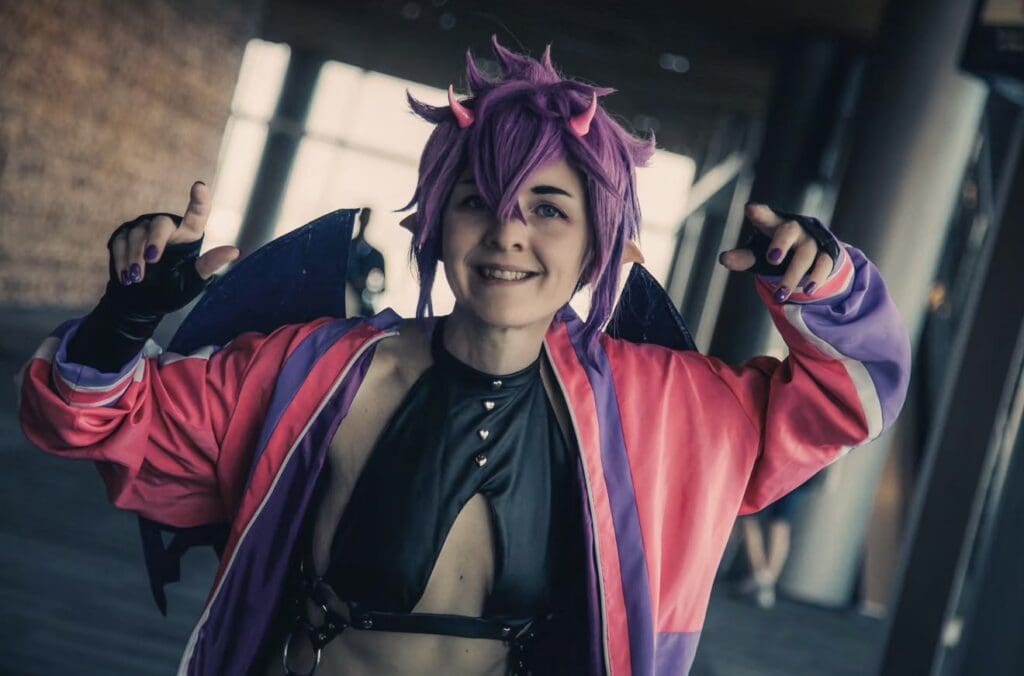
“Female characters are often portrayed as overly emotional, with a kind of softness I don’t connect to,” she says.
“I prefer more outspoken, masculine characters.
“I relate to yaoi characters far more than I ever did to female ones.”
From there, the argument becomes more complex.
“One of the key things is that the protagonists are male, but often they look very gender neutral or quite feminine,” says Professor Madill. “There’s a kind of slippage of gender.”
Characters are often not strictly masculine and have softer features, ambiguous bodies, or emotional expressiveness that does not align with rigid gender norms. At the same time, they retain the social position of being male.
“This genre is most often written by women,” Koi_256 says, “so the male characters themselves will more frequently have personalities and behaviour that are somewhat unconventional for men.”
Professor Madill connects this to a wider cultural shift.
“There is much more questioning of sexuality and more flexibility in terms of gender identities,” she says.
“Yaoi provides a space to explore it, and that may be one of the reasons why the community is growing, particularly among younger people.”
Characters may be male, but they may as well be read as queer or trans. Their identities are not always fixed, and neither is the reader’s relationship to them.
For some, that openness becomes personal.
“In high school, I found out that I was gay,” says Chibi_raincloud.
“Reading yaoi and seeing healthy gay relationships helped me figure out who I was at an earlier age. At least I had words for it.
“Being able to have an accessible LGBTQ+ thing was a great safe space.”
Another appeal of yaoi is how readers position themselves in relation to the story.
“I was surprised how often people said – I’m an observer,” says Professor Madill.
That response suggests a different way of engaging with intimacy altogether.
Instead of stepping into a character’s role, the reader watches.
They are not the ones being or doing the desiring. They are looking at how desire works – how two people come together, what makes them compatible, and why attraction forms in the first place.
“There’s something about wanting to watch it happen,” says Professor Madill. “To see how two people come together, rather than having to be in that position yourself.”
She links this to a more indirect way of engaging with desire. Instead of identifying with a character, the reader can watch attraction form from the outside: why someone becomes desirable, what creates emotional chemistry, and how intimacy develops between two people.
In heterosexual stories, that process often comes with pressure. Female readers are encouraged to imagine themselves as the woman being desired. Yaoi removes that expectation.
“It’s quite challenging to be the object of desire,” Madill says. “It’s much easier to enjoy watching it happen.”
Readers recognise this difference.
“In heterosexual stories, you begin to identify yourself with the female character,” Koi_256 says.
“That can create a lot of discomfort, especially if the character’s actions do not correlate with your worldview.”
In yaoi, that pressure loosens.
There is another reason why yaoi is popular.
“Women are able to engage with sexual material where they’re not in it,” says Professor Madill carefully. “It could be considered a paraphilia.”
The term refers to forms of sexual interest that fall outside what is typically defined as normative heterosexual desire. It does not imply harm, nor does it apply to everyone who reads yaoi.
“That’s not to say that these women aren’t heterosexual in their everyday life,” Madill says. “But they may be turned on by this kind of niche sexuality, where the characters are putatively both male. And that is not uncommon.”
What makes this significant is how little it has been recognised.
Madill describes that paraphilias are mostly discussed in relation to male behaviour, particularly when they intersect with visibility or transgression. Female sexual interests, by contrast, have historically been framed as limited, passive, or secondary.
Yaoi challenges that assumption.
Its popularity suggests that women’s desires are more varied and complex than often acknowledged.
At the same time, this form of engagement is not without criticism.
Some argue that yaoi risks romanticising or simplifying relationships between men, particularly because many of these stories are created by women.
Within the community itself, there is awareness of this tension.
“I am sure that many consumers of this genre do romanticise or fetishise relationships between men,” Koi_256 says. “Some people consume it primarily for the sake of sexual objectification.”
At the same time, she distinguishes between that and more reflective engagement.
“As a creator, I try to approach relationships more thoughtfully,” she says.
Yang Deli, 20, from London, who identifies himself as gay, does not agree with the criticism.
“I don’t really understand why it gets criticised so much,” he says. “It actually brings more attention to queer relationships and makes them more visible.
“Some take it seriously, some don’t, but that doesn’t make it less meaningful.”
Back in that dark room, it’s easy to tell yourself it’s just a story.
But it is never only that.
For many readers, yaoi offers something difficult to find elsewhere: a way of engaging with intimacy without being placed inside it, of watching desire unfold without the pressure to perform it.
The room is still dark. The screen still glows faintly against the ceiling.
One chapter ends. And then there is another one.
*Some interviewees requested partial anonymity because of professional and personal privacy concerns.