
When you have endometriosis, it’s difficult enough to navigate on its own. You’re dealing with pain that medical professionals don’t always know how to help with, and you’re often left feeling like you’re the only one going through it. When you layer sex and intimacy on top of that, when your body already won’t cooperate the way you need it to – it becomes this whole other thing to navigate, and yet nobody really talks about it.
I have endometriosis, and I didn’t know where to turn, especially when I entered my first long-term relationship. So I attended a seminar held by Endometriosis UK, with guest host Consultant Gynaecologist Gemma Bentham, to better understand my body. What I learned might help you navigate it, too, because this stuff is messy and complicated and different for everyone, but you shouldn’t have to figure it out alone.
The vicious cycle nobody talks about
Pelvic pain can be all-consuming. As someone with endometriosis, it can take over your entire day and dictate how it’s going to go, and quite frankly, it doesn’t leave a lot of room for anything else. So when it comes to thinking about sex or intimacy, the desire just isn’t there and not because you don’t want it to be, but because you’re so caught up in managing the pain day to day that there’s no opportunity to allow yourself to feel turned on.
That’s where the cycle starts. Without desire, your body doesn’t do what it normally would – there’ll be no lubrication, no increased blood flow, none of the things that ultimately make sex comfortable rather than painful. So when sex does happen, it hurts. Once it’s hurt, the thought of it happening again fills you with dread, so you then avoid it. See what I’m getting at here?
People with pelvic pain are also twice as likely to experience problems with sex. With endometriosis being so underfunded and under-researched, sex and intimacy are one of the things that get most overlooked. When you already feel less like a woman because of everything endo puts you through, having problems with intimacy on top of that just amplifies it even more. So it’s just important to know: you’re more likely to experience this, and you’re not alone in it.
Sex doesn’t have to mean penetration – and here’s why that matters
One of the most damaging myths out there is that sex has to mean penetration, or has to end in penetration. A lot of people don’t realise that penetration isn’t even the main way most people orgasm. It mostly comes from clitoral stimulation for the majority of women. However, if you’re under the impression that orgasms have to come from penetration itself, it’s important to understand that a lot of that comes from what we’ve been fed our entire lives. All the films, the books, the pornography -we’ve been conditioned to believe that’s what sex is, full stop.
Here’s what I took from the seminar: sex is everything that falls into the category of things that might give you physical pleasure. It could be masturbation, it could be intimacy without penetration, it could literally just be touch or little steps to get you there. Most importantly, if you need time to explore what works for you, explore it by yourself first. Learn what feels good – for you. That’s the most important thing.
When you have endometriosis and you allow yourself to let go of what you think sex should look like, that can be one of the most important things you do, and if penetration is painful for you, I need to emphasise this – you are not broken. You are not failing at sex. You just need to find a different way in. Intimacy is adaptable – whether you’re with a partner, single, or exploring it by yourself, you have to learn what feels good and what doesn’t. If penetration doesn’t feel good, there are plenty of other ways to explore it.
The accelerator and the brake
One thing that really stuck with me was the accelerator and brake theory. So, imagine driving a car – what’s more likely, you’re gonna put your foot on the accelerator or the brake?
That’s literally how your brain works when it comes to sex and desire. The accelerator is the bit where your brain is curious and interested. The brake is the bit that protects you and keeps you safe, so ultimately, when you start to feel anxious or nervous or fearful during sex (which is completely normal by the way) you subconsciously put your foot on the break.
The best way I heard it explained was through a cake analogy. I’m not gonna lie, it made me giggle. Imagine a massive Vicky sponge sitting in front of you – looks delish, icing sugar on top, your mouth’s watering. That’s the accelerator. Now imagine you’re on a diet, you don’t like jam and cream, and you’ve just got a bad stomach. Suddenly, the cake doesn’t look appealing anymore. That’s the brake. That’s essentially how your libido works: the balance between what turns you on and what turns you off.
When you have endometriosis, things like pain, hormones and where you are in your cycle are sitting firmly in that brake category. These are the things that inevitably factor into sex and intimacy, and it’s really important to note that some of these things aren’t modifiable. You can’t just switch your pelvic pain off; that’s something that comes with endometriosis.
However, what I found really interesting was that you can think of ways to minimise it. So, for instance, are there times in your cycle when things are less painful, and you feel more aroused? Would sex feel more comfortable in the shower or a hot bath? When it comes to endometriosis, heat is such an important factor for my pain management. I use monthly heat patches (deep heat ones) and obviously, the number one is a hot water bottle, but I never really thought about it in the sense of sex until now.
Then there’s your environment. What makes you feel most comfortable? With endometriosis, endo belly is really common – do you wanna wear comfortable clothes that make you feel better in your body? Even your bed sheets make a difference, and then there’s planned spontaneity – which I know sounds mad. Hear me out, though, if you have your lube, warm patches or a hot water bottle, everything you need already at your bedside table, then when that moment arises, you can just grab what you need. Bob’s your uncle. Wanting to feel spontaneous doesn’t mean you can’t prepare, and you can get right to it with the comfort of knowing you are doing everything you can to make the pain more manageable.
Mindfulness and sensate focus – retraining your mind and body
Even just in normal life, I’m a very anxious person. My brain is always going at a million miles per hour. So when you have endometriosis and you’ve been stuck in this cycle of pain and dread around sex, your brain ultimately starts to associate intimacy with anxiety. As soon as you start thinking about any form of intimacy, you get yourself worked up. You get those butterflies, the sweating, the racing heart – but these things also accompany arousal. So it can be really hard to separate the two and just allow yourself to be in the moment.
Mindfulness is essentially about freeing your mind from all of that baggage and focusing on right here, right now. I know it sounds easier said than done – I completely agree, you have to practice it. You know how they say you put ten thousand hours into something and you become a master? You’ll become a master with sex, too.
Mindfullness guidance: https://publicdocuments.sth.nhs.uk/pil5414.pdf
There’s also sensate focus. I’d heard of this before I attended the seminar, and it’s basically just retraining your body and mind to feel safe again. Obviously, this really depends on your situation. I’m not going to say this is easy for everyone; it does take time, and it’s very situational, but this is where you go back to basics. You start with non-sexual touch and just focus on pleasurable sensations, like, really slowly. Then, you only move on to something else once you feel secure and comfortable.
Senate focus guidance: https://publicdocuments.sth.nhs.uk/pil3291.pdf
I think there’s this idea that when you’re practicing mindfulness stuff, you have to go straight into it and challenge yourself straight away. That’s totally not true. Only moving on to something that feels secure and comfortable when you’re ready – that’s the whole point of this. It’s to desensitise your nervous system, reduce your anxiety and fear around intimacy, and then build confidence in your own body. Trust that this is going to feel good for you, not thinking about pain, which I know is easier said than done when you have endometriosis because you are constantly in pain. That’s a really difficult thing to just ‘put aside’.
What I’m saying is the goal doesn’t have to be to go straight to penetrative sex. It can just be around feeling good. Take time with yourself to understand what feels good for you step by step, whatever form it takes, that’s what it’s about.
Managing the physical
When you have endometriosis or pelvic pain, your body’s natural response is fight, flight or freeze – and none of those are conducive to sex, are they? Physically, you end up carrying a lot of tension in your pelvic floor, and that’s gonna make sex feel really tight and really sore.
I learnt there are a lot of ways you can manage this.
Lubrication is your best friend. If you haven’t been introduced to it, there are a lot of resources out there. You can look into different types, or the best way I find it is maybe just go to a shop in your local shopping centre that sells lubrication. It really depends on what you are most comfortable with.
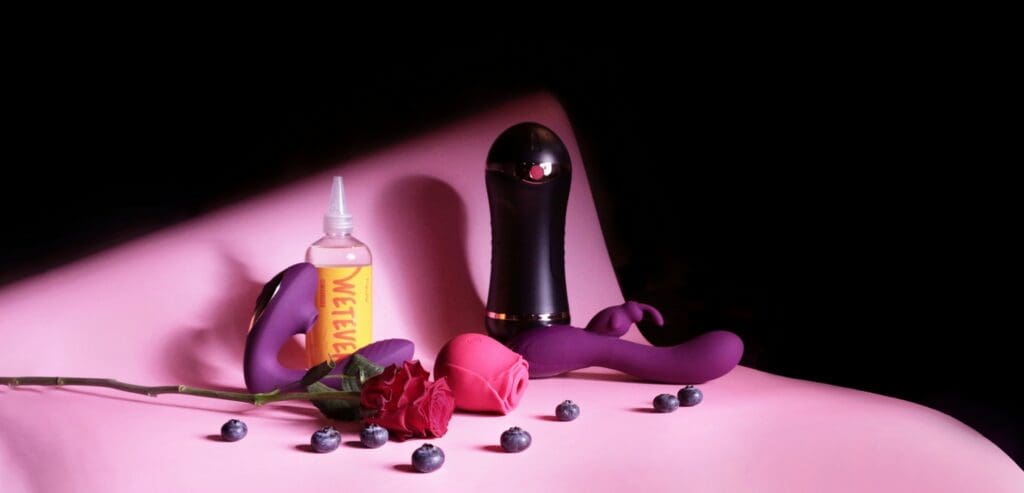
Then, as much foreplay as possible, whatever you feel comfortable with. This can be nice against your skin, creating a comfortable environment. A few candles, some music, whatever floats your boat.
Positions also matter too. Using a cushion, lying on your side – whatever works for you. Sex isn’t supposed to be glamorous, it’s about communication and comfortability. So if you need a pillow, you put that pillow down. We need more pillow princesses in this world anyway!
If you need more lube, use more lube, it just has to feel comfortable for you.
There’s also pelvic floor therapy – whether self-directed or with a physiotherapist – can also make a really significant difference to how sex feels physically. There are physical things you can do to make this more manageable, and it’s not just in your head. You don’t have to write off intimacy completely. Nobody deserves that.
Pelvic exercises for women: https://publicdocuments.sth.nhs.uk/pil3282.pdf
Making your plan
Now this is the part where everything comes together. Having a plan – personal, written down, whatever works for you – is one of the most important things you can do.
It starts with knowing your baseline. Where are you at right now? What do you want to achieve? Be realistic – your goal doesn’t have to be penetrative sex. It might just be feeling comfortable with touch or having a conversation with your partner. Work around your life. Our lives should not be dictated by our endometriosis.
There’s also the WOOP method – Wish, Outcome, Obstacle, Plan. What do you want? What does achieving it look like? What’s in the way? How are you gonna get around it? As someone who catastrophises, writing it down makes everything feel so much more manageable.
Finally, there’s the flare up plan, because a lot of us with endometriosis know pain can be bad after sex sometimes. Being prepared for that can really help crack that cycle of dread.
What people are really asking
There was a Q&A section at the seminar, and honestly these are the questions we’re all thinking but maybe don’t feel comfortable asking out loud.
Can sex make endometriosis worse?
This is a question I know a lot of us have Googled. The honest answer is: for the vast majority of people, no. It won’t make your endometriosis worse, but that doesn’t mean it won’t cause a flare up or pain. Tissue damage is unlikely, but if your pelvic floor is tense and you go straight into penetrative sex without enough foreplay or lubrication, you can experience superficial pain and some bleeding. So as much foreplay as you can, as much lubrication as you can, and look at other ways to get physical pleasure that don’t add to the situation.
Why do I feel pain for days after sex?
Yes, this is a thing. No, you are not imagining it. Due to pelvic sensitisation, flare ups after sex are really common with endometriosis and can be genuinely debilitating for days. Is it normal? Not exactly, however, is it inevitable with endo? Unfortunately, yes. Which is why planning for the impact is so important – because if you don’t, it just adds to the anxiety and dread next time.
For those trying to conceive when intimacy is painful with endometriosis
I’m not personally in this stage of my life, but I found it really important to include this. There is already so much pressure around trying to conceive, and pelvic pain on top of that can feel absolutely overwhelming. So first – take some of the pressure off. Try not to have sex more than a couple of times a week. Most people aren’t fertile during and just after menstruation, so giving yourself a break then is completely fine. Make the experience as comfortable as possible – lubrication, positions that work for you, a cushion, lying on your side. Communication and safety words are everything, and if you have a known condition like endometriosis that impacts fertility, you don’t have to wait the standard time before accessing fertility care. Push for that referral, because you deserve that support.
At the end of the day, you deserve to feel good, and don’t let anyone else tell you otherwise. I came out of that seminar expecting to just do an educational piece, but I actually learned a bit more about myself. I learned there are other women out there experiencing this, and that the stuff I didn’t know, the stuff nobody was educating me on – sex and intimacy is the last thing you even think about when you have endometriosis. So this was really insightful for me, and I want you all to learn about it too.
Endometriosis takes so much from you. Your good days, your energy, your confidence, sometimes your sense of self. A lot of us quietly write off intimacy as just another thing it’s taken, but it doesn’t have to be that way. It’s not linear, it’s not easy, and it’s going to look different for every single person reading this. There are ways through it, even though it may not feel like it, there are tools, there are plans, and there are people who understand.
There is nothing wrong with you. Everyone’s path looks different, and with sex and intimacy, that applies too. You’re not broken. You’re just someone navigating something really hard.
We deserve to feel good in our bodies, in our relationships, in our intimacy – whether that’s just with ourselves – just as much as anyone else does.
If you take nothing else from this, take that.
If you are affected by any of the issues raised above, below are some resources which may be useful:
Endometriosis UK (endometriosis-uk.org) – the main UK charity, brilliant resources including a helpline
The Endometriosis Foundation (endofound.org)
Fertility Network UK (fertilitynetworkuk.org)